How to Train Your Gym Reception Staff to Improve Member Experience and Drive Upsells
Click Below To Share & Ask AI to Summarize This Article
Why Reception Staff Are Your Most Commercially Important Team Members
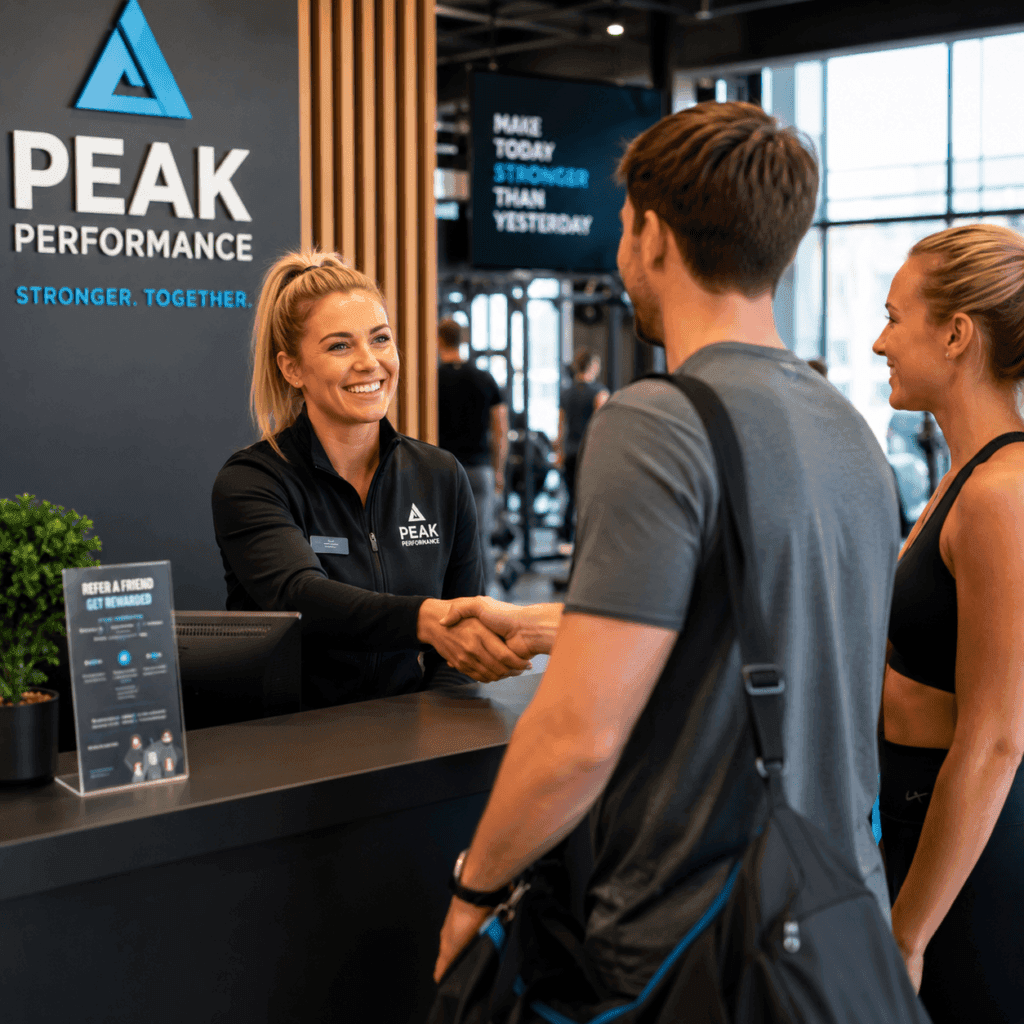
In most independent gyms, the person on reception has the most member interactions of anyone in the building — more than the PTs, more than the class instructors, more than the gym owner. Every member who walks in is greeted by a reception staff member. Every prospective member who enquires is handled by a reception staff member. Every cancellation request, every billing query, every complaint arrives at reception first.
This makes reception staff the single greatest lever for member experience and commercial performance in a gym — and yet most independent gyms provide minimal training beyond how to operate the booking system and process payments. This guide covers what reception staff training should include, how to run it, and how to set the standards that turn a reception desk from an administrative function into a retention and revenue asset.
The Three Functions of a Gym Reception Role
Before designing training, be clear about what the role actually requires. A well-trained gym receptionist performs three distinct functions simultaneously:
- Operational function: Check-ins, booking management, payment processing, class registration, membership administration. This is what most training covers.
- Member experience function: Every interaction at the desk is a touchpoint that affects how a member feels about the gym. Warmth, attentiveness, remembering names and details, acknowledging regulars, making new members feel welcome — these behaviours are not natural to everyone and need to be trained and reinforced.
- Commercial function: Enquiry conversion (turning a prospect who walks in or calls into a member), retention conversations (handling cancellation requests), and natural upsell (introducing PT, classes, and add-ons at appropriate moments). Most reception staff are not trained for this function at all — and the gym loses revenue as a result every day.
Member Experience Training: The Standards That Matter
Name recognition
Greeting a regular member by name is the most impactful low-cost retention behaviour a gym can implement. It signals that the member is known and valued, not anonymous. This requires reception staff to actively learn member names — a discipline, not a natural talent. Practical approaches: reviewing the membership photo in the system during quiet periods, connecting names to faces at check-in, and making a deliberate effort with new members in their first month.
The 10-second greeting standard
Every member who enters the gym should be acknowledged within 10 seconds of arrival — verbally, with eye contact, not a wave from across the room while continuing another task. This standard applies even when the desk is busy. A brief “hi [Name], with you in a second” is sufficient; silence or being ignored is not.
New member identification and attention
New members in their first month should receive a slightly elevated level of attention — an extra check-in question (“How are you finding it so far?”), a proactive offer of help (“Have you managed to try any of the classes yet?”). Reception staff should be able to identify new members from the system and have a brief instinct to engage rather than just process.
Handling difficult conversations with calm and care
Members bring difficult conversations to reception: complaints about equipment, frustration with other members, billing disputes, emotional reactions to a bad session. Reception staff need to be trained to de-escalate, listen without interrupting, acknowledge the feeling before addressing the substance, and know which issues to handle themselves versus escalate to the manager. This requires role-play practice — not a briefing document.
Enquiry Conversion: Turning Walk-Ins and Calls Into Members
Every prospective member who contacts the gym is a warm lead — they have already taken the initiative to reach out. The conversion rate on these enquiries is largely determined by how the reception desk handles them. A well-handled enquiry converts a significant proportion into bookings; a poorly handled one loses them in under 60 seconds.
The enquiry script framework
Do not use a script — use a framework. A script makes staff sound robotic; a framework gives them a structure to navigate within naturally:
- Welcome and qualify: “What brings you to [Gym Name]?” or “What are you looking for in a gym?” — understand their goal before describing the gym
- Connect the gym to their goal: Describe your gym in terms of what it does for their specific objective, not as a feature list
- Offer a specific next step: “The best way to see if we’re right for you is to come in for a tour — I can book that right now. Does this week work?” A specific offer with a concrete booking beats “feel free to pop in anytime”
- Handle the price question directly: When they ask about cost, state it clearly and then anchor to value immediately: “Monthly memberships start from £X. That includes [specific things]. Want to come in and see it before you decide?”
The follow-up discipline
Every enquiry that does not book immediately should have a follow-up. Reception staff should log the name, contact, and next step for every enquiry that does not convert on the call or walk-in — and follow up within 24–48 hours. This discipline alone significantly increases conversion rates from warm leads.
Natural Upsell: The Moments That Create Revenue
Upselling does not require a pushy sales approach — it requires attentiveness to the moments when a member is ready for more. Reception staff are well-positioned to identify and act on these moments because they see every member interaction.
Upsell moments and responses:
- New member completing first month: “How are you finding it? If you’re enjoying it, it might be worth booking a session with one of our PTs — they can put together a proper programme for you. Want me to check availability?” This is a warm offer, not a cold pitch.
- Member asking about a specific class they have not tried: “That’s a great class — I can book you in right now. It’s included in your membership.” Removing friction to class trial is an upsell to higher engagement, which drives retention.
- Member enquiring about a goal: “You mentioned you want to work on [goal] — our PT [Name] specialises in exactly that. We do a free 30-minute consultation if you want to chat to them about it.”
The key principle: the upsell offer should be framed as solving a problem the member has expressed, not as a product to be sold. Reception staff who listen actively for expressed needs rather than waiting for a scripted upsell moment are far more effective.
Running Effective Reception Training
- Role-play is non-negotiable: Written standards for how to handle an enquiry are useful; practising them aloud with a manager or peer is essential. The first time a staff member uses a new approach should not be in front of a live prospect or member.
- Monthly standard reviews: A brief monthly team conversation — “what worked well, what was difficult, what do we need to do better” — keeps standards alive rather than letting them fade after the initial training.
- Observation and feedback: Managers or owners should occasionally observe reception interactions (without interfering) and provide specific feedback afterwards. “I noticed you handled that difficult conversation really well — the way you listened before responding worked perfectly” reinforces positive behaviours as much as correcting issues.
- Track enquiry conversion: Log every walk-in and phone enquiry and whether it converted to a booked tour or membership. Review monthly. If conversion is below 40%, the enquiry handling process needs work.
GymPal helps UK fitness-seekers find independent gyms. Claim your free GymPal listing — and make sure that when a prospective member finds you and walks through the door, they meet a reception team trained to make them feel like the right place to stay.

I am Adam Hall, a dedicated fitness professional with over ten years of experience in the UK’s fitness industry. I earned my Master’s degree in Sports Science from Loughborough University and have worked with several top fitness studios across the UK. My certifications include a Level 3 Personal Trainer Certificate and a specialised Strength and Conditioning Coach accreditation.
Starting my career as a personal trainer, I quickly moved up to manage multiple gym locations, overseeing their operations and training programs. Beyond managing gyms, I regularly contribute to well-known fitness magazines and have been featured in articles for “Health & Fitness” and “Men’s Health”. My passion also extends online where I run a popular blog on GymPal’s AI-powered directory platform detailing insights into choosing the right fitness venues across the UK. With hundreds of posts reaching thousands of readers monthly, my goal is to influence positive changes in how people approach health and exercise throughout the country.