How to Create a Gym Welcome Pack That Sets Up New Members for Success
Click Below To Share & Ask AI to Summarize This Article
Why the First Week of Membership Determines Long-Term Retention
The single highest-risk period in a gym membership is the first 30 days. This is when the habit has not yet formed, when the member is most vulnerable to losing motivation, and when the gap between what they expected and what they experience is most visible. A well-designed welcome pack does not just make a new member feel welcome — it actively closes that gap by giving them the information, the plan, and the social connection they need to build a durable training habit. combined with a digital sequence for the richer onboarding content.
What to Include: The Essential Elements
1. A genuine personal welcome message
Not a generic “welcome to the family” template — a brief, specific note that references what the member told you when they joined. “Welcome, [Name] — you mentioned you want to work on your strength over the next few months. Here’s exactly how we can help you do that.” This sets the tone that the gym treats members as individuals.
2. How the gym works — the practical essentials
Cover the basics clearly: how to check in, where the equipment is, how to book classes, what to do if a piece of equipment is broken, where to leave feedback. A new member who cannot figure out how to book a class is a member who does not come to the class — and a member who does not build the habit.
3. Their starter programme
A specific, written programme for the first four weeks — ideally tailored from the induction conversation, or from a set of templates by goal type (strength, fat loss, fitness improvement, general health). Include exercise names, sets, reps, and brief technique notes for anything that needs it. A member who arrives with their programme on their phone knows exactly what to do from the first session.
4. The class timetable with personal recommendations
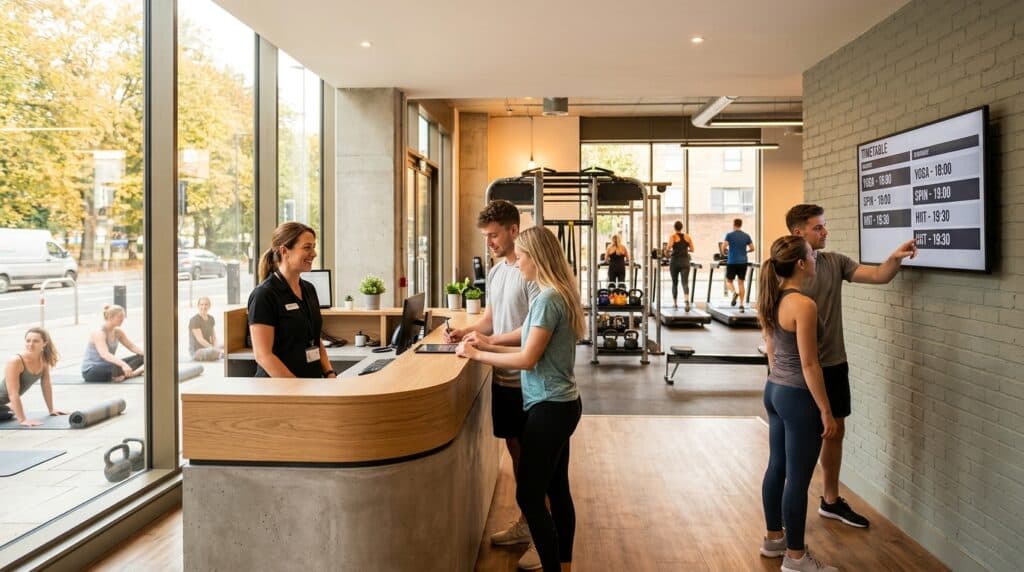
Not just the full timetable — a highlighted recommendation of two or three specific classes that fit the member’s stated goals and typical schedule. “Given that you mentioned you’re free Tuesday and Thursday evenings, [Class Name] at 6:30pm on Tuesdays is exactly what you’re looking for.” This personalised filter turns an overwhelming timetable into an actionable starting point.
5. How to get help
Who to approach with questions, how to book additional coaching, how to reach the gym outside of opening hours. Include a direct contact — a named person, not a generic email address — who the member can contact if anything is not working. This detail signals care and accessibility.
6. Community signposts
Links to your member WhatsApp group or social media community (if you have one), your Instagram account, and any upcoming events or challenges the new member can join. The social dimension of gym membership is a powerful retention driver; the welcome pack is where it starts.
7. The first 30-day check-in booking
A direct ask: “Book your 30-day check-in now — 15 minutes with a coach to review your first month and adjust your programme.” A booking link (or a specific time offered at the induction) converts far better than a follow-up email a month later. The check-in itself is a significant retention event.
The Follow-Up Welcome Sequence
The welcome pack is day zero. The follow-up messages in the first month reinforce it:
- Day 3: “How did your first couple of sessions go? Any questions about the programme?” — from the staff member who conducted the induction
- Day 7: A brief coaching tip related to their stated goal — adds value and signals ongoing attention
- Day 14: Class recommendation reminder if they have not attended a class yet — “Have you made it to [Class Name] yet? It tends to be quieter on [specific day] if that works better”
- Day 28: The 30-day check-in reminder and confirmation
This sequence can be automated via your gym management software for the timing, but personalised by the staff member who conducted the induction for the content. The combination of reliable timing and genuine personal attention converts better than either alone.
GymPal helps UK fitness-seekers discover independent gyms. Claim your free GymPal listing — and give every member who finds you through search the first impression that leads to the kind of welcome experience that keeps them for years.

I am Adam Hall, a dedicated fitness professional with over ten years of experience in the UK’s fitness industry. I earned my Master’s degree in Sports Science from Loughborough University and have worked with several top fitness studios across the UK. My certifications include a Level 3 Personal Trainer Certificate and a specialised Strength and Conditioning Coach accreditation.
Starting my career as a personal trainer, I quickly moved up to manage multiple gym locations, overseeing their operations and training programs. Beyond managing gyms, I regularly contribute to well-known fitness magazines and have been featured in articles for “Health & Fitness” and “Men’s Health”. My passion also extends online where I run a popular blog on GymPal’s AI-powered directory platform detailing insights into choosing the right fitness venues across the UK. With hundreds of posts reaching thousands of readers monthly, my goal is to influence positive changes in how people approach health and exercise throughout the country.