Personal Trainer Costs UK: What You’ll Actually Pay in 2026
Click Below To Share & Ask AI to Summarize This Article
Booking a session with a personal trainer sounds simple until you start looking at prices and find them all over the place — £25 here, £90 there, and no obvious reason why. Whether you’re after weekly accountability, help with technique, or a structured plan to hit a specific goal, understanding what you’re actually paying for makes it much easier to budget and to spot a fair deal.
This guide breaks down real UK personal trainer costs for 2026, what changes the price, and how to make sure you’re getting proper value — not just a friendly face counting your reps.
How Much Does a Personal Trainer Cost in the UK?
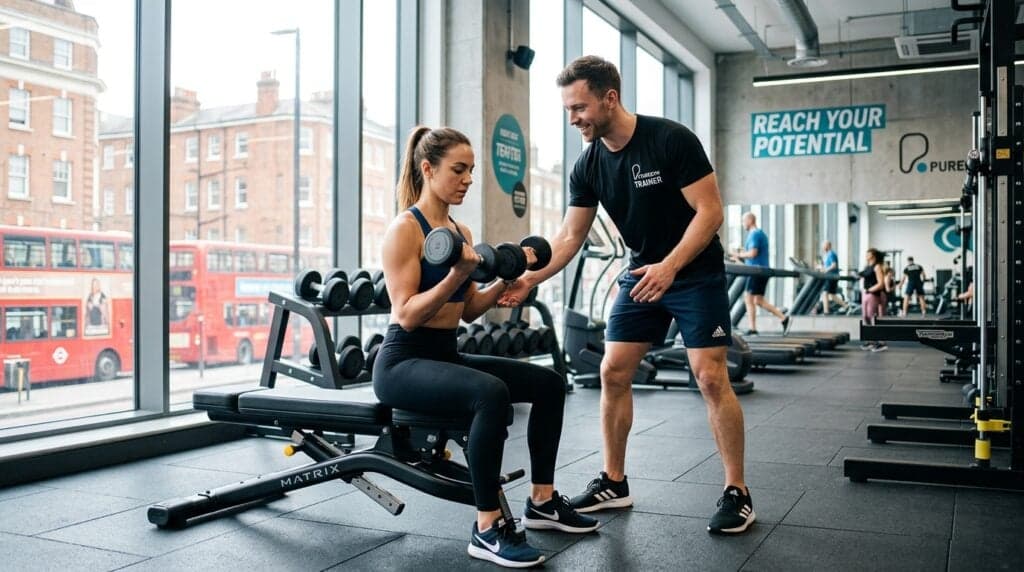
Prices vary hugely depending on where you live and who you train with, but here’s a realistic snapshot for 2026:
- Gym-based PT (1:1, 60 minutes): £30–£60 per session outside major cities, £50–£90+ in London and the South East
- Freelance/independent PT (own studio or outdoor sessions): £35–£70 per session
- Online coaching (programming + check-ins, no in-person time): £60–£150 per month
- Small group PT (2–4 people): £15–£30 per person per session
Most trainers offer package discounts, so a block of 10 sessions is usually 10–20% cheaper per session than paying one at a time. If you’re training twice a week with a mid-range trainer, budget somewhere between £280 and £480 a month once you factor in package pricing.
Personal Trainer Costs by UK Region
National averages hide a lot of local variation, so here’s a rough regional guide for a standard 60-minute, 1:1 session with a Level 3 qualified trainer:
- Central London: £55–£100+
- Outer London and the South East: £45–£75
- Manchester, Birmingham, Leeds city centres: £35–£65
- Bristol, Cardiff, Edinburgh, Glasgow: £35–£60
- Smaller towns and rural areas: £25–£45
- Northern Ireland: £25–£50
These figures are for general strength and fitness coaching. Specialist areas — sports-specific conditioning, rehab work alongside a physio referral, or pre/post-natal training — typically add £5–£15 per session on top of the local baseline, reflecting the extra qualifications involved.
What Actually Affects the Price
A handful of factors explain most of the price difference you’ll see between trainers:
Location. Central London, Manchester city centre, and Edinburgh’s New Town all command a premium simply because rent and demand are higher. Move ten miles out and the same qualified trainer might charge 30% less.
Qualifications and specialism. A trainer with a Level 3 Personal Training qualification and a few years of general experience sits at the lower end. Someone with additional accreditation in areas like strength and conditioning, pre/post-natal training, or rehab tends to charge more — and often should, given the extra study involved.
Session length and format. A 30-minute express session naturally costs less than a full hour, and outdoor park sessions are usually cheaper than studio time because the trainer isn’t paying rent on a space.
Who employs the trainer. Trainers renting floor space in a big-chain gym often set their own rates, while trainers who are directly employed by a boutique studio may be priced into the studio’s own membership structure.
Demand and time slot. Early morning and evening slots (before 9am and after 5pm) are the most requested times for anyone working a standard day, and trainers know it — some charge a small premium for peak-hours bookings, while daytime midweek sessions are sometimes discounted to fill quieter diaries.
Gym PT vs Independent PT vs Online Coaching
Gym-based trainers are the easiest starting point if you’re already a member somewhere, since you can often book a free consultation on the spot. The trade-off is that you’re limited to that gym’s equipment and opening hours, and your budget for a trainer sits on top of whatever you’re already paying for membership. If you haven’t settled on a gym yet, it’s worth comparing options properly — a proper checklist for choosing a gym will save you from picking somewhere with a great trainer but an awful commute.
Independent trainers, whether they run their own studio or train clients outdoors, tend to offer more flexibility on scheduling and programming since they’re not tied to a single gym’s rules. They’re also worth considering if you want sessions somewhere other than a conventional gym floor — a park, your garden, or a rented studio space.
Online coaching has grown fast because it strips out the cost of a trainer’s time and space, replacing in-person sessions with a tailored programme, video form checks, and regular check-ins by message or call. It’s the cheapest route to genuinely personalised training, but it demands more self-discipline since nobody’s stood next to you counting your last rep.
A hybrid approach works well for a lot of people: a handful of in-person sessions to nail down technique on the big lifts, followed by ongoing online programming to keep costs manageable while still getting expert input on progression.
Questions Worth Asking Before You Book
A short conversation before you hand over any money can save you from a wasted package. Useful questions include:
- What’s included in the price — just the session, or programming and nutrition guidance too?
- What happens if I need to cancel or reschedule at short notice?
- Do unused sessions in a package expire, and if so, when?
- Have you trained clients with similar goals or injury history to mine before?
- Can I try a single session before committing to a block?
Cancellation policies catch people out more than anything else. Many trainers require 24–48 hours’ notice or the session is charged in full, which is fair given they’ve held that time slot for you — but it’s worth knowing upfront rather than finding out after a missed lie-in costs you £50.
How to Check a Trainer Is Properly Qualified
Anyone can call themselves a “personal trainer” in the UK — there’s no legal requirement to hold a qualification, which means it’s entirely on you to check. At minimum, look for a REPs (Register of Exercise Professionals) listing or membership with CIMSPA, the recognised professional body for the UK’s sport and physical activity sector. Both confirm the trainer holds a recognised Level 3 qualification and carries valid insurance.
It’s also worth asking directly about first aid certification (should be current, not expired), whether they carry public liability insurance, and how they’d adapt a session if you mentioned an old injury. A trainer who answers these clearly and without hesitation is generally one worth trusting with your money.
Getting the Best Value From Every Session
The biggest waste of money with personal training isn’t the hourly rate — it’s paying for sessions that don’t move you toward anything specific. Before your first session, be clear about what you actually want: fat loss, strength, marathon prep, rehab after an injury, or just consistency because you struggle to show up alone.
Most trainers offer a free or discounted first consultation, which is the ideal moment to test whether their style suits you before committing to a package. If stepping into a gym still feels intimidating, say so — a good trainer will build the first few sessions around getting you comfortable with the space, not just hammering you with a punishing workout to prove their worth.
Buying sessions in blocks of 10 or 20 is almost always cheaper per session than pay-as-you-go, but only commit to a block once you’ve had at least one trial session. And keep track of the bigger picture too: if you’re already stretching your budget on gym membership costs, it might make more sense to start with a shorter block of sessions focused purely on teaching you a programme you can run yourself.
Is a Personal Trainer Worth It?
For most people, the honest answer is: worth it in bursts rather than forever. A block of sessions to learn proper technique, break through a plateau, or get moving after time off tends to deliver far more value than open-ended weekly sessions with no end point in sight. Treat it as an investment in learning how to train yourself well, not a permanent subscription.
Think in terms of specific outcomes rather than an ongoing arrangement: “learn to squat and deadlift properly over six weeks” is a much better brief than “help me get fit,” and it gives both you and the trainer a clear point at which to review progress and decide whether to continue, switch to occasional check-ins, or step away having got what you needed.
It’s also worth revisiting the arrangement every few months even if things are going well. Goals change, budgets change, and a trainer who was exactly right for building a strength base might not be the best fit once you’re focused on a half marathon or recovering from a minor injury. There’s no loyalty penalty for moving on to someone better suited to your next phase — a professional trainer will understand that completely.
If you’re weighing up where to actually train, GymPal’s gym finder lets you filter for facilities with in-house personal trainers nearby, so you can compare gyms and PT availability in one search rather than working it out gym by gym across dozens of individual websites.

I am Adam Hall, a dedicated fitness professional with over ten years of experience in the UK’s fitness industry. I earned my Master’s degree in Sports Science from Loughborough University and have worked with several top fitness studios across the UK. My certifications include a Level 3 Personal Trainer Certificate and a specialised Strength and Conditioning Coach accreditation.
Starting my career as a personal trainer, I quickly moved up to manage multiple gym locations, overseeing their operations and training programs. Beyond managing gyms, I regularly contribute to well-known fitness magazines and have been featured in articles for “Health & Fitness” and “Men’s Health”. My passion also extends online where I run a popular blog on GymPal’s AI-powered directory platform detailing insights into choosing the right fitness venues across the UK. With hundreds of posts reaching thousands of readers monthly, my goal is to influence positive changes in how people approach health and exercise throughout the country.