UK Bootcamp Fitness Classes: Your Complete Guide
Click Below To Share & Ask AI to Summarize This Article
Whether you’ve seen a group of people doing burpees in your local park at 6am or spotted a fitness studio advertising “military-style” training, bootcamp classes have become one of the most popular ways to get fit across the UK. But what exactly is a bootcamp workout, what should you expect from your first session, and how do you find the right class for you? (see NHS physical activity guidelines for adults) (see Sport England Active Lives survey)
This guide covers everything you need to know — from the formats and genuine benefits of bootcamp training to practical tips on finding classes near you. Whether you’re a complete beginner or a gym regular looking for something different, there’s a bootcamp out there with your name on it.
What Is a Bootcamp Fitness Class?
The term “bootcamp” is borrowed from military training and describes high-intensity group workouts that combine cardiovascular exercise with strength and conditioning. In practice, this usually means circuits of bodyweight movements, sprints, partner exercises, and equipment-based drills — all delivered at a pace designed to push you.
Unlike a standard gym class or spin session, bootcamp is deliberately varied. You might spend five minutes on kettlebell swings, then move straight into shuttle runs, box jumps, press-ups, and battle ropes — all within a single 45–60 minute session. That unpredictability is half the appeal. Your body never quite knows what’s coming next, which means you’re constantly adapting and improving.
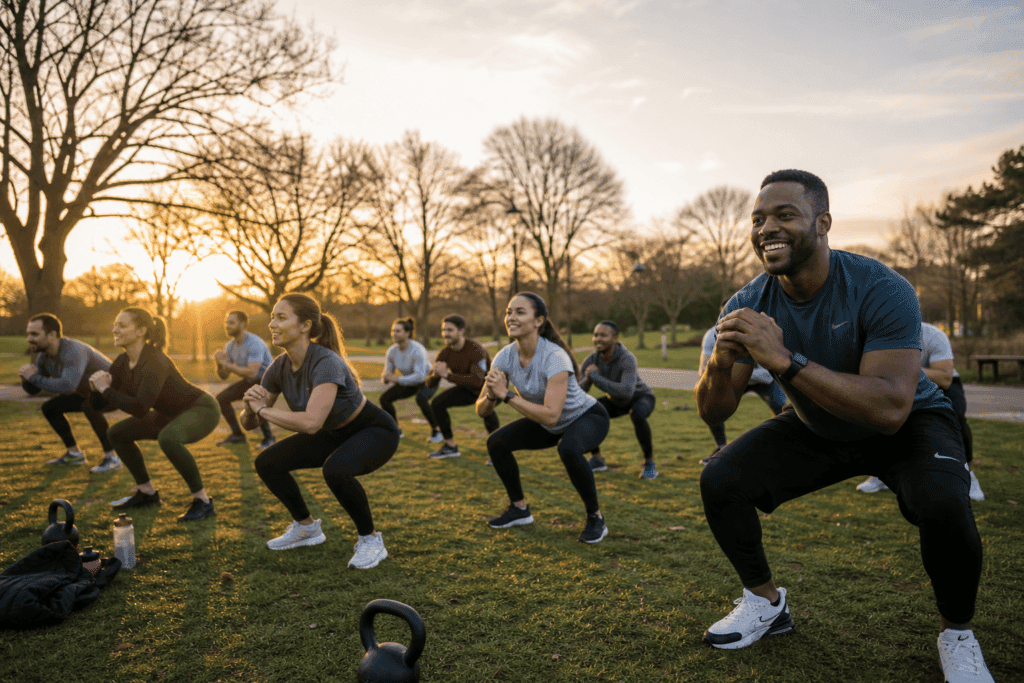
Sessions run both indoors (at gyms, leisure centres, and dedicated studios) and outdoors (in parks, on beaches, and even on football pitches). Outdoor bootcamps are particularly popular in British cities from spring through autumn, though plenty of die-hard groups train year-round regardless of the weather — it does build character, after all.
The Real Benefits of Bootcamp Training
Bootcamp gets results, and there’s a simple reason for it: it combines the intensity of interval training with the accountability of a group. Here’s what you can genuinely expect from consistent bootcamp attendance:
Full-Body Conditioning in Less Time
Most bootcamp sessions last 45–60 minutes, yet deliver a workout that would take twice as long to replicate in a traditional gym. Because you’re moving almost continuously — transitioning between exercises with minimal rest — you’re burning calories, building functional strength, and improving your cardiovascular fitness all at once.
Community and Accountability
One of the most underrated benefits of bootcamp is the group dynamic. When you’ve paid for a class and you know the instructor — and your training partners — are expecting you, you’re far more likely to show up. And once you’re there, the energy of training alongside others pushes you harder than you’d push yourself alone.
Many UK bootcamp regulars describe their class as a social lifeline as much as a fitness routine. It’s not unusual for genuine friendships to form around shared suffering on a Tuesday morning circuit.
Scalable for All Fitness Levels
Good bootcamp instructors always provide modifications. Can’t do a full press-up yet? You’re on your knees. Knee issues preventing lunges? Here’s an alternative. The class adapts to you, not the other way around. This makes bootcamp genuinely accessible for beginners, not just the already-fit.
Improved Mental Resilience
Regularly doing hard things in a supportive environment has a spillover effect on everyday life. Many bootcamp regulars report improved stress management, better sleep, and greater confidence — benefits that go well beyond the physical.
Types of Bootcamp Classes in the UK
Bootcamp isn’t a single format — it’s an umbrella term covering several distinct approaches. Here are the main types you’ll encounter:
Outdoor Park Bootcamps
These are the classic format: early mornings in your local park with a qualified PT leading 10–20 people through circuits using bodyweight exercises, resistance bands, and sometimes portable equipment like sandbags or battle ropes. They tend to be affordable (£8–15 per session or cheaper on a block booking) and are found in virtually every UK city and large town.
Popular parks for outdoor bootcamps include Victoria Park in London, Sefton Park in Liverpool, Kelvingrove Park in Glasgow, and Pontcanna Fields in Cardiff — but you’ll find sessions everywhere from Hyde Park to your local recreation ground.
Gym-Based Bootcamp Classes
Many gyms and leisure centres run bootcamp-style classes as part of their group fitness timetable. These tend to use a mix of gym equipment (rowing machines, kettlebells, slam balls, TRX) alongside bodyweight work. The indoor format means you can train through winter without battling the elements, and most gym memberships include class access.
Specialist Bootcamp Studios
Dedicated bootcamp and HIIT studios have grown significantly across the UK, particularly in larger cities. Brands like Barry’s (London, Manchester, Edinburgh), F45 Training, and various independent operators offer structured, coach-led programmes that take the bootcamp ethos and package it into a premium studio experience.
Corporate and Workplace Bootcamps
Increasingly, UK businesses are bringing personal trainers into offices or nearby green spaces for lunchtime bootcamp sessions. If your company has a wellbeing programme, it’s worth asking whether group fitness sessions are included or available.
What to Expect on Your First Bootcamp Session
First sessions can feel daunting, but knowing what to expect makes a real difference. Here’s a typical structure:
- Warm-up (5–10 minutes): Dynamic stretching, light jogs, arm circles — getting the body ready to work.
- Circuit work (30–40 minutes): Multiple stations or rounds of exercises. You might do 40 seconds on, 20 seconds rest, cycling through 8–10 movements. Expect a mix of cardio (jumping jacks, high knees, burpees) and strength (squats, press-ups, lunges, core work).
- Cool-down (5–10 minutes): Static stretching and breathing — essential for recovery and reducing DOMS.
Most instructors will introduce themselves and ask about any injuries or medical conditions before the session begins. Don’t be shy about mentioning anything — a good instructor would far rather adjust than have you injure yourself.
Bring water, a towel if it’s an indoor session, and wear trainers suitable for multidirectional movement (cross-trainers rather than running shoes). Don’t worry about wearing the “right” kit — everyone starts somewhere.
How to Find Bootcamp Classes Near You
Finding a bootcamp class used to mean trawling through Facebook groups and flyers on lampposts. These days, it’s much simpler. GymPal lists bootcamp fitness venues and trainers across the UK, making it easy to discover what’s available in your area.
When searching for a bootcamp class, consider the following:
- Location and accessibility: An outdoor bootcamp a 20-minute drive away will get skipped. Find something walkable or easily commutable.
- Session times: Are the early morning or evening slots compatible with your schedule? Consistency is everything.
- Class size: Smaller classes (under 15) mean more attention from the instructor. Larger classes can be more energetic but feel less personal.
- Instructor qualifications: Look for a Level 3 Personal Trainer qualification as a minimum. Many bootcamp instructors also hold additional certifications in group exercise.
- Trial sessions: Most reputable bootcamp providers offer a free or reduced-price first session. Take them up on it before committing to a block booking.
You can also use GymPal to browse personal trainers in your area who offer bootcamp-style sessions alongside one-to-one coaching — a good option if you prefer a more tailored approach.
Bootcamp vs. Other Group Fitness Classes: Which Is Right for You?
Bootcamp sits in a specific part of the fitness spectrum. Here’s how it compares to other popular formats:
- Bootcamp vs. Gym: The gym offers more control over your programme but requires self-motivation and knowledge. Bootcamp provides structure, coaching, and community. Many people find a gym membership and bootcamp class work well together — use the gym for your individual training, bootcamp for the high-intensity group work.
- Bootcamp vs. Yoga or Pilates: These complement rather than compete. Yoga and Pilates build flexibility, core stability, and mobility — all of which support your bootcamp performance and reduce injury risk.
- Bootcamp vs. Spin/Cycling: Spin is purely cardiovascular and lower body. Bootcamp gives you a full-body workout and includes strength elements that spinning doesn’t cover.
- Bootcamp vs. Boxing: There’s significant overlap. Many boxing fitness classes incorporate bootcamp-style conditioning work. If you enjoy bootcamp, a boxing fitness class is an easy adjacent move.
Bootcamp for Beginners: Tips for Getting Started
You don’t need to be fit to start bootcamp — that’s a common misconception. You start where you are. That said, a few tips will help your early sessions go smoothly:
- Go at your own pace: Don’t race to keep up with people who’ve been training for months. Work hard within your own capacity.
- Speak up about injuries: A good instructor will modify exercises. An unaddressed injury will derail your training far more than a brief modification conversation.
- Fuel properly: Eat a light meal or snack 1–2 hours before a bootcamp session. Turning up on an empty stomach for a high-intensity class is a recipe for a rough experience.
- Expect to be sore: DOMS (delayed onset muscle soreness) is normal, especially after your first few sessions. Active recovery — walking, light stretching, swimming — helps more than complete rest.
- Commit to three sessions before judging: The first session is usually the most overwhelming. By session three you’ll know the format, recognise the other participants, and have a much clearer sense of whether this class is for you.
Find Your Local Bootcamp Today
Bootcamp training offers something genuinely hard to replicate: high-intensity, structured, community-driven fitness that gets results without requiring hours in the gym. For busy UK adults who want maximum return on their fitness time investment, it’s one of the most effective options available.
Ready to find a class? GymPal makes it easy to discover bootcamp venues, outdoor fitness classes, and personal trainers running group sessions across the UK. Whether you’re in London, Manchester, Birmingham, Edinburgh, or anywhere in between, there’s a class waiting for you — and your first session could be this week.
Stop scrolling. Start sweating.

I am Adam Hall, a dedicated fitness professional with over ten years of experience in the UK’s fitness industry. I earned my Master’s degree in Sports Science from Loughborough University and have worked with several top fitness studios across the UK. My certifications include a Level 3 Personal Trainer Certificate and a specialised Strength and Conditioning Coach accreditation.
Starting my career as a personal trainer, I quickly moved up to manage multiple gym locations, overseeing their operations and training programs. Beyond managing gyms, I regularly contribute to well-known fitness magazines and have been featured in articles for “Health & Fitness” and “Men’s Health”. My passion also extends online where I run a popular blog on GymPal’s AI-powered directory platform detailing insights into choosing the right fitness venues across the UK. With hundreds of posts reaching thousands of readers monthly, my goal is to influence positive changes in how people approach health and exercise throughout the country.