From 5K to 10K: A UK Beginner’s Training Plan

Click Below To Share & Ask AI to Summarize This Article
So you’ve conquered your first 5K. Maybe it was a sweaty, triumphant parkrun finish, maybe it was the last session of a Couch to 5K plan — either way, you’ve proved you can run for half an hour without stopping. Now the question creeping in is obvious: what’s next?
For most UK runners, the answer is 10K. It’s the natural next step up — long enough to feel like a genuine achievement, short enough that you don’t need to rearrange your entire week around training. A 10K also opens the door to some of the best-loved events in the country, from the Great South Run to local charity 10Ks that pop up in nearly every town between spring and autumn.
The good news is that going from 5K to 10K doesn’t require a dramatic overhaul of your fitness. It requires patience, a sensible plan, and a bit of trust that your body adapts faster than your brain gives it credit for. Here’s exactly how to make the jump without burning out or getting injured along the way.
Why the Jump From 5K to 10K Feels Harder Than It Should
Doubling your distance sounds intimidating, but the physiology is kinder than the maths suggests. Running 5K comfortably means your body has already built the basic aerobic engine, running economy, and mental resilience needed for sustained effort. Going to 10K is mostly about extending your endurance at an easy pace, not running twice as hard.
The mistake most runners make is trying to run every session at 5K pace, just for longer. That’s a fast track to fatigue and niggles. Instead, the bulk of your 10K training should happen at a conversational, “could hold a chat” pace — noticeably slower than your current 5K pace. Save the faster running for one session a week, if at all, especially in the early weeks.
A sensible target is eight to ten weeks of training if you’re already comfortable running 5K two or three times a week. If you’ve just finished a plan like the Couch to 5K programme, give yourself a couple of easy weeks at your current distance before stepping up the volume, so your joints and tendons catch up with your newly improved cardiovascular fitness.
A Simple 8-Week Training Structure
You don’t need a complicated spreadsheet to build towards 10K. Three runs a week is enough for most beginners, with at least one full rest day between harder efforts.
Weeks 1–2: Run 5K comfortably three times a week. Focus on consistency, not speed. This is about banking easy mileage.
Weeks 3–4: Extend one run each week by 1–1.5km. Keep the other two runs at your existing 5K distance. You should finish every run feeling like you could have done a bit more.
Weeks 5–6: Push your longest run to 7–8K. Introduce gentle variety into a second session — a few minutes at a slightly brisker pace within an otherwise easy run — while keeping your third run short and relaxed.
Weeks 7–8: Build your long run to 9–10K at an easy pace. In the final week before any event, cut your volume right back — two shorter, easy runs plus plenty of rest — so you arrive fresh rather than fatigued.
If a week feels too much, repeat it rather than pushing on. Fitness gains from running come from recovering between sessions as much as from the sessions themselves, and rushing the plan is the single biggest cause of the knee, shin and Achilles injuries that sideline new 10K runners.
Cross-Training Days Matter More Than You Think
Running three times a week leaves four days where you’re either resting or doing something else, and that “something else” is where a lot of 10K progress quietly happens. Low-impact cardio builds aerobic capacity without adding to the repetitive pounding your legs are already absorbing from running.
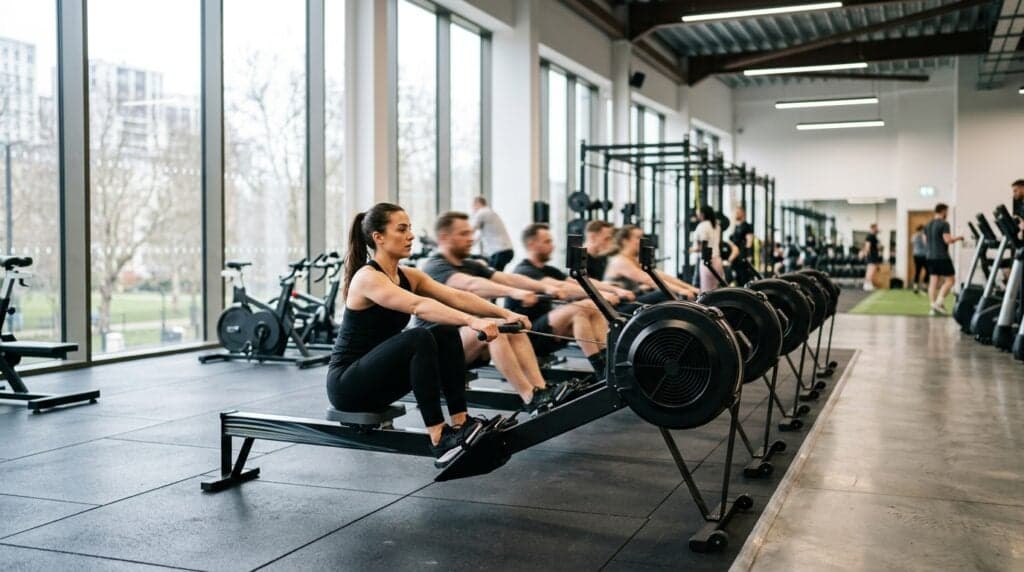
The rowing machine is one of the best options here, because it trains your cardiovascular system and your posterior chain — hamstrings, glutes, back — which running alone tends to neglect. If you’ve not used one before, working through some structured rowing machine workouts on an easy or moderate setting is a genuinely effective way to add fitness without adding running-specific fatigue. Twenty minutes, twice a week, is plenty alongside your running schedule.
Swimming, cycling, or a steady session on the cross-trainer all work on the same principle. The goal on these days is to keep your heart rate up without hammering the same muscles and joints that are adapting to your increasing running volume.
Fuelling and Hydration for Longer Runs
At 5K, most people can get away with running on whatever they had for breakfast. At 10K, especially once your long run creeps past 45–50 minutes, what you eat and drink starts to matter more.
Eat a carbohydrate-based meal or snack 1–3 hours before a longer run — porridge, toast with banana, or a bagel all work well. Avoid heavy, fatty, or high-fibre meals right before running, since they sit poorly during exercise. You generally don’t need to fuel during a run shorter than an hour, but do carry water on warmer days or if you’re prone to dehydration.
After your long run, aim to eat something with both carbohydrate and protein within an hour or two — a proper meal, a protein shake with fruit, or even just beans on toast. This supports muscle repair and tops up the glycogen stores you’ve just used, setting you up properly for your next session rather than starting it already depleted.
Recovery Is Where the Fitness Actually Builds
It’s tempting to think progress happens during the run itself, but the adaptation — stronger muscles, a more efficient heart, tougher connective tissue — happens in the hours and days afterwards, provided you give your body the chance. Skipping recovery is how a promising 10K block turns into shin splints or a nagging Achilles strain.
Sleep is the single biggest lever here, followed by simple things like gentle stretching, foam rolling, and not scheduling two hard efforts back-to-back. If you want a fuller breakdown of what actually helps versus what’s mostly myth, our guide to rest and recovery covers the practical basics that apply just as well to runners as to lifters.
Listen to your body’s warning signs, too. A dull, general tiredness is normal; a sharp pain that changes how you walk is not. Most running niggles are entirely avoidable with gradual progression and decent footwear, but it’s worth addressing the sharp ones early rather than hoping they fade on their own.
Do You Need New Kit for 10K?
You don’t need to spend a fortune to go from 5K to 10K, but a couple of things are worth checking before you ramp up the mileage. The biggest one is your trainers. Running shoes are generally good for 500–800km before the cushioning breaks down, and if yours have already clocked up a few months of regular 5K runs, they may be closer to the end of their life than you think. Worn-out cushioning is a common, easily avoidable contributor to the niggles that crop up when weekly mileage increases.
Beyond footwear, the extra time on your feet makes a few comfort details matter more than they did at 5K. Moisture-wicking socks cut down on blisters over longer efforts, and if you’re running for 50 minutes or more, chafing in places you didn’t expect becomes a real possibility — a bit of anti-chafe balm on inner thighs or underarms solves this cheaply. None of this needs to be expensive or branded; it just needs to actually fit and function, which a quick try-before-you-buy at a proper running shop will sort out far better than guessing online.
A chest strap or watch-based heart rate monitor isn’t essential, but it does make “easy pace” much easier to stick to honestly. Plenty of newer runners think they’re running easy when they’re actually working at a moderate effort, which is exactly the trap that leads to burnout halfway through an 8-week block.
Picking Your First 10K and Getting Race-Ready
Once you’re consistently covering 8–9K in training, you’re ready to pick a date. The UK has 10K events virtually every weekend from March through to October, ranging from big-city races with closed roads and finish-line bands to small local charity runs that loop through a park a couple of times. Both are equally valid — the atmosphere of a big event can be brilliant for motivation, but a quieter local 10K is often less stressful for your first attempt.
On race day, resist the urge to set off at a pace faster than anything you’ve trained at. Start conservatively for the first kilometre or two — you can always speed up in the second half if you’re feeling strong, but you can’t undo a start that’s too quick. Many first-time 10K runners post a faster second half simply by holding back early on.
Practical race-day details make a bigger difference than people expect. Check the start time and arrive with enough margin to find parking or your train, use the loo, and still have 15–20 minutes to warm up with some easy walking and light jogging. Lay out your kit the night before, pin your number on early, and avoid trying anything new on the day itself — new shoes, new breakfast, new gel — because race morning is not the time to discover your stomach disagrees with something. Most UK 10Ks are chip-timed and extremely well marshalled, so you’ll rarely need to think about navigation; your only job is to run your own sensible pace and enjoy the crowd support.
If you train indoors through autumn and winter, or want variety alongside your outdoor running, searching GymPal’s directory of UK gyms and fitness venues is a quick way to find somewhere nearby with a decent treadmill, pool, or rowing machine for those cross-training days.
The Takeaway
Going from 5K to 10K isn’t about running harder — it’s about running smarter, building volume gradually, and respecting recovery as much as the sessions themselves. Stick to mostly easy pace, add distance in small increments, fuel properly for longer efforts, and cross-train on your rest days, and 10K will feel like a natural progression rather than a leap. Pick an event, commit to eight weeks, and you’ll be lining up at the start line before you know it.

I am Adam Hall, a dedicated fitness professional with over ten years of experience in the UK’s fitness industry. I earned my Master’s degree in Sports Science from Loughborough University and have worked with several top fitness studios across the UK. My certifications include a Level 3 Personal Trainer Certificate and a specialised Strength and Conditioning Coach accreditation.
Starting my career as a personal trainer, I quickly moved up to manage multiple gym locations, overseeing their operations and training programs. Beyond managing gyms, I regularly contribute to well-known fitness magazines and have been featured in articles for “Health & Fitness” and “Men’s Health”. My passion also extends online where I run a popular blog on GymPal’s AI-powered directory platform detailing insights into choosing the right fitness venues across the UK. With hundreds of posts reaching thousands of readers monthly, my goal is to influence positive changes in how people approach health and exercise throughout the country.