Postnatal Fitness UK: Safely Returning to the Gym After Birth
Click Below To Share & Ask AI to Summarize This Article
Nobody quite prepares you for how strange that first walk back into a gym feels after having a baby. Your body has done something extraordinary, your sleep is in pieces, and the kit bag you used to grab without thinking now needs a nappy bag, a changing mat and a small miracle of timing to go with it. If you’re staring at your trainers wondering whether you’re “allowed” back on the gym floor yet, you’re not alone — and the answer is almost always yes, just not in the way you left it.
Postnatal fitness isn’t about bouncing back to a pre-baby body by a certain date. It’s about rebuilding strength, energy and confidence at a pace your body can actually handle, with proper attention to the parts of you that carried and delivered a baby. Rush it, and you risk pelvic floor problems, back pain or a frustrating setback. Take it steady and sensible, and most new mums in the UK are back to meaningful training within three to six months — often stronger and more switched on to their bodies than before.
This guide walks through when to start, what to prioritise first, and how to find a gym environment that actually supports you rather than making you feel like you’ve got something to prove.
When Can You Start Exercising Again After Birth?
The honest answer is: it depends, and there’s no shortcut around that. If you had an uncomplicated vaginal delivery, gentle walking and pelvic floor exercises can usually start within days. For most other activity, you should wait for your six-to-eight week postnatal check with your GP before resuming anything more structured — and if you had a caesarean section, forceps delivery, or any tearing or complications, that timeline often stretches further and should be guided by your midwife or GP rather than a fitness plan you found online.
According to the NHS’s guidance on recovering from birth, it’s safe to do some gentle exercise as soon as you feel ready, but high-impact activity like running, jumping or heavy lifting needs to wait until your pelvic floor and abdominal muscles have recovered enough to cope with the load. Every body’s timeline is different — a straightforward birth and a complicated one simply aren’t the same starting point, and comparing yourself to a friend who was “back at Pilates in three weeks” helps nobody.
A good rule of thumb: if anything leaks, drags, bulges or causes pain during or after exercise, that’s your body telling you to scale back and possibly get checked by a women’s health physiotherapist before pushing on.
Why Your Core and Pelvic Floor Need Attention First
Pregnancy and birth put serious strain on your deep core and pelvic floor, whether you delivered vaginally or by caesarean. Up to a third of women experience some degree of diastasis recti — a separation of the abdominal muscles down the midline — and it doesn’t automatically resolve without targeted work. Jumping straight back into sit-ups, planks or heavy squats before these muscles have reconnected can make the gap worse and increase your risk of a hernia further down the line.
The fix isn’t to avoid your core entirely — it’s to retrain it properly. Start with breathing-led exercises: deep diaphragmatic breaths paired with a gentle pelvic floor lift, done lying down or seated, rebuild the connection between your breath, your deep core and your pelvic floor before you ask them to do anything harder. Many NHS trusts now offer postnatal physio referrals, and some GP surgeries will refer you directly if you mention ongoing symptoms at your six-week check — it’s worth asking rather than assuming you’ll just be sent away.
Once that foundation feels solid, usually after a few weeks of consistent practice, you can progress to modified core work — bird dogs, dead bugs, and gentle bridges — well before you’re ready for anything resembling a traditional ab workout.
Finding a Gym Environment That Actually Works for You
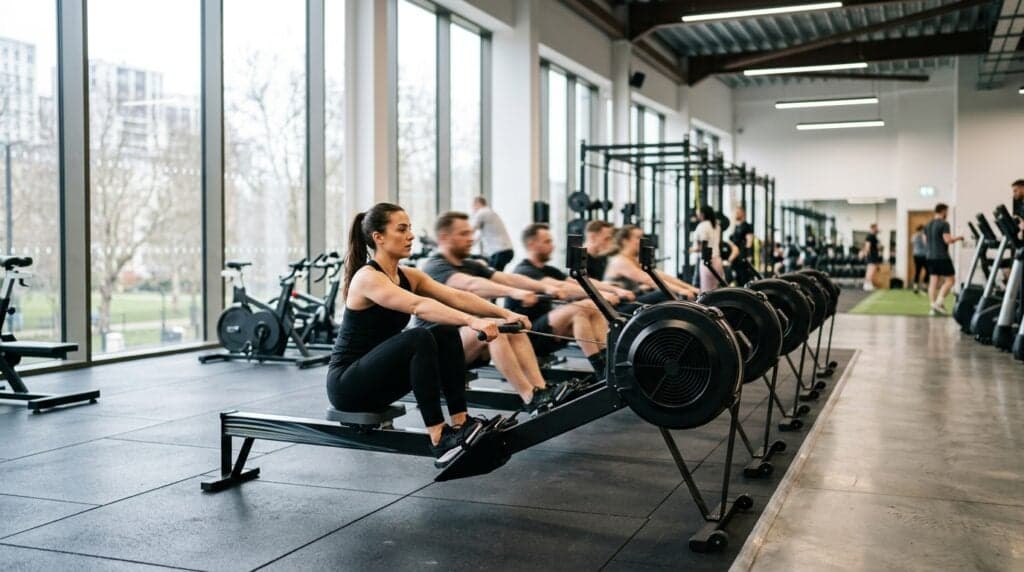
Where you train matters just as much as what you do. Turning up to a packed free-weights area at 6pm with a baby brain fog and a leaking pelvic floor is a recipe for feeling awful about the whole experience. Look for gyms with a quieter daytime window, a crèche or baby club, or dedicated postnatal classes — a growing number of independent studios across the UK now run “mum and baby” sessions where it’s completely normal to pause for a feed or a nappy change mid-set.
If self-consciousness about your changed body is holding you back, it’s worth knowing that women-only gyms have grown substantially in the UK precisely because new and expectant mums wanted a space without feeling watched. Plenty of women find that training somewhere single-sex for the first few months back makes the difference between skipping sessions and actually showing up.
Whatever setup you choose, tell the staff you’re postnatal. A decent gym or studio will adapt a class or programme accordingly rather than just handing you the standard plan — and if they don’t, that’s useful information about whether it’s the right gym for you right now.
Low-Impact Ways to Rebuild Your Fitness
Before you’re ready for anything high-impact, low-impact cardio is your best friend. Walking is the obvious starting point — pushing a pram up a hill is a genuinely decent workout — but swimming and water-based classes deserve more credit than they get. The water supports your joints and pelvic floor while still giving your heart and lungs a proper workout, which is exactly what postnatal bodies need.
If you’ve never tried it, aqua aerobics classes are widely available at leisure centres across the UK, typically costing between £5 and £9 a session as a pay-as-you-go option, and most instructors are used to postnatal attendees. The buoyancy takes pressure off stretched abdominal muscles and healing scar tissue, making it one of the safest ways to get your heart rate up in those first few months.
Stationary cycling and the cross-trainer are other sensible low-impact options once you’re a little further along, since they build cardiovascular fitness without the jarring impact of running on tarmac or a treadmill.
Rebuilding Strength: From Pilates to the Weights Room
Once your six-week check is done and you’ve got the all-clear, controlled strength work should become your priority — not endless cardio. Carrying, lifting and bending a baby all day is a strength demand in itself, and weak glutes, a weak back or an under-recovered core will catch up with you through niggling pain rather than dramatic injury.
Reformer and mat-based Pilates are a popular bridge back into structured exercise for exactly this reason — the controlled, low-load movements rebuild core and pelvic floor coordination without overloading tissue that’s still healing. If you’re weighing up whether to join a studio, a typical reformer Pilates class in the UK runs from around £20 to £35 per session, though many studios offer discounted postnatal packages worth asking about directly.
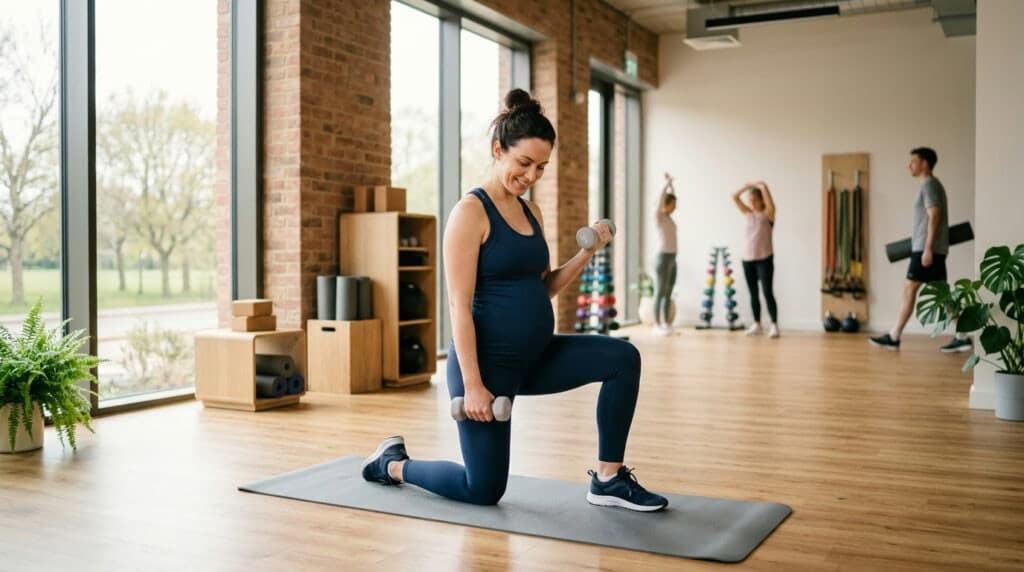
From there, progressing into the weights room with compound movements like goblet squats, deadlifts and rows — starting light and building gradually — is one of the most effective things you can do for long-term strength, bone density and energy levels as a new mum. There’s no need to rush to pre-pregnancy weights; most women find their strength returns faster than expected once the foundational work is in place.
Dealing With Time Pressure, Tiredness and Mum Guilt
Realistically, the biggest barrier isn’t your body — it’s finding 30 minutes that aren’t already spoken for. Be honest about what’s sustainable. Two or three short sessions a week, consistently, will do far more for you than an ambitious five-day plan you abandon after a fortnight of broken sleep.
Bring a partner, friend or family member in on the plan if you can — even 20 minutes of someone else holding the baby while you get to a class is often the difference between training and not. And try to let go of any guilt about the time: a stronger, fitter, more energised version of you is better placed to deal with the demands of a newborn, not a selfish distraction from them.
If motivation is the sticking point rather than logistics, training with other new mums tends to help enormously — shared experience makes the whole thing feel far less like a solo grind.
Finding the Right Gym for Your Postnatal Journey
The right gym for this stage of your life probably isn’t the same one that suited you before you had a baby — and that’s fine. You might want somewhere closer to home for those early, exhausted months, with a crèche, postnatal classes, or simply a daytime quiet period that fits around nap schedules.
GymPal’s UK gym search lets you filter by facilities and location so you can find somewhere that actually matches what you need right now, rather than just whatever’s nearest. It’s a straightforward way to compare options without ringing round half a dozen gyms yourself while juggling a baby on one hip.
Whatever you choose, remember that getting back into a gym after having a baby is a process, not a single milestone. Start with your pelvic floor and breath, build low-impact fitness gradually, and only progress into heavier strength work once your body, and ideally a physio, has given you the go-ahead. There’s no prize for getting there fastest — just a stronger, more capable you on the other side.
If you’re not sure where to start looking, GymPal is a good first stop for browsing what’s actually near you, so give yourself the same patience you’d give anyone else doing something this big.

I am Adam Hall, a dedicated fitness professional with over ten years of experience in the UK’s fitness industry. I earned my Master’s degree in Sports Science from Loughborough University and have worked with several top fitness studios across the UK. My certifications include a Level 3 Personal Trainer Certificate and a specialised Strength and Conditioning Coach accreditation.
Starting my career as a personal trainer, I quickly moved up to manage multiple gym locations, overseeing their operations and training programs. Beyond managing gyms, I regularly contribute to well-known fitness magazines and have been featured in articles for “Health & Fitness” and “Men’s Health”. My passion also extends online where I run a popular blog on GymPal’s AI-powered directory platform detailing insights into choosing the right fitness venues across the UK. With hundreds of posts reaching thousands of readers monthly, my goal is to influence positive changes in how people approach health and exercise throughout the country.