Exercise and Menopause: A UK Woman’s Guide to Training Through the Change
Click Below To Share & Ask AI to Summarize This Article
Somewhere between the ages of 45 and 55, millions of UK women notice that the gym routine they’ve relied on for years suddenly stops working the way it used to. Weights that used to feel manageable leave you wrecked for days. The scales creep up despite nothing else changing. Sleep gets patchy, energy dips without warning, and a hot flush mid-set can turn a confident workout into a scramble for the door. This is perimenopause and menopause doing exactly what they do — and it’s precisely the moment a lot of women quietly stop exercising altogether.
That’s the worst possible time to step back. The hormonal shifts of midlife accelerate muscle loss, weaken bones and change how your body stores fat, which means training smarter (not necessarily harder) becomes more important, not less. The good news is that with a few adjustments, the gym can become one of the most effective tools you have for managing symptoms and protecting long-term health.
This guide breaks down what’s physically changing, how to adapt your training around it, and how to find a gym environment in the UK that actually works with your body rather than against it.
What’s Actually Happening to Your Body (and Why Your Old Routine Stops Working)
Oestrogen does far more than regulate your cycle. It helps maintain muscle mass, supports bone density, influences how and where you store fat, and even affects joint lubrication and recovery speed. As levels fall during perimenopause and drop further after menopause, several things tend to happen at once: muscle mass declines faster than it did in your 30s, bone density loss speeds up (raising osteoporosis risk), fat tends to redistribute towards the abdomen, and joints can feel stiffer and slower to recover between sessions.
It’s worth saying plainly: this isn’t the first time your training has had to adapt around a major hormonal shift. Plenty of women go through something similar in the months after having a baby, when strength, energy and recovery all change at once and the old routine simply doesn’t fit any more. The principle that got you through that — rebuilding gradually and adjusting expectations rather than pushing through — applies just as well here, and the same patience that works for returning to the gym safely after birth is worth borrowing for this transition too.
None of this means you’re destined to lose fitness. It means the training that protects you most effectively in your 20s and 30s (lots of steady-state cardio, not much resistance work) is the opposite of what protects you best from your mid-40s onward. Bone density is worth taking particularly seriously: women can lose up to 10% of their bone mass in the first five years after their final period, and osteoporosis affects roughly one in two women over 50 in the UK at some point in their lives. Weight-bearing exercise is one of the few things proven to slow that loss, which is exactly why the training advice below leans so heavily on resistance work rather than the cardio-only habits many of us grew up with.
Perimenopause can also last considerably longer than most people expect — anywhere from a few months to around a decade before periods stop completely — which means these changes often creep in gradually rather than arriving all at once. That’s part of why so many women put the fatigue, joint stiffness or weight changes down to “just getting older” or stress, rather than recognising them as a hormonal shift that specific training choices can actually help with.
Strength Training Is Non-Negotiable Now
If you only change one thing about your routine, make it this: lift weights, and lift them regularly. Resistance training is the single most effective tool for slowing the muscle and bone loss that accelerates during menopause, and it’s also one of the best ways to manage the midlife shift in body composition, since muscle burns more resting energy than fat.
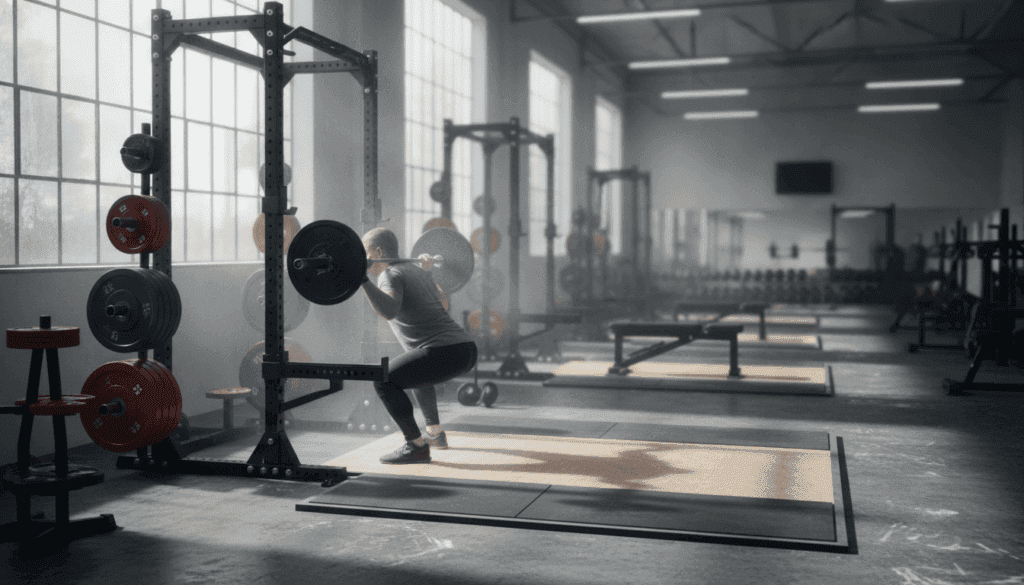
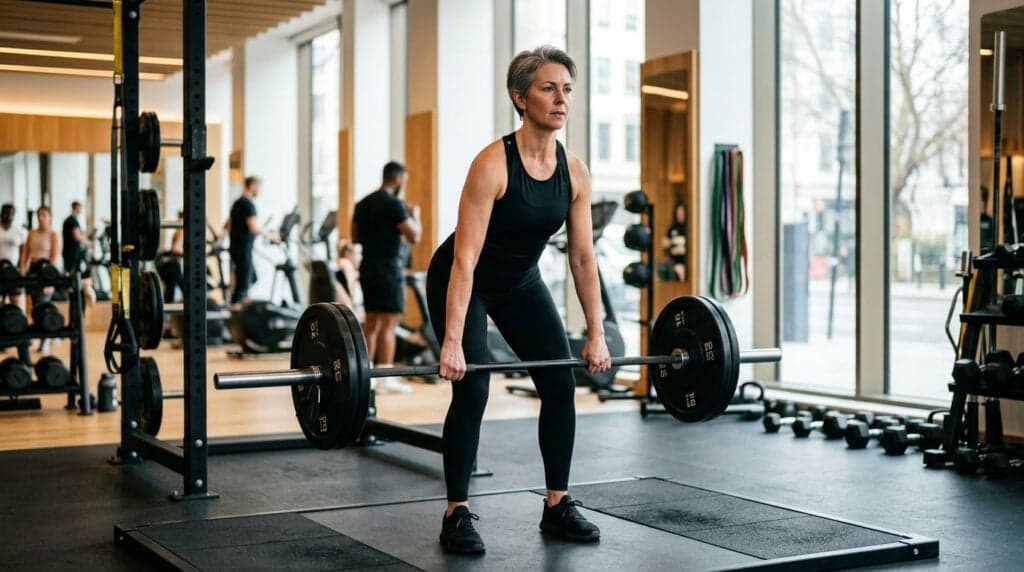
Aim for two to three resistance sessions a week, hitting all the major muscle groups, with a focus on progressive overload — gradually increasing weight, reps or sets over time rather than staying on autopilot with the same dumbbells for years. Compound lifts like squats, deadlifts, rows and presses give you the most bang for your buck, and they’re also weight-bearing, which is exactly the stimulus your bones need. If you’re newer to lifting or it’s been a while, building a proper foundation matters more than going heavy straight away; a structured look at strength training for women is a good place to start if you want the fundamentals right before adding load.
Don’t be put off by the myth that lifting will make you “bulky” — that’s never been true, and it’s especially irrelevant here, where the goal is preserving the muscle and bone you already have rather than building something new.
Cardio, Heart Health and Managing Weight Gain
Oestrogen has a protective effect on the cardiovascular system, which is one reason heart disease risk rises for women after menopause. Regular cardiovascular exercise — brisk walking, swimming, cycling, rowing — helps offset that risk, supports healthy blood pressure and cholesterol, and plays a genuine role in managing the weight gain many women experience during this stage.
You don’t need to chase intensity here. Two to three sessions a week of moderate cardio, ideally mixed with your strength training rather than instead of it, is enough to move the needle. The NHS’s guidance on managing menopause symptoms points to regular weight-bearing and aerobic exercise as one of the most effective non-medical ways to manage symptoms and protect long-term health, which lines up with what most UK gym-goers find in practice: consistency beats intensity every time.
If high-impact cardio has started to aggravate joints that feel stiffer than they used to, swapping some sessions for swimming, cycling or an incline treadmill walk keeps your heart rate up without the pounding.
Hot Flushes, Sleep and Low Energy: Working Around Symptoms, Not Against Them
Hot flushes mid-workout, broken sleep the night before, and energy that dips without warning are some of the most common reasons women tell us they’ve quietly stopped going to the gym. The fix usually isn’t to push through — it’s to restructure around the symptoms.
A few practical adjustments make a real difference: training earlier in the day or in a cooler part of the gym if flushes tend to strike with heat and exertion, choosing breathable, moisture-wicking kit over tight synthetic layers, keeping water close and sipping throughout rather than gulping at the end, and being honest with yourself about splitting one long session into two shorter ones on low-energy days rather than skipping entirely. If sleep has been disrupted, it’s worth accepting that some sessions will feel harder than they should — that’s a hormone problem, not a fitness problem, and it isn’t a reason to write off the whole week.
If symptoms are significantly affecting your day-to-day life, it’s worth speaking to your GP about the full range of options, including HRT, rather than trying to train your way through something that has medical solutions too.
Finding a Gym Environment That Works for You
Where you train matters as much as how. Some women find that a mixed, high-energy commercial gym floor starts to feel less appealing during menopause — self-consciousness about hot flushes, slower lifts, or simply wanting a calmer space is common and completely normal. This is a big part of why women-only gyms have grown so quickly across the UK; many are specifically designed around exactly this kind of life-stage transition, with smaller class sizes, better ventilation and a culture that doesn’t treat a mid-workout flush as a spectacle.
Smaller studios, strength-focused personal training, and women’s classes at your existing gym are all worth exploring if the main floor doesn’t feel right anymore. There’s no single correct environment — only the one that gets you back in three times a week consistently.
Building a Sustainable Weekly Routine
A realistic week during perimenopause or menopause might look like this: two to three strength sessions covering the full body, two cardio sessions (one of which can double up with a strength day as a short finisher), one mobility or yoga session to manage stiffness, and at least one full rest day. That’s roughly four to five gym visits a week, which is achievable for most people without burning out, and it covers every physiological base — muscle, bone, heart and joints.
The hardest part is usually the first few weeks of adjusting expectations. Progress may look different to how it did a decade ago, and that’s fine — the goal now is long-term resilience, not personal bests. Give any new routine at least six to eight weeks before judging whether it’s working; hormonal symptoms can mask genuine fitness progress in the short term, and plenty of women give up right before the benefits start showing.
Recovery deserves just as much planning as the workouts themselves. Stiffer joints and slower-to-repair muscle mean a proper warm-up and five to ten minutes of mobility work afterwards aren’t optional extras anymore — they’re what stops a strength session turning into three days of discomfort. Protein intake matters more too, since muscle becomes harder to maintain as oestrogen falls; aiming for a source of protein with each meal supports the resistance training doing the heavy lifting elsewhere in this plan.
If you’re not sure where to start or which type of gym suits this new routine, searching GymPal’s directory of UK gyms, studios and classes is a quick way to compare women-only gyms, strength-focused studios and local options before committing to a membership.
The Bottom Line
Menopause changes your body, but it doesn’t have to shrink your fitness. Strength training protects the muscle and bone you’re at risk of losing, moderate cardio protects your heart, and small practical adjustments around symptoms keep you consistent rather than constantly starting over. Find the right environment, be patient with the adjustment period, and treat this as a transition to train through — not a reason to stop. GymPal’s gym finder makes it easy to compare facilities near you so you can find the one that actually fits where you are right now.

I am Adam Hall, a dedicated fitness professional with over ten years of experience in the UK’s fitness industry. I earned my Master’s degree in Sports Science from Loughborough University and have worked with several top fitness studios across the UK. My certifications include a Level 3 Personal Trainer Certificate and a specialised Strength and Conditioning Coach accreditation.
Starting my career as a personal trainer, I quickly moved up to manage multiple gym locations, overseeing their operations and training programs. Beyond managing gyms, I regularly contribute to well-known fitness magazines and have been featured in articles for “Health & Fitness” and “Men’s Health”. My passion also extends online where I run a popular blog on GymPal’s AI-powered directory platform detailing insights into choosing the right fitness venues across the UK. With hundreds of posts reaching thousands of readers monthly, my goal is to influence positive changes in how people approach health and exercise throughout the country.