Hydration for Gym-Goers: How Much Water Do You Need?
Click Below To Share & Ask AI to Summarize This Article
Walk into any gym in the UK on a Tuesday evening and you’ll see it: someone three sets into a session, red in the face, nursing a sip from an empty bottle they forgot to refill. Hydration is the bit of training nobody talks about because it feels too basic to matter — yet it’s often the difference between a session that flies by and one where you’re flat by the second exercise.
Most of us know we’re “supposed” to drink more water, but UK gym culture rarely gets specific about how much, when, or why it changes depending on what you’re training for. Spin class and deadlifts don’t have the same fluid demands, and neither does a muggy July session versus a dry January one in a cold church-hall studio.
This guide breaks down exactly how much you need, when to drink it, and what to do when plain water isn’t enough — all tailored to training in the UK rather than generic advice written for a hotter climate.
How much water does a gym-goer actually need?
The general baseline for UK adults is 6-8 glasses of fluid a day (roughly 1.5-2 litres), and that’s before you factor in exercise. The NHS guidance on water, drinks and your health is a useful starting point, but it’s written for general population health, not for someone doing an hour of resistance training or a 10k tempo run.
As a practical rule, add 500-750ml for every hour of moderate-to-hard training, more if you’re sweating heavily or training somewhere warm. A useful gut check: if your urine is pale straw-coloured, you’re roughly on track. Dark yellow is a clear sign to drink more before your next session, not during it.
Your actual number shifts with a few things most generic advice ignores: body size, caffeine intake, and whether you’re training in a heated studio or an unheated church hall in February. Bigger frames generally need more fluid, caffeine has a mild diuretic effect so your morning coffee counts against your total rather than towards it, and a 45-minute spin class in a warm, packed studio will cost you noticeably more fluid than the same ride in a cold, well-ventilated space. Treat the 500-750ml figure as a floor, not a fixed number.
Hydrating for strength training versus cardio
Strength training and cardio put very different demands on your fluid balance, and lumping them together is where a lot of gym-goers go wrong. A heavy lifting session — squats, deadlifts, a full push day — often doesn’t feel like it makes you sweat buckets, but the exertion still raises your core temperature and increases fluid turnover between sets. The mistake here is assuming that because you’re not drenched, you don’t need to drink; dehydration during strength work shows up as a drop in grip strength and power output on your last few sets, long before you’d notice it any other way.
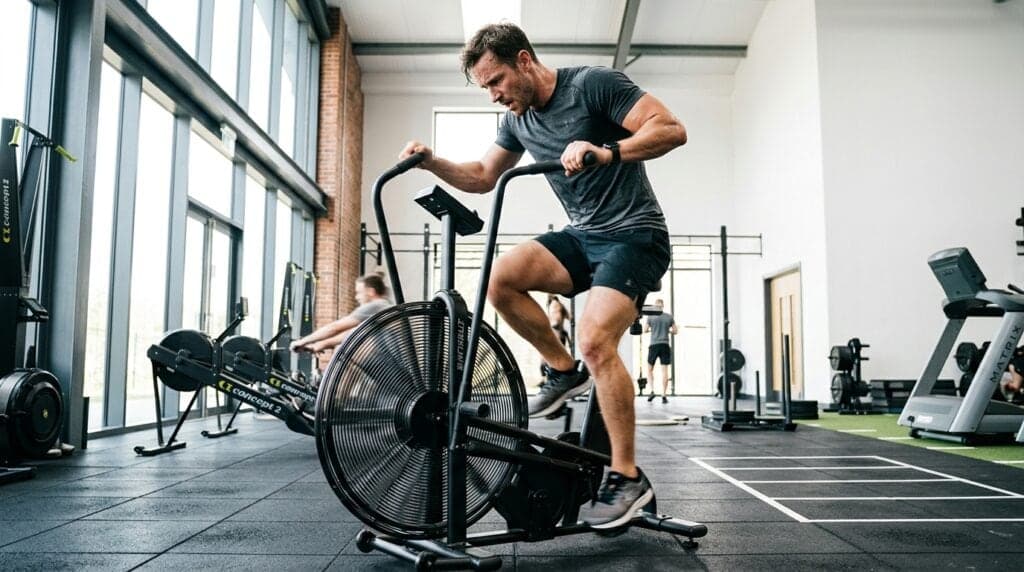
Cardio is the more obvious case: running, rowing, cycling and circuit classes all drive up sweat rate quickly, and the longer the session runs, the more your fluid losses compound. For anything over 45 minutes of continuous cardio, sipping steadily throughout — rather than waiting for a natural break — keeps your heart rate and perceived effort more stable. If you train both disciplines in the same week, it’s worth mentally tagging your cardio days as higher hydration priority and your strength days as “don’t skip it just because you’re not sweating as much.”
Hydrating before you even step on the gym floor
Turning up already dehydrated is the most common mistake, and it’s almost entirely avoidable. If you’ve had two coffees and no water since breakfast, no amount of sipping mid-workout will fully claw that back once you’re under the bar or on the rower.
Aim to drink 400-500ml in the 2-3 hours before training, finishing the bulk of it early enough that you’re not uncomfortable once you start moving. This matters even more if your session involves anything endurance-based — if you’re building towards a longer run, the pacing and fuelling habits in a structured plan like a 5K to 10K training plan only work if your hydration baseline is already sorted before you lace up.
What to drink during your session
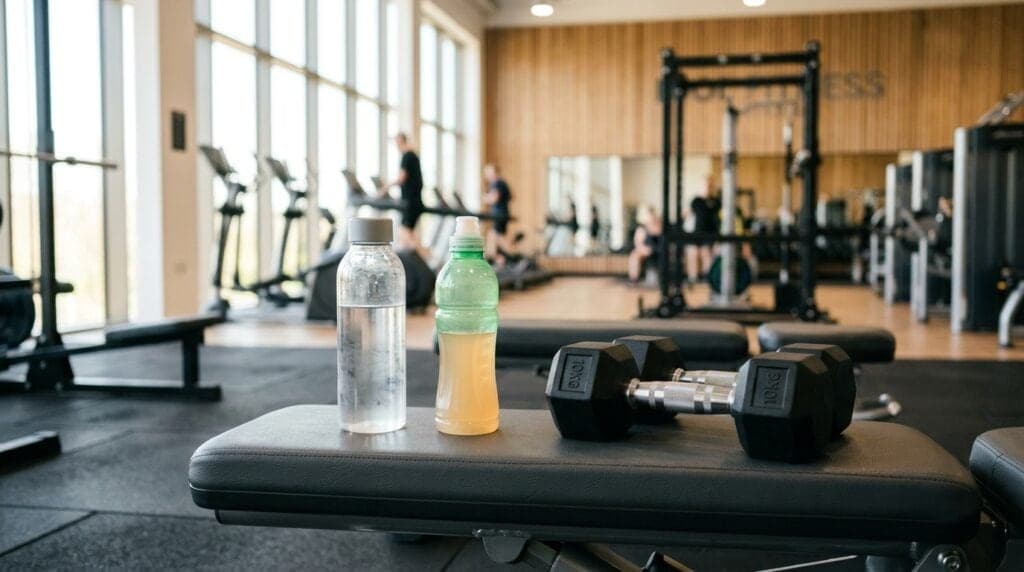
For most gym sessions under an hour, water is genuinely all you need. Little and often beats chugging a full bottle in one go — aim for small sips every 15-20 minutes rather than waiting until you’re thirsty, since thirst is already a lagging indicator that you’re behind.
Where it gets more nuanced is longer or sweatier sessions: an hour-plus of HIIT, a hot yoga class, or back-to-back classes on a Saturday morning. In those cases, you’re not just losing water, you’re losing sodium and other electrolytes through sweat, and that changes what “staying hydrated” actually means.
When water alone isn’t enough
Electrolytes — mainly sodium, potassium and magnesium — regulate muscle contractions and fluid balance. Sweat heavily for an hour and you can lose enough sodium that water alone won’t rehydrate you properly; you end up drinking plenty but still feeling sluggish and crampy. A pinch of salt in water, an electrolyte tablet, or even a banana and a glass of water post-session does the job without needing an expensive sports drink.
It’s also worth flagging if you’re taking creatine as part of your supplement routine, since it pulls extra water into your muscle cells and genuinely does increase your baseline fluid needs — not dramatically, but enough that it’s worth an extra glass or two a day while you’re loading it.
Rehydrating and recovering after training
What you do in the 30-60 minutes after a session matters more than most people realise. A simple approach: weigh roughly what fluid you’ve lost (or just estimate from how much you sweated) and aim to replace 1.5x that amount over the next few hours, since you’ll continue losing fluid through breathing and sweat even after you’ve stopped moving.
Pairing fluids with a proper recovery meal helps too — rehydration and refuelling work together, and getting enough protein alongside your fluids supports the muscle repair side of recovery. If you’re unsure how much you need day to day, our guide on how much protein you really need covers the UK-specific numbers.
Signs you’ve got it wrong
Keep an eye out for: a headache that creeps in mid-session, unusually dark urine, dizziness when you stand up from a lying exercise, or a resting heart rate that feels higher than normal before you’ve even started. Any one of these on its own isn’t a big deal, but a few together is your body telling you to slow down and drink, not push through.
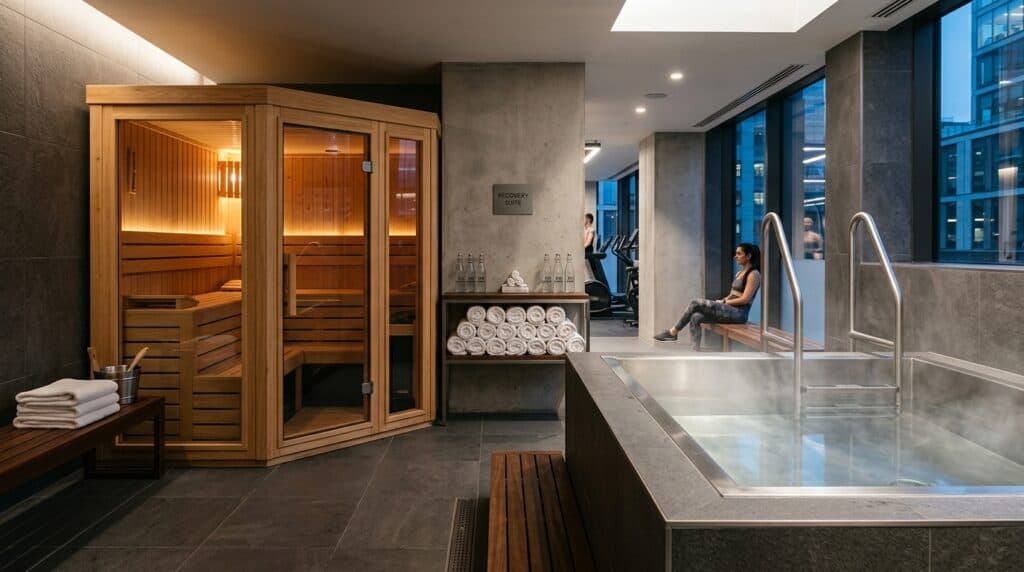
British weather makes this trickier than it should be — we don’t “feel” thirsty the way you do on a 30°C day abroad, which is exactly why so many UK gym-goers under-hydrate without noticing. Humid indoor studios, heated spin rooms and saunas all create real fluid loss even when it doesn’t feel like a hot day outside.
Common UK hydration myths, debunked
“I don’t sweat much, so I don’t need to drink as much” doesn’t hold up — sweat rate varies hugely between people for reasons that have nothing to do with how much fluid your body is actually losing or needs internally. Someone who barely visibly sweats can still be running a significant fluid deficit by the end of a session.
“Cold weather means I don’t need to worry about hydration” is another one that catches people out every autumn and winter. You lose less fluid through visible sweat in a cold gym, but you still lose plenty through breathing, especially during hard cardio efforts, and the drop in temperature makes it easier to ignore thirst cues altogether.
“Sports drinks are always better than water” isn’t true either — for a standard 45-60 minute gym session, a sports drink mostly adds sugar you don’t need. They earn their place for long endurance efforts or genuinely heavy, prolonged sweating, not for a routine weights session.
A simple hydration checklist for training days
If you’d rather not think too hard about litres and percentages, a short routine covers most of what matters: drink a glass of water when you wake up, before caffeine has a chance to work against you; sip steadily through the morning so you’re not starting your session already behind; have your pre-workout 400-500ml at least two hours before you train; carry a bottle rather than relying on a gym’s water fountain being free or working; and finish your session with a proper glass of water plus whatever your next meal is, rather than treating rehydration as optional because you’re already heading home.
None of this requires tracking apps or calculations — it’s closer to brushing your teeth than it is to counting macros. Build it into the same mental checklist as packing your gym bag and you’ll stop thinking about it as a separate task altogether.
Make hydration part of your routine, not an afterthought
Hydration isn’t glamorous, but it’s one of the cheapest and easiest performance upgrades available to anyone training regularly. Get into the habit of drinking before you’re thirsty, topping up with electrolytes on longer or sweatier sessions, and treating your post-workout rehydration as seriously as your post-workout meal.
If you’re still working out which gym, studio or pool suits your training style and schedule, GymPal makes it easy to search UK gyms, classes and facilities near you — including which ones have the water fountains, showers and recovery spaces that make staying properly hydrated that much easier. Find your next session, bring a bottle, and drink before you need to.

I am Adam Hall, a dedicated fitness professional with over ten years of experience in the UK’s fitness industry. I earned my Master’s degree in Sports Science from Loughborough University and have worked with several top fitness studios across the UK. My certifications include a Level 3 Personal Trainer Certificate and a specialised Strength and Conditioning Coach accreditation.
Starting my career as a personal trainer, I quickly moved up to manage multiple gym locations, overseeing their operations and training programs. Beyond managing gyms, I regularly contribute to well-known fitness magazines and have been featured in articles for “Health & Fitness” and “Men’s Health”. My passion also extends online where I run a popular blog on GymPal’s AI-powered directory platform detailing insights into choosing the right fitness venues across the UK. With hundreds of posts reaching thousands of readers monthly, my goal is to influence positive changes in how people approach health and exercise throughout the country.