Climbing and Bouldering Gyms in the UK: A Complete Beginner’s Guide
Click Below To Share & Ask AI to Summarize This Article
Bouldering and climbing have exploded in popularity across the UK. Ten years ago, climbing was a niche sport. Today, there are over 400 indoor climbing and bouldering centres nationwide, and the sport got a massive boost from its inclusion in the 2020 Olympics.
If you’ve never set foot in a climbing gym, here’s everything you need to know to get started. without ropes, over thick crash mats. You don’t need a partner, harness, or any specialist knowledge to start. Just rock up, hire some shoes, and climb.
Roped climbing (sometimes called “top rope” or “lead climbing”) involves taller walls (10-20 metres) and requires a harness, rope, and a belay partner. Most climbing centres offer both, but bouldering is where almost everyone starts.
What to Expect at a Climbing Gym
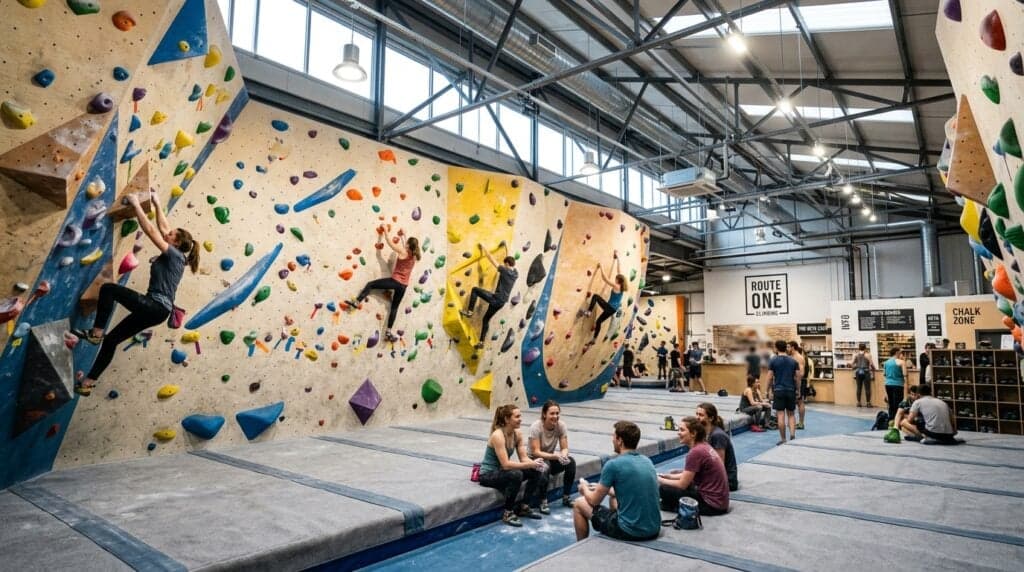
- Walls covered in colourful holds — each colour represents a different route or “problem” at a specific difficulty level
- Thick crash mats — designed to cushion falls from bouldering height
- Shoe hire — climbing shoes are tight-fitting with grippy rubber soles. Most centres hire them for £3-5
- Chalk bags — magnesium chalk keeps your hands dry. You can hire or buy one.
- Training areas — fingerboards, campus boards, and hangboards for building grip strength
- Cafe area — climbing centres are social spaces. Expect good coffee and a relaxed vibe.
Cost of Climbing Gyms in the UK
- Adult entry (bouldering): £8-15 per session
- Shoe hire: £3-5
- Monthly membership: £40-70/month (unlimited climbing)
- Student concession: usually £2-3 off per session
- Intro courses: £25-50 for a beginner session with instruction
Compared to a standard gym membership (£10-50/month), climbing can be pricier per visit. But monthly memberships at climbing centres are competitive, especially if you go 2-3 times per week.
Is Climbing a Good Workout?
Absolutely. Climbing engages your entire body — arms, shoulders, back, core, legs, and forearms. A one-hour bouldering session can burn 400-700 calories. It builds functional strength, grip endurance, flexibility, and problem-solving skills (each route is like a physical puzzle).
Many climbers supplement with traditional gym training for strength and conditioning. The two complement each other perfectly.
Getting Started: Tips for Your First Visit
- Book a taster session — most centres offer 60-90 minute beginner sessions with an instructor. The best way to start.
- Wear comfortable, stretchy clothing — leggings or joggers and a t-shirt. Nothing too baggy.
- Start with easy routes — centres use the V-grade or Font system. V0/VB (very easy) is where to begin.
- Learn to fall safely — your taster session will cover this. It’s not scary once you know the technique.
- Don’t compare yourself to others — climbing has a remarkably supportive community. Everyone remembers being a beginner.
- Rest between attempts — climbing is intense. 3-5 minutes rest between problems is normal.
Finding a Climbing Gym Near You
Major UK climbing chains include The Climbing Hangar, Boulder Central, Depot Climbing, and VauxWall, plus dozens of excellent independent centres. Use GymPal to search for climbing and bouldering gyms in your area, compare prices, and read reviews.
For Gym Owners: Should You Add a Climbing Wall?
If you have the ceiling height (minimum 4 metres for bouldering), adding a climbing wall can be a smart diversification. Climbers are a dedicated, passionate audience who often pay premium rates and become long-term members.
- Start small — a traverse wall (horizontal climbing along a wall) requires less height and investment
- Partner with route setters — good route setting is what keeps climbers coming back
- Offer intro sessions — bring in new climbers who might not join a traditional gym
- Cross-promote — climbers need strength training too. Offer combined memberships.
Whether you’re looking for a new fitness challenge or a different type of social workout, climbing is worth trying. Search for climbing gyms on GymPal and book a taster session this week.

I am Adam Hall, a dedicated fitness professional with over ten years of experience in the UK’s fitness industry. I earned my Master’s degree in Sports Science from Loughborough University and have worked with several top fitness studios across the UK. My certifications include a Level 3 Personal Trainer Certificate and a specialised Strength and Conditioning Coach accreditation.
Starting my career as a personal trainer, I quickly moved up to manage multiple gym locations, overseeing their operations and training programs. Beyond managing gyms, I regularly contribute to well-known fitness magazines and have been featured in articles for “Health & Fitness” and “Men’s Health”. My passion also extends online where I run a popular blog on GymPal’s AI-powered directory platform detailing insights into choosing the right fitness venues across the UK. With hundreds of posts reaching thousands of readers monthly, my goal is to influence positive changes in how people approach health and exercise throughout the country.