CrossFit Gyms in the UK: What to Expect Before Your First Class
Click Below To Share & Ask AI to Summarize This Article
What Is CrossFit — and Why Is It Everywhere?
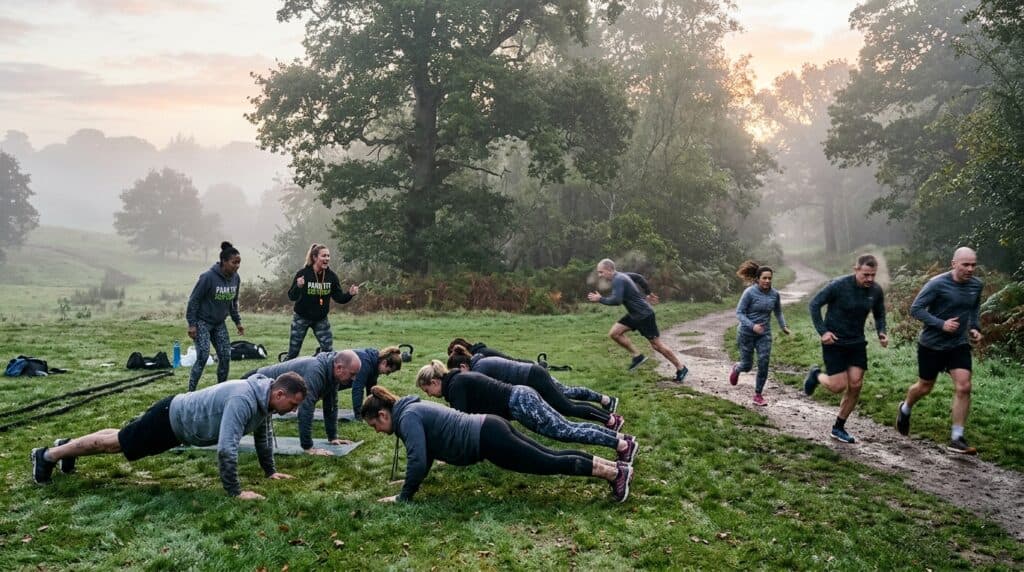
If you have walked past a gym recently and seen people flipping tyres, swinging from ropes, and lifting barbells at speed to the sound of blaring music, chances are you have spotted a CrossFit box. CrossFit has grown from a niche American fitness movement into one of the most popular training styles in the UK, with over 1,000 affiliated boxes across the country. WOD (Workout of the Day) 10–20 minutes The main event — a high-intensity workout combining multiple movements Cool-down 5 minutes Stretching and mobility to aid recovery
The WOD is what CrossFit is famous for. It might be “for time” (complete the work as fast as possible) or “AMRAP” (as many rounds as possible in a set time). Every day is different — you will rarely do the same workout twice.
What Makes CrossFit Gyms Different from Regular Gyms
If you have only trained in commercial gyms, stepping into a CrossFit box is a noticeably different experience. Here are the key differences:
1. Classes, Not Solo Training
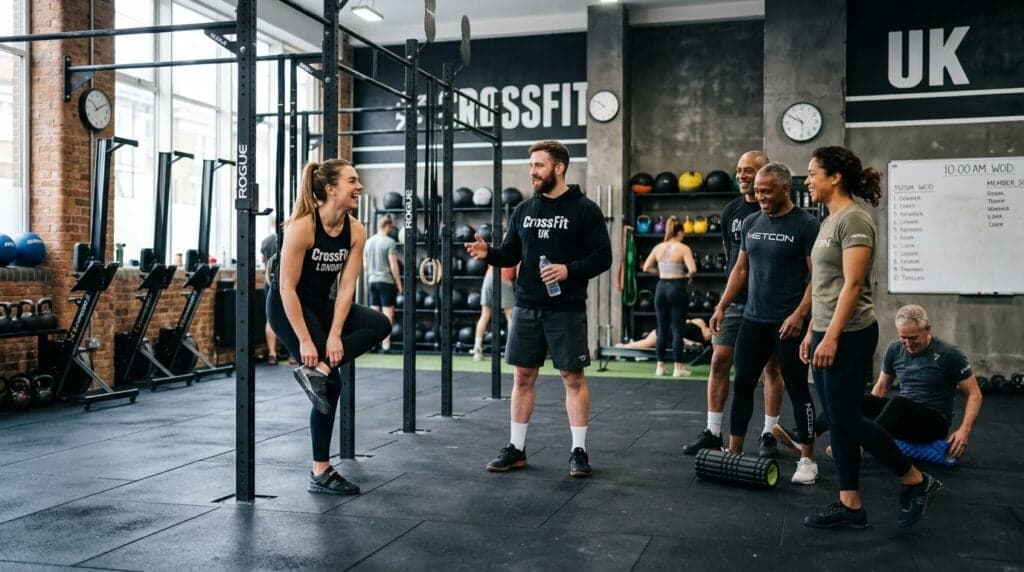
CrossFit is coach-led and group-based. You do not wander around doing your own thing — every session is structured, timed, and guided by a qualified coach. This is a huge advantage for beginners who want direction but do not want to pay for one-to-one personal training.
2. Community Atmosphere
CrossFit boxes are famous for their community spirit. Members cheer each other on, the last person to finish a WOD gets the loudest applause, and social events are common. For many members, the community is what keeps them coming back as much as the workouts themselves.
3>Minimal Machines
You will not find rows of treadmills, weight machines, or isolation equipment. Instead, expect barbells, kettlebells, pull-up rigs, rowing machines, rope climbs, plyo boxes, and rings. The focus is on functional, compound movements that engage multiple muscle groups simultaneously.
4. Coaching and Technique First
Reputable CrossFit gyms in the UK require newcomers to complete a “fundamentals” or “on-ramp” course before joining regular classes. This typically runs for two to four sessions and covers the basic movements, terminology, and safety protocols. Good boxes will not let you lift heavy until you have demonstrated proper form.
Is CrossFit Right for You?
CrossFit is not for everyone — and that is fine. Here is an honest breakdown of who it suits and who might prefer a different approach:
| You Will Love CrossFit If… | You Might Prefer a Regular Gym If… |
|---|---|
| You enjoy group training and motivation from others | You prefer training alone at your own pace |
| You want structured, coach-led sessions | You like designing your own programmes |
| You want to improve overall fitness, not just aesthetics | You are focused on bodybuilding or powerlifting |
| You enjoy variety and dislike repetitive routines | You prefer a consistent, predictable training split |
| You are competitive (with yourself or others) | You find competition stressful or demotivating |
| You value community and social connection | You just want to get in, train, and get out |
How Much Does CrossFit Cost in the UK?
CrossFit is generally more expensive than budget gym memberships like PureGym (£10–20/month), but it is important to understand what you are paying for. CrossFit memberships typically include:
- Unlimited coached classes
- Programmed workouts (no planning required)
- Coaching and technique correction in every session
- A supportive community environment
Typical UK CrossFit pricing:
| Membership Type | Typical Monthly Cost |
|---|---|
| Unlimited classes | £90–£150 |
| Limited (3 classes/week) | £65–£90 |
| Drop-in (single session) | £10–£15 |
| On-ramp/fundamentals course | £50–£150 (one-off) |
Pricing varies significantly by location — London boxes tend to be at the higher end, while boxes in smaller towns and cities often charge less. Many offer free trial classes so you can experience a session before committing.
Finding a Good CrossFit Box Near You
Not all CrossFit gyms are created equal. When you are choosing a box, look for these quality indicators:
- Qualified coaches — at minimum, a CrossFit Level 1 Trainer certificate. Look for additional qualifications in weightlifting, gymnastics, or physiotherapy.
- On-ramp programme — a proper fundamentals course for beginners is a sign of a responsible gym.
- Scaling options — every workout should be scalable to your ability level. If a coach only offers one version, that is a red flag.
- Clean, well-maintained equipment — barbells, rigs, and flooring should be in good condition.
- Positive culture — visit during a class and observe. Are members encouraging each other? Does the coach pay attention to everyone, not just the fittest?
If you are searching for CrossFit boxes in your area, GymPal lists thousands of UK gyms including CrossFit affiliates. You can filter by location, read what other members have said, and find the right box for your fitness level and budget.
CrossFit Terminology You Will Hear
Every subculture has its own language. Here is a quick cheat sheet for your first class:
| Term | Meaning |
|---|---|
| Box | A CrossFit gym (they call them boxes, not gyms) |
| WOD | Workout of the Day — the main workout in each class |
| AMRAP | As Many Rounds (or Reps) As Possible in a set time |
| EMOM | Every Minute On the Minute — start a set at the top of each minute |
| RX | Doing the workout as prescribed (full weight and movement standards) |
| Scaled | Modified version of the workout to match your ability |
| Chipper | A WOD with multiple movements done sequentially |
| Hero WOD | A workout named after a fallen soldier or first responder — typically very challenging |
| Box Jump | Jumping onto a raised platform (not jumping rope!) |
What to Bring to Your First Class
- Comfortable training clothes — anything you can move freely in
- Flat-soled trainers — Converse, Vans, or dedicated lifting shoes work better than running shoes for lifting
- Water bottle — you will sweat. A lot.
- Towel — optional but recommended
- An open mind — you will be learning new movements. Embrace being a beginner.
The Bottom Line
CrossFit offers something that many traditional gyms do not: a structured, coached, community-driven fitness experience that pushes you to improve across all areas of fitness. It is not perfect — quality varies between boxes, and it is not the cheapest option — but for the right person, it can be genuinely transformative.
The best way to find out if CrossFit is for you is to try it. Book a free trial at a local box, go with realistic expectations, and give yourself permission to be terrible at it. Everyone starts somewhere — and in CrossFit, your first day is celebrated, not judged.
Ready to find a CrossFit box near you? Search GymPal to browse UK CrossFit gyms, read member reviews, and compare pricing. Your next workout is just a search away.

I am Adam Hall, a dedicated fitness professional with over ten years of experience in the UK’s fitness industry. I earned my Master’s degree in Sports Science from Loughborough University and have worked with several top fitness studios across the UK. My certifications include a Level 3 Personal Trainer Certificate and a specialised Strength and Conditioning Coach accreditation.
Starting my career as a personal trainer, I quickly moved up to manage multiple gym locations, overseeing their operations and training programs. Beyond managing gyms, I regularly contribute to well-known fitness magazines and have been featured in articles for “Health & Fitness” and “Men’s Health”. My passion also extends online where I run a popular blog on GymPal’s AI-powered directory platform detailing insights into choosing the right fitness venues across the UK. With hundreds of posts reaching thousands of readers monthly, my goal is to influence positive changes in how people approach health and exercise throughout the country.