How to Build a Member Referral Programme That Actually Works
Click Below To Share & Ask AI to Summarize This Article
Why Word-of-Mouth Is Your Gym’s Most Powerful Marketing Tool
When someone recommends your gym to a friend, that referral carries more weight than any advert, social post, or flyer ever could. According to industry research, referred members are 18% more likely to stay beyond their first year compared to members who found you through paid channels. Yet many UK gym owners still don’t have a structured referral programme in place.. This is the gold standard because it gives both parties a reason to act.
The key is making the reward immediate. If someone refers a friend and has to wait three months for their free month, the motivation disappears. Trigger the reward as soon as the new member signs up.
2. Make It Ridiculously Easy to Refer
If your referral process involves printing a card, filling out a form at reception, or remembering a special code, it’s already too complicated.
Modern referral programmes should work like this:
- Unique referral link: Each member gets a personalised link they can share via WhatsApp, text, or social media. Many gym management platforms like Glofox, Mindbody, or Trainerize have this built in.
- One-tap sharing: Integrate WhatsApp and social sharing buttons directly in your member app or email template.
- QR codes: Display QR codes around the gym that link to a referral page. Members can snap and share instantly.
The fewer steps between “I want to recommend this gym” and “I’ve sent the referral,” the more referrals you’ll get.
3. Time Your Ask Strategically
Not every moment is equally good for asking for a referral. Ask at the wrong time and it feels pushy; ask at the right time and it feels natural.
The best moments to prompt a referral:
- After a great class or session: Someone just crushed a workout and is feeling great — that’s the moment they’re most likely to tell a friend.
- At the one-month mark: New members who’ve stuck around for a month are past the initial adjustment phase and starting to see results. They’re also the most enthusiastic.
- After a milestone: When a member hits a goal — losing 5kg, completing 50 classes, hitting a PB — send an automated congratulation message that includes their referral link.
- During renewal: Members who choose to renew are signalling satisfaction. Include a referral prompt in the renewal confirmation.
4. Promote It Everywhere — Not Just Once
A common mistake is launching a referral programme with a splash and then forgetting about it. Your members have a lot going on; they need regular reminders.
Integrate referral prompts into your regular touchpoints:
- Email signatures: Every email from your gym should include a referral link in the footer.
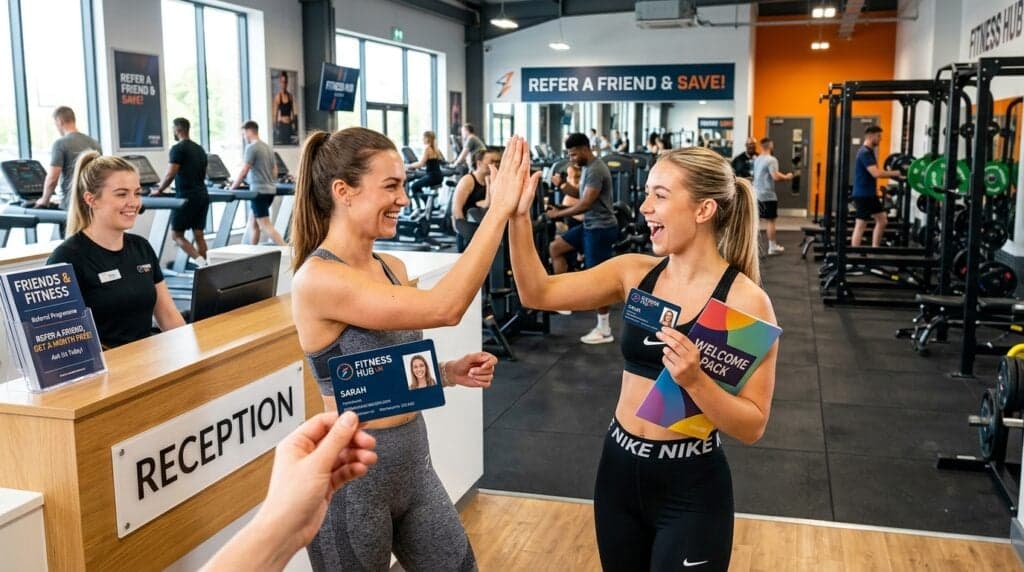
- In-gym signage: Posters near the entrance, changing rooms, and water stations.
- Member app or portal: A dedicated “Refer a Friend” section that’s visible on the home screen.
- Staff mentions: Train reception and floor staff to mention the referral programme during positive interactions.
- Social media: Monthly posts highlighting real members who’ve referred friends (with their permission).
5. Track, Measure, and Optimise
You can’t improve what you don’t measure. Set up tracking from day one:
- Referral volume: How many referrals are being sent each month?
- Conversion rate: What percentage of referral links result in a sign-up?
- Retention of referred members: Do referred members stay longer than other acquisition channels?
- Cost per acquisition: Compare the cost of your referral rewards to your paid advertising CPA.
Most gym owners find that referred members have a significantly lower CPA than paid channels and a higher lifetime value. If your numbers don’t reflect this, it’s usually because the reward isn’t compelling enough or the sharing process is too friction-heavy.
6. Create a Referral Culture, Not Just a Programme
The most successful referral programmes feel less like a marketing tactic and more like a natural part of gym culture. Here’s how:
- Spotlight referrers: Feature top referrers on your social media or gym noticeboard (with their permission). Recognition can be as motivating as financial rewards.
- Group challenges: Run “bring a friend” events or challenges where existing members bring a guest for a class or open day.
- Community focus: Gyms with strong community vibes naturally generate more referrals. Invest in member experience first — the referrals will follow.
Getting Started: Your 30-Day Action Plan
You don’t need a massive budget or a custom-built app to launch a referral programme. Here’s a simple 30-day roadmap:
- Week 1: Decide on your reward structure and set up tracking (even a simple spreadsheet works to start).
- Week 2: Create your referral landing page and generate unique links for existing members.
- Week 3: Launch with an email campaign to all current members, plus in-gym signage.
- Week 4: Review early results, gather feedback, and tweak the process.
Make Your Gym Easy to Find and Recommend
Before you ask members to refer friends, make sure your gym is easy to discover online. A complete, up-to-date listing on GymPal gives potential members all the information they need — facilities, photos, reviews, and contact details — in one place. When your existing members share a referral, they want confidence that their friend will find a great first impression online.
Whether you’re running a single studio or managing multiple locations, GymPal’s free listing puts your gym in front of thousands of UK fitness seekers every month. Claim or update your free listing today and make every referral count.
Is your gym listed on GymPal? Over 10,000 UK fitness businesses are in our directory. Claim your free listing in 5 minutes — and start getting discovered by local fitness seekers today.

I am Adam Hall, a dedicated fitness professional with over ten years of experience in the UK’s fitness industry. I earned my Master’s degree in Sports Science from Loughborough University and have worked with several top fitness studios across the UK. My certifications include a Level 3 Personal Trainer Certificate and a specialised Strength and Conditioning Coach accreditation.
Starting my career as a personal trainer, I quickly moved up to manage multiple gym locations, overseeing their operations and training programs. Beyond managing gyms, I regularly contribute to well-known fitness magazines and have been featured in articles for “Health & Fitness” and “Men’s Health”. My passion also extends online where I run a popular blog on GymPal’s AI-powered directory platform detailing insights into choosing the right fitness venues across the UK. With hundreds of posts reaching thousands of readers monthly, my goal is to influence positive changes in how people approach health and exercise throughout the country.