Outdoor Bootcamps UK: What to Expect and What They Cost
Click Below To Share & Ask AI to Summarize This Article
If your idea of exercise doesn’t involve a squat rack, a bootcamp might be exactly what you’re after. Outdoor fitness bootcamps have quietly become one of the fastest-growing ways Brits are getting fit, blending military-inspired drills, circuit training and a healthy dose of mud with the kind of group energy a solo treadmill session just can’t match. You’ll find sessions running in parks from Bristol to Bradford, usually before work, at lunchtime, or on weekend mornings when everyone else is still in bed.
But bootcamps aren’t for everyone, and they’re not all run the same way. Some are polished, well-insured operations with qualified instructors and progressive programming. Others are a bloke with a whistle and a bag of cones. Before you hand over your card details for a block booking, it’s worth knowing what you’re actually signing up for.
This guide covers what a typical session looks like, who actually runs them, what it costs across the UK, what to bring, and how to spot a bootcamp that’s actually worth your time and money.
What Actually Happens at a Bootcamp Session
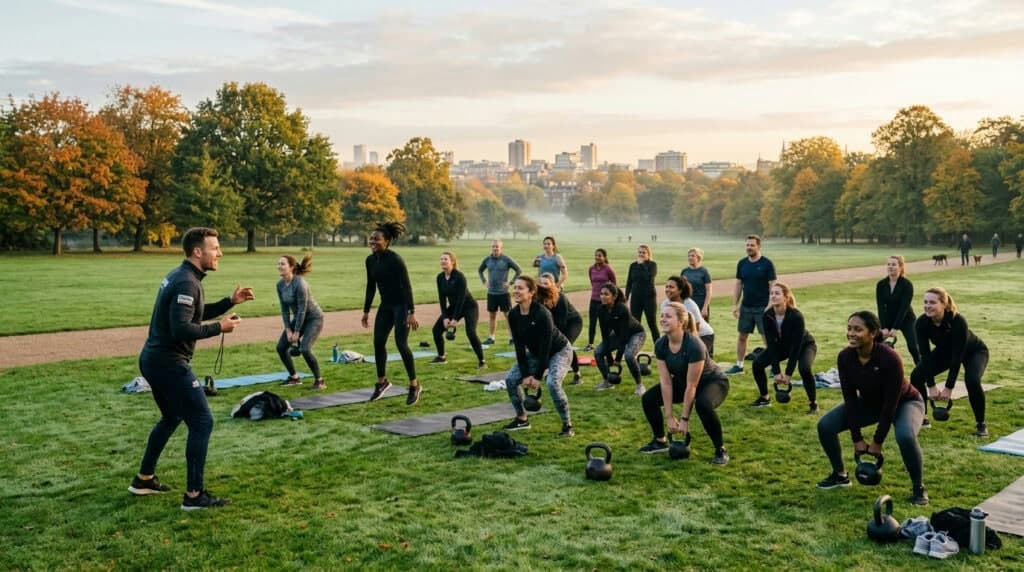
A standard UK bootcamp runs 45 to 60 minutes and follows a circuit format: a warm-up, several rounds of exercises performed in stations or intervals, and a cool-down. Expect a mix of bodyweight moves (press-ups, burpees, lunges), kettlebells or sandbags, sprint intervals, and partner drills like resistance-band rows or tyre flips if the venue has the kit. Good instructors scale everything up or down depending on who’s turned up that day, so a total beginner and a half-marathon runner can train side by side without either of them being short-changed.
A typical circuit might rotate through six or eight stations: box jumps or step-ups, battle rope waves, sandbag carries, resistance-band rows, sprint shuttles between cones, and a core finisher like plank holds or mountain climbers. Instructors usually run 30-to-45-second work intervals with short rests, so the whole session feels less like “exercise” and more like it’s over before you’ve had time to dread it. Some operators build in a running warm-up loop around the park first, both to raise the heart rate and to make use of the space before the equipment-based stations start.
Who Actually Runs Bootcamps in the UK
The bootcamp scene in the UK ranges from national franchises to independent local operators. British Military Fitness (BMF) is probably the best-known name, running instructor-led outdoor sessions in parks across London, Manchester, Birmingham and beyond, with a format built around military-style circuit drills. Alongside the big franchises, most towns have at least one independent PT or small team running park-based bootcamps, often advertised through local Facebook groups or word of mouth rather than glossy marketing. Some gyms and studios also run “bootcamp” as an indoor class format using the same interval-and-circuit structure without the mud, which is worth knowing if you like the training style but not the British weather.
Independent operators are often cheaper and more flexible than franchises, but the quality varies far more — which is exactly why checking qualifications and insurance (covered further down) matters more here than it would when signing up to a well-established chain.
Most sessions are held outdoors year-round, rain or shine, which is part of the appeal but also the catch — you will get wet, muddy and cold at some point between October and March. Some operators move indoors to a sports hall or gym studio during the worst of winter, so it’s worth asking about their wet-weather policy before you commit to a multi-week pass.
How Much Do UK Bootcamps Cost
Pricing varies more than you’d expect for what’s essentially a park and some cones. As a rough guide across the UK in 2026:
- Pay-as-you-go drop-in: £8–£15 per session
- Weekly membership (2–3 sessions a week): £30–£55 per month
- Unlimited monthly membership: £60–£100 per month
- Block bookings (6–12 weeks, common for “transformation” style camps): £120–£300 upfront
London and the South East sit at the top end of that range, while sessions in smaller towns and cities across the North and Midlands tend to land closer to £8–£12 a session. Many operators also offer a free trial session, which is worth taking up before you commit to anything longer than a single class — it’s the fastest way to judge coaching quality and group size.
Bootcamp vs Gym: Which Suits You Better
Bootcamps and traditional gyms solve different problems, and plenty of people end up doing both. A gym gives you control — train at 6am or 9pm, follow your own programme, and skip the small talk. A bootcamp gives you structure, accountability and a coach shouting your name when you want to stop three burpees early, which for a lot of people is the difference between a habit that sticks and a gym membership that quietly lapses in February.
If you’re drawn to the high-intensity, no-equipment-needed style of training but want the option of doing it indoors when the weather turns, it’s worth comparing bootcamps against HIIT classes, which run on a similar interval-based format but happen in a studio with more consistent programming week to week.
What to Wear and Bring
Because most bootcamps happen outdoors regardless of season, kit matters more here than at your average gym class. A few essentials:
- Trail or off-road trainers with decent grip — road running shoes slip on wet grass and mud
- Layers you can strip off once you’ve warmed up, rather than one thick coat
- A waterproof outer layer for autumn and winter sessions — this isn’t optional if you’re training through a British winter
- A towel and a change of clothes for the drive or walk home, especially if there’s no changing facility on site
- A reusable water bottle — most parks don’t have taps nearby
Gloves are worth packing between November and February too, particularly if kettlebells or battle ropes are part of the programme — cold hands and heavy grip work don’t mix well.
Injury Prevention and Staying Safe Outdoors
Bootcamp injuries usually come from two things: uneven ground and going too hard, too soon. Grass hides tree roots, rabbit holes and uneven camber that a treadmill never will, so a proper ankle warm-up and a scan of the terrain before any sprint drill is worth the extra thirty seconds. Beginners are also the most likely group to push through fatigue in a group setting purely because everyone else seems to be coping fine — a good instructor will actively check in on new faces rather than assuming silence means everything’s fine.
If you’re returning from a long break or managing an existing niggle, it’s worth having a quiet word with the instructor before the session starts rather than during the middle of a circuit. Most reputable operators will happily scale exercises down or suggest a lower-impact alternative on the spot — box step-ups instead of jump squats, or a plank hold instead of full burpees, for example.
Finding a Reputable, Well-Run Bootcamp
Not every bootcamp is run to the same standard, so a bit of due diligence before you pay for a block booking saves both money and injuries. Check that instructors hold a recognised qualification (Level 2 or 3 Gym Instructor/Personal Trainer as a minimum) and that the operator carries public liability insurance — any legitimate business will confirm this without hesitation if you ask. It’s also worth watching a session from the sidelines first: a well-run camp keeps group sizes manageable enough that the coach can actually see and correct everyone’s form, rather than just shouting motivational phrases from the front.
If bodyweight training is what draws you to bootcamps in the first place, it’s worth reading up on calisthenics training as well, since many of the same movement patterns — press-ups, pull-ups, squats — form the backbone of most bootcamp programming, just with a coach and a group around you instead of a solo session in the park. GymPal’s directory is a straightforward way to compare bootcamps, ratings and prices in your area at askgympal.co.uk before you commit to anything.
Bootcamp Fitness Tests and Challenges
Plenty of bootcamp operators build towards a periodic fitness test or timed challenge — think a set circuit against the clock, repeated every 6 to 8 weeks so members can track progress. It’s a genuinely useful way to see improvement that the mirror doesn’t always show. If you enjoy that competitive, benchmark-driven side of training, it’s worth also looking at HYROX, the UK’s fastest-growing fitness race, which has become a natural next step for a lot of bootcamp regulars who want a bigger event to train towards.
According to the NHS’s physical activity guidelines for adults, most people should aim for at least 150 minutes of moderate activity or 75 minutes of vigorous activity a week, plus strength work on two or more days — a twice-weekly bootcamp habit gets you a long way towards both targets in one go.
Is a Bootcamp Right for You?
Bootcamps work best for people who thrive on group energy, need a coach to push them past the point they’d normally stop, and don’t mind training outdoors in all weathers. If you’d rather train at your own pace, indoors, on your own schedule, a standard gym membership is probably the better fit — though there’s nothing stopping you from doing both.
Either way, the best way to find out is to turn up to a free trial session near you. Search GymPal to compare bootcamps, gyms and fitness classes in your area, check real reviews, and book a taster before you commit to a membership.

I am Adam Hall, a dedicated fitness professional with over ten years of experience in the UK’s fitness industry. I earned my Master’s degree in Sports Science from Loughborough University and have worked with several top fitness studios across the UK. My certifications include a Level 3 Personal Trainer Certificate and a specialised Strength and Conditioning Coach accreditation.
Starting my career as a personal trainer, I quickly moved up to manage multiple gym locations, overseeing their operations and training programs. Beyond managing gyms, I regularly contribute to well-known fitness magazines and have been featured in articles for “Health & Fitness” and “Men’s Health”. My passion also extends online where I run a popular blog on GymPal’s AI-powered directory platform detailing insights into choosing the right fitness venues across the UK. With hundreds of posts reaching thousands of readers monthly, my goal is to influence positive changes in how people approach health and exercise throughout the country.