How to Track Your Fitness Progress (Without Obsessing Over the Scales)
Click Below To Share & Ask AI to Summarize This Article
Why the Scales Are the Worst Way to Measure Progress
If you have ever stepped on the scales after a solid week of training and felt your stomach drop because the number has not moved (or worse, gone up), you are not alone. The scales are the most commonly used fitness metric, and they are also the most misleading. According to Sport England Active Lives survey
Your body weight fluctuates daily based on hydration, glycogen stores, stress, hormones, and even how much you ate the night before. A single number tells you nothing about what is actually changing inside your body.
Here is a better approach: track what actually matters.
The Metrics That Actually Show Progress
1. How Your Clothes Fit
This is the single most underrated progress indicator. If your jeans feel looser around the waist, your shirts fit better through the shoulders, or you have dropped a belt notch, you are making progress — regardless of what the scales say. Muscle is denser than fat, so you can look leaner and feel stronger without the number changing at all.
2. Strength Gains in the Gym
Are you lifting heavier than last month? Can you do more reps with the same weight? Have you progressed from knee push-ups to full push-ups? Strength gains are a direct sign that your body is adapting and improving. Keep a simple training log — a notes app on your phone is enough — and compare your lifts every four to six weeks.
3. Progress Photos
Take a front, side, and back photo once every two to four weeks in the same lighting and clothing. You will notice changes in your physique that are impossible to see day to day. Most people who start tracking this way are genuinely surprised by the difference after just eight weeks.
4. Energy Levels and Sleep Quality
These are the metrics nobody talks about but everyone notices. When your fitness improves, you sleep better, wake up feeling more rested, and have more energy throughout the day. If your afternoon slump has disappeared since you started training, that is progress.
5. Body Measurements
A tape measure costs less than £3 and tells you far more than any smart scale. Measure your chest, waist, hips, thighs, and upper arms every two weeks. Even small changes — half a centimetre off your waist — add up over time and are a clear sign that your training and nutrition are working.
The Simple Tracking System That Actually Works
You do not need a complicated spreadsheet or an expensive gadget. Here is a system you can start using today:
- Weekly: Log your key lifts and note how your workouts felt
- Fortnightly: Take progress photos and body measurements
- Monthly: Assess how your clothes fit and review your training log for trends
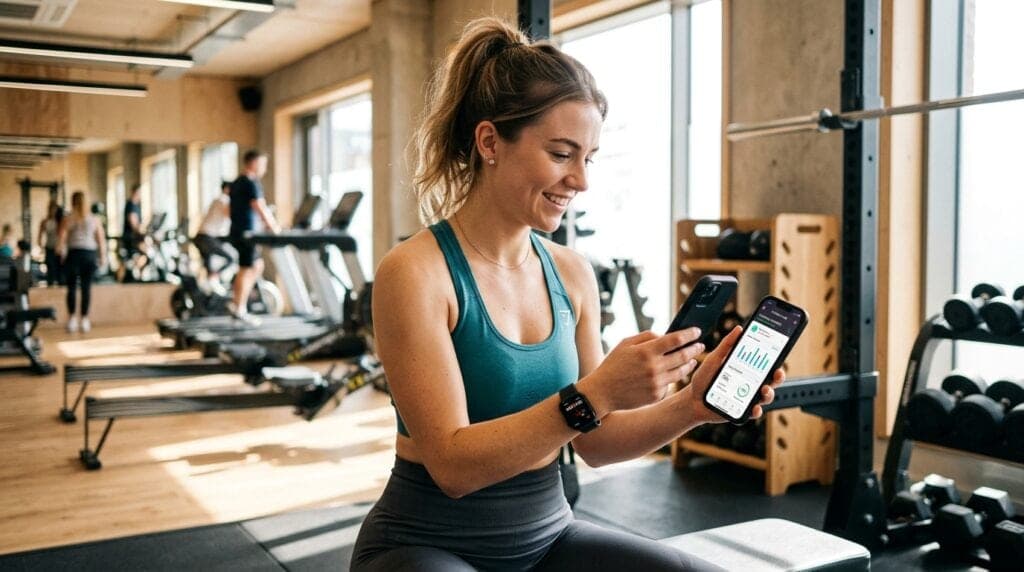
- Optional: Use a fitness app like Strong, JEFIT, or Hevy to automate your training log
The key is consistency. Tracking once and then forgetting about it for three weeks will not help. Pick your metrics, set a reminder, and stick with it.
What About Smart Scales and Fitness Trackers?
Smart scales that measure body fat percentage can be useful for spotting trends over time, but they are notoriously inaccurate for single readings. If you use one, focus on the monthly trend rather than daily fluctuations.
Fitness trackers and smartwatches are excellent for monitoring daily activity levels, heart rate during exercise, and recovery metrics. If you already own one, use it as a supplementary tool — not your primary measure of progress.
The Mental Shift That Changes Everything
The biggest mistake people make is tying their self-worth to a number. Fitness progress is not linear. There will be weeks where you feel stronger but the measurements have not changed. There will be weeks where the measurements drop but your energy is low. That is normal.
Focus on the process: showing up, training consistently, eating well, and recovering properly. The results will follow.
Find the Right Gym for Your Goals
Whether you are just starting out or looking to take your training to the next level, having the right gym makes a massive difference. GymPal helps you find and compare gyms across the UK so you can find one that matches your goals, budget, and schedule. Browse thousands of listings, read real reviews, and discover your ideal training space today. According to ukactive State of the UK Fitness Industry report

I am Adam Hall, a dedicated fitness professional with over ten years of experience in the UK’s fitness industry. I earned my Master’s degree in Sports Science from Loughborough University and have worked with several top fitness studios across the UK. My certifications include a Level 3 Personal Trainer Certificate and a specialised Strength and Conditioning Coach accreditation.
Starting my career as a personal trainer, I quickly moved up to manage multiple gym locations, overseeing their operations and training programs. Beyond managing gyms, I regularly contribute to well-known fitness magazines and have been featured in articles for “Health & Fitness” and “Men’s Health”. My passion also extends online where I run a popular blog on GymPal’s AI-powered directory platform detailing insights into choosing the right fitness venues across the UK. With hundreds of posts reaching thousands of readers monthly, my goal is to influence positive changes in how people approach health and exercise throughout the country.