Why Wellness Services Are the Secret to Keeping Gym Members Longer
Click Below To Share & Ask AI to Summarize This Article
UK gym owners are locked in a battle for members. Budget chains offer rock-bottom prices, boutique studios promise unique experiences, and online fitness keeps improving. So how do you stand out and — more importantly — keep the members you already have? and high-value to members who want to move better and feel less stiff.
Consider running free “Mobility Monday” or “Stretch & Recover” sessions to build the habit.
3. Nutrition Guidance
You don’t need to hire a full-time nutritionist. Even simple offerings like meal prep workshops, healthy eating talks, or a monthly newsletter with nutrition tips can make a big difference. Many members quit the gym because they don’t see results — and diet is usually the missing piece.
If you have the budget, partner with a registered nutritionist to offer discounted consultations to your members. The partnership adds credibility and gives members another reason to stay.
4. Mental Health and Stress Management
Mental wellbeing is a growing priority for UK consumers. Offering mindfulness sessions, yoga classes, or even a quiet “chill-out” space can differentiate your gym from every other facility on the high street.
You don’t need to become a therapy centre. Something as simple as a dimly lit cool-down area with calming music and comfortable seating shows members you understand that fitness is about more than physical effort.
5. Member Wellness Check-Ins
This costs almost nothing but has a huge impact. Train your front desk team or personal trainers to do quick quarterly check-ins with members — not to sell anything, but to ask how they’re doing, whether they’re hitting their goals, and if there’s anything the gym could do better.
This personal touch is something budget chains simply cannot offer at scale. It’s your competitive advantage as an independent or mid-sized gym.
How to Get Started
You don’t need to launch everything at once. Here’s a practical roadmap:
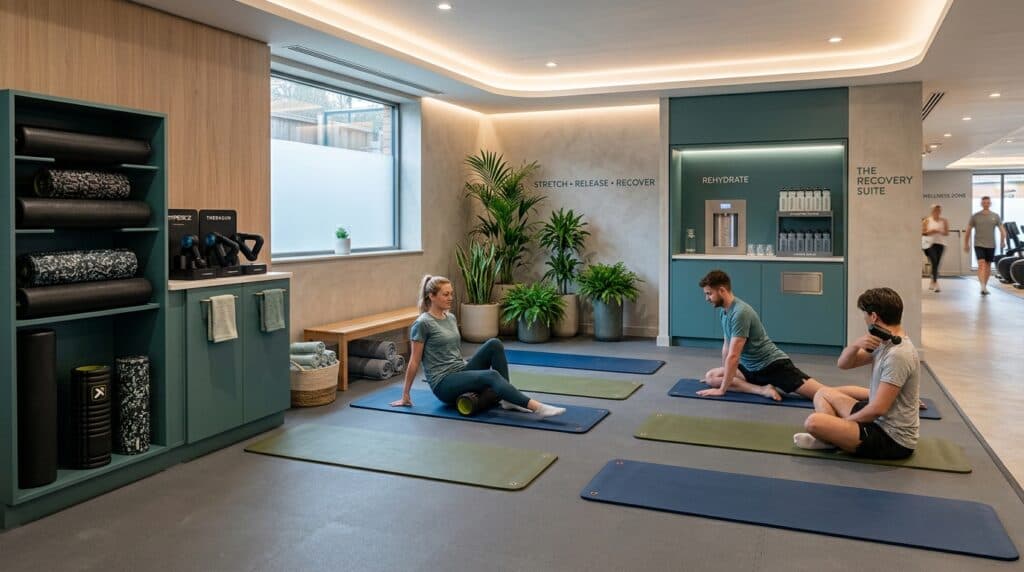
- Month 1: Set up a basic recovery zone with foam rollers, massage balls, and a stretching mat area. Cost: £200–£500.
- Month 2: Add a weekly mobility or stretch class to your timetable. Use existing PT staff if possible.
- Month 3: Launch a simple nutrition initiative — a healthy eating workshop or a printed guide available at reception.
- Month 4: Introduce quarterly member check-ins and gather feedback on what wellness services they’d value most.
The Bottom Line
In a market where anyone can offer cheap gym access, wellness is your edge. Members stay where they feel looked after — not just where the equipment is newest or the price is lowest. By investing in recovery, nutrition, mobility, and mental wellbeing, you build a gym that members don’t want to leave.
Want more visibility for your gym? List your business on GymPal — the UK’s growing fitness directory connecting gyms with people actively searching for fitness services. It’s free to claim your listing and start reaching new members in your area. Find out more about listing your gym.
Is your gym listed on GymPal? Over 10,000 UK fitness businesses are in our directory. Claim your free listing in 5 minutes — and start getting discovered by local fitness seekers today.

I am Adam Hall, a dedicated fitness professional with over ten years of experience in the UK’s fitness industry. I earned my Master’s degree in Sports Science from Loughborough University and have worked with several top fitness studios across the UK. My certifications include a Level 3 Personal Trainer Certificate and a specialised Strength and Conditioning Coach accreditation.
Starting my career as a personal trainer, I quickly moved up to manage multiple gym locations, overseeing their operations and training programs. Beyond managing gyms, I regularly contribute to well-known fitness magazines and have been featured in articles for “Health & Fitness” and “Men’s Health”. My passion also extends online where I run a popular blog on GymPal’s AI-powered directory platform detailing insights into choosing the right fitness venues across the UK. With hundreds of posts reaching thousands of readers monthly, my goal is to influence positive changes in how people approach health and exercise throughout the country.