Yin Yoga UK: The Slow Practice That’s Brilliant for Stress, Sleep and Recovery
Click Below To Share & Ask AI to Summarize This Article
Most people who try yin yoga the first time say the same thing: “I didn’t expect it to be that hard.” Not hard in a burpees-until-you-collapse way, but hard in a sit-still-and-breathe-through-it way. In a world where every fitness class seems to be getting faster, louder and more intense, yin yoga offers something genuinely different — and right now, it’s finding a serious audience across the UK.
Whether you’re a seasoned gym-goer who never stretches properly, someone recovering from an injury, or just desperately in need of proper rest, yin yoga might be the missing piece in your routine. This guide covers what yin yoga actually is, how it differs from other styles, what you’ll experience in a typical UK class, and where to find sessions near you.
What Is Yin Yoga?
Yin yoga is a slow-paced style of yoga where poses are held for anywhere from two to ten minutes at a time. While most yoga styles — and almost all gym classes — target the muscles, yin yoga works deeper, targeting the connective tissues of the body: fascia, ligaments, tendons and the joints themselves.
The philosophy behind yin yoga draws from Chinese Taoist traditions, which view the body through complementary forces: yin (passive, slow, cooling) and yang (active, fast, heating). Most of what we do in the gym — weight training, cardio, HIIT, even fast-paced yoga — is yang in nature. Yin yoga provides the counterbalance, helping the body recover, rehydrate connective tissue and restore range of motion.
The practice was developed in the late 1970s by martial arts expert Paulie Zink and later popularised by Paul Grilley and Sarah Powers, who brought it into mainstream Western yoga. Today it’s taught in independent yoga studios, leisure centres and health clubs across the UK, often as an evening or weekend class.
Yin Yoga vs Other Styles: What Makes It Different?
If you’ve explored yoga classes across different styles in the UK, you’ll know the range is enormous — from sweaty vinyasa flows to restorative sessions where you barely move. Yin yoga sits firmly at the slower end of that spectrum, but it’s distinct from restorative yoga in one important way: yin poses are meant to create mild, sustained stress on the connective tissue. You’re not meant to be completely comfortable. You’re meant to hold your edge, breathe through sensation, and stay.
| Style | Pace | Hold time | Target |
|---|---|---|---|
| Vinyasa / Flow | Fast | 1–5 breaths | Muscles, cardiovascular |
| Hatha | Moderate | 5–10 breaths | Muscles, alignment |
| Restorative | Very slow | 5–20 minutes | Nervous system, relaxation |
| Yin | Slow | 2–10 minutes | Connective tissue, joints |
| Hot yoga | Moderate–fast | Varies | Muscles, flexibility, detox |
The table above shows where yin sits in the wider yoga spectrum. It’s not the “easy” option — holding a dragon pose (a deep lunge) for five minutes while breathing steadily is genuinely challenging. But it’s a different kind of challenge from what most gym-goers are used to.
The Real Benefits: What Yin Yoga Does for Your Body and Mind
The evidence base for yin yoga’s benefits is growing steadily. Here’s what regular practice can do:
Improved joint mobility and flexibility
Unlike muscles, connective tissue doesn’t respond well to short, bouncy stretches. It needs sustained, gentle stress held over time. Yin yoga is one of the only movement practices specifically designed to stimulate and rehydrate the fascia, ligaments and cartilage around your joints. Over weeks and months, practitioners consistently report significant gains in flexibility and range of motion — especially in the hips, lower back and inner thighs.
Stress reduction and nervous system regulation
Most of us spend our days — and our gym sessions — in sympathetic nervous system mode: the “fight or flight” state that keeps us alert, reactive and tense. Yin yoga actively shifts you into parasympathetic mode, often called “rest and digest.” According to the Mental Health Foundation, mind-body practices like yoga are associated with measurable reductions in cortisol levels, improved mood and better resilience to stress. The long holds in yin yoga are particularly effective at triggering this response.
Better sleep
If you’re struggling with sleep, yin yoga — particularly an evening session — can genuinely help. The practice activates the parasympathetic nervous system, slows the breath and lowers heart rate, creating the ideal physiological conditions for sleep. Many practitioners report that even after a single class, their sleep quality noticeably improves. After a few weeks of regular practice, better sleep often becomes one of the most consistent benefits they describe.
Athletic recovery
For those who train hard — runners, weightlifters, cyclists, footballers — yin yoga offers something most recovery tools can’t: deep tissue work without active exertion. Where foam rolling addresses surface-level muscle tension, yin yoga targets the deeper connective tissue layer. Many serious athletes now include a yin session in their training week specifically for this reason.
What to Expect at Your First Yin Yoga Class in the UK
If you’ve only done fast-paced gym classes, walking into a yin yoga session can feel a little disorienting. Here’s what to expect:
- The room will be quiet. There’s no thumping playlist. Most yin instructors play ambient or gentle background music — or nothing at all. Some classes include guided mindfulness prompts between poses.
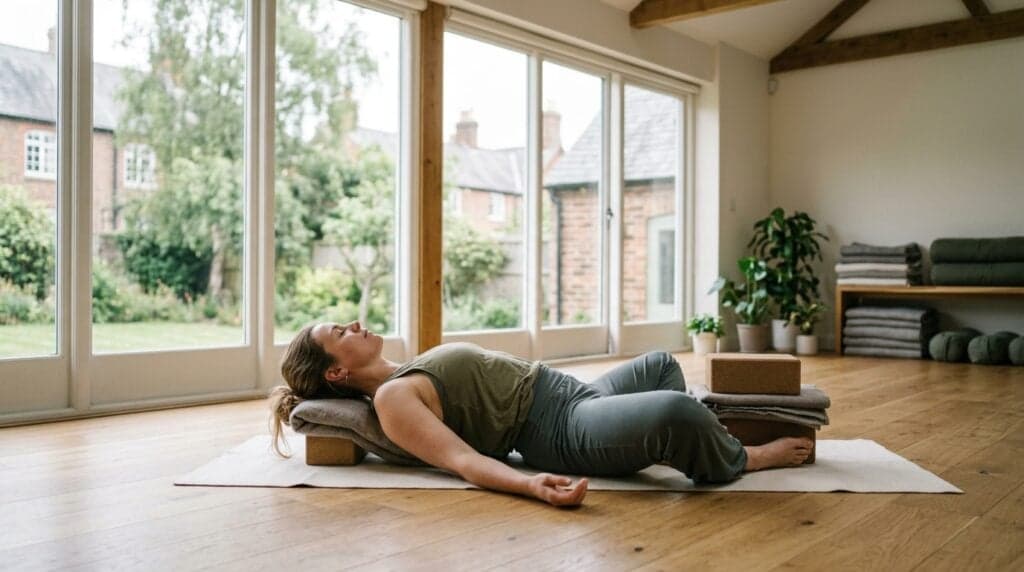
- You’ll need props. Blocks, bolsters, blankets and straps are all commonly used in yin yoga to support the body in passive holds. Most studios provide them — just ask at reception if you can’t see any.
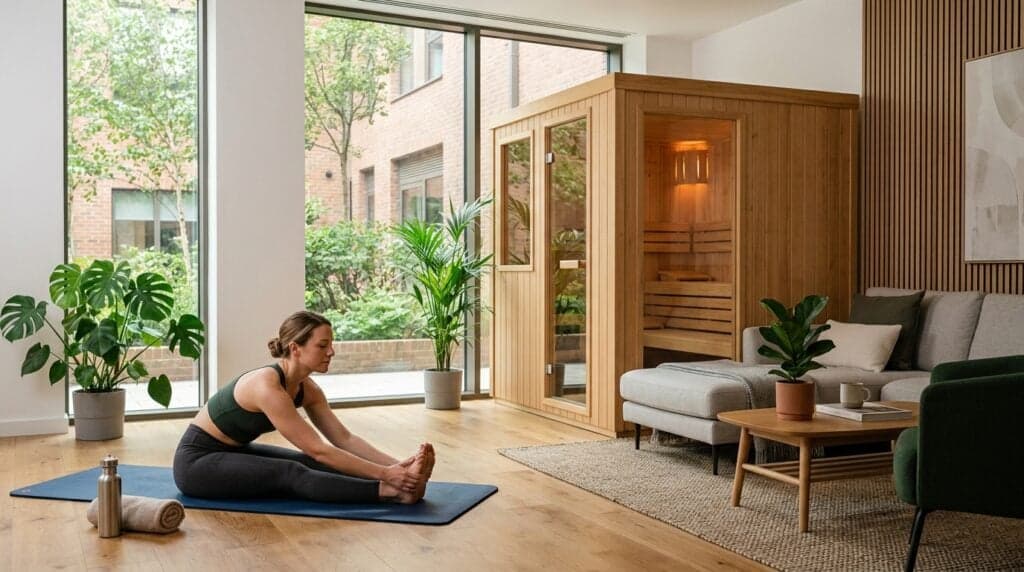
- Poses focus on the hips, lower back and spine. Common yin poses include pigeon, butterfly, caterpillar (seated forward fold), dragon (lunge) and supported fish. You’ll spend most of the class on the floor.
- Sensation is normal; sharp pain is not. A good yin teacher will tell you to find your “edge” — the point where you feel a steady, manageable sensation. You should never feel sharp, shooting or joint pain. If you do, come out of the pose immediately and let the teacher know.
- Classes typically run 60–90 minutes. Most UK yin classes are either one hour or 75–90 minutes, ending with a savasana rest. Don’t rush out — the final rest is part of the practice.
- You may feel emotional. This sounds odd, but it’s well-documented. Connective tissue can hold physical tension from stress and past experiences. When you release that tension over time, emotions sometimes surface. It’s normal and nothing to worry about.
How Much Do Yin Yoga Classes Cost in the UK?
Pricing varies significantly depending on whether you attend an independent studio, a health club or a community centre.
- Drop-in classes at independent studios: £12–£22 per class (London is typically at the top of this range; regional cities and towns are usually £12–£16)
- Monthly studio memberships: £40–£100 per month for unlimited classes — excellent value if you attend twice a week or more
- Gym and health club memberships with yoga included: Many gyms include yoga timetables in their standard membership, meaning yin classes may be included at no extra cost
- Community centre and leisure centre classes: £5–£10 per session — the most affordable option, though class frequency may be limited
- Online classes: Free to £15 per month depending on the platform, and a great way to try yin yoga before committing to in-person sessions
If you’re already a gym member, check whether your gym’s class timetable includes yin yoga — you might already be paying for access. Our 2026 guide to UK gym membership prices covers what’s included in memberships at major chains, which is useful if you’re weighing up standalone studio membership against a gym that bundles classes in.
Who Is Yin Yoga Best For?
Yin yoga suits a surprisingly wide range of people. Here are the groups who consistently get the most from it:
- Athletes and heavy gym users who train hard but don’t recover well — yin yoga addresses the connective tissue dimension of recovery that cool-downs and foam rolling miss.
- Office workers and those in sedentary jobs — hours of sitting compresses the hip flexors, lower back and thoracic spine. Yin yoga specifically targets these areas.
- People managing stress, anxiety or poor sleep — the nervous system regulation benefits are real and consistent. An evening yin class can make a tangible difference to sleep quality within days.
- Yoga beginners — despite the long holds, yin yoga is genuinely accessible to complete beginners because you’re not required to have existing flexibility or fitness. You just need patience.
- Older adults — yin yoga is gentle on the cardiovascular system while offering real joint health benefits. Many practitioners in their 50s, 60s and 70s find it transformative.
- Those recovering from injury — with instructor guidance, yin yoga can be adapted around most injuries and can support rehabilitation, particularly for lower back, hip and knee issues. Always let your instructor know about any injuries before class.
The one group who may want to approach yin yoga cautiously are hypermobile individuals, who can be prone to overstretching. A good yin teacher will help you find appropriate modifications.
How to Find Yin Yoga Near You
Yin yoga has gone from a niche offering to a mainstream studio staple across the UK over the past decade. You’ll now find it offered regularly in most cities and larger towns, from London’s packed studio scene to independent instructors running community classes in market towns across England, Scotland and Wales.
GymPal lists yoga studios and fitness venues across the UK, making it straightforward to find what’s available near you. Use the GymPal yoga venue finder to search by location and see studios, health clubs and leisure centres offering yoga classes — including yin — in your area.
Final Thoughts
Yin yoga won’t give you a six-pack or improve your 5K time. What it will do is make you feel better in your body, sleep more deeply and handle stress more effectively — and those things have a compounding effect on everything else you do, in and out of the gym.
In a fitness culture that often prizes intensity above everything else, choosing to slow down and hold still for 90 minutes takes a different kind of discipline. Most people who try it wonder why they waited so long.
Ready to find a yin yoga class near you? Search GymPal’s yoga venues to discover studios, health clubs and leisure centres offering yin yoga across the UK.

I am Adam Hall, a dedicated fitness professional with over ten years of experience in the UK’s fitness industry. I earned my Master’s degree in Sports Science from Loughborough University and have worked with several top fitness studios across the UK. My certifications include a Level 3 Personal Trainer Certificate and a specialised Strength and Conditioning Coach accreditation.
Starting my career as a personal trainer, I quickly moved up to manage multiple gym locations, overseeing their operations and training programs. Beyond managing gyms, I regularly contribute to well-known fitness magazines and have been featured in articles for “Health & Fitness” and “Men’s Health”. My passion also extends online where I run a popular blog on GymPal’s AI-powered directory platform detailing insights into choosing the right fitness venues across the UK. With hundreds of posts reaching thousands of readers monthly, my goal is to influence positive changes in how people approach health and exercise throughout the country.