Aqua Aerobics UK: Why Water Workouts Are Having a Major Moment
Click Below To Share & Ask AI to Summarize This Article
You’ve probably walked past the aqua aerobics class at your local leisure centre a hundred times. Maybe you’ve glanced through the window, seen a group of people bouncing around in the shallow end, and moved on without giving it a second thought. That, it turns out, would be a mistake — because aqua aerobics is one of the most effective and underrated workouts available in the UK, and it’s quietly winning over a much wider audience than most people expect.
The old stereotype — that water workouts are only for older adults doing gentle movement — is well past its sell-by date. Modern aqua aerobics classes are properly challenging, high-energy sessions that burn significant calories, build real muscular endurance, and offer cardiovascular conditioning you’d struggle to match on a treadmill. The fact that they do all of this without grinding your joints is a bonus, not a compromise.
Whether you’re coming back from injury, looking for a lower-impact addition to your training, or simply trying something new, here’s everything you need to know about aqua aerobics in the UK — what it involves, what it costs, who it’s for, and how to find your nearest class.
What Exactly Is Aqua Aerobics?
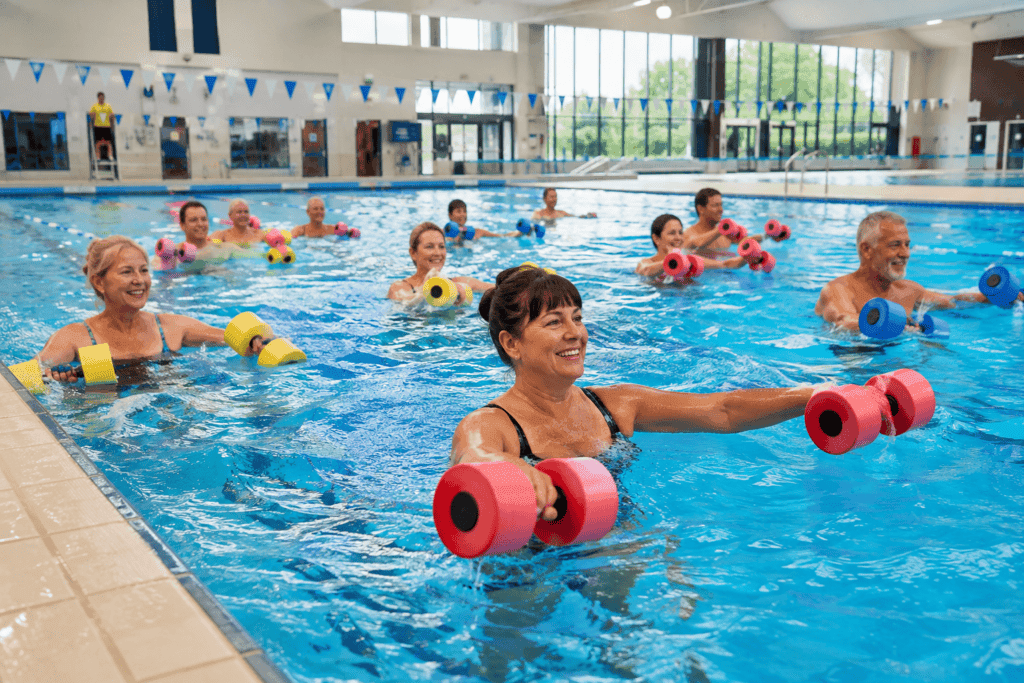
Aqua aerobics — also called water aerobics or aqua fitness — is a form of aerobic exercise performed in a swimming pool, typically in the shallow end so you don’t need to know how to swim. You’ll follow a class led by an instructor on poolside, working through a sequence of movements that get your heart rate up, strengthen your muscles, and improve your flexibility — all while your body is submerged in water.
The water provides natural resistance in every direction, which means your muscles work harder than they would doing the same movements on land. At the same time, buoyancy supports up to 90% of your body weight, removing the joint impact that makes high-intensity exercise tough for many people. It’s this combination — serious workout, minimal stress on joints — that makes aqua aerobics so effective and so accessible.
Classes usually run for 45–60 minutes and are held in leisure centres, hotel pools, and dedicated aquatic fitness studios across the UK. You don’t need to be a confident swimmer; most sessions stay in chest-to-waist-depth water throughout.
Why Aqua Aerobics Is Booming Right Now
Aqua aerobics has quietly shaken off its “just for older adults” reputation and is attracting a much wider crowd. Here’s what’s driving the surge in UK participation.
It’s genuinely hard work
The buoyancy illusion fools first-timers every time. You step into the pool thinking it’ll be easy, and ten minutes in you’re working harder than you expected. Water resistance is roughly 12 times greater than air resistance, so even slow movements recruit significant muscle effort. A 60-minute aqua aerobics class burns between 400 and 600 calories depending on intensity and your body weight — comparable to a brisk jog, without any of the impact.
It’s perfect for injury recovery and chronic conditions
The NHS recommends aquatic exercise for people managing arthritis, lower back pain, and joint conditions because the water eliminates the compressive forces that make land-based exercise painful. According to Swim England’s Aqua Fitness programme, regular water-based exercise improves cardiovascular fitness, muscular strength, and flexibility while reducing the risk of exercise-related injury — a combination that’s difficult to find in any other single activity.
Beyond rehabilitation, aqua aerobics suits anyone who finds high-impact workouts hard on their knees, hips, or back. That includes postnatal women returning to exercise, people carrying extra weight who find floor-based classes uncomfortable, and older adults who want to stay active without risking falls or joint flare-ups.
The social element hits different
There’s something about exercising in a group in a pool that creates a different kind of atmosphere to a gym floor. Classes tend to be relaxed, chatty, and fun — participants are there because they enjoy it, not because they feel obligated. Many UK leisure centres report that aqua aerobics classes have some of the highest retention rates of any group fitness format, with regulars attending weekly for years.
What to Expect in Your First Aqua Aerobics Class
If you’ve never tried a water fitness class before, here’s what the session will typically look like.
Warm-up (5–10 minutes): You’ll start with gentle movements to get the blood flowing — walking laps through the water, shoulder rolls, and some light leg swings. The resistance of the water means even this warming-up phase is working your body.
Main set (35–45 minutes): The instructor will lead you through sequences of movements that target your cardiovascular system and major muscle groups. Expect jogging on the spot, jumping jacks (called “tuck jumps” in water), cross-country ski movements, punching and kicking motions, and a lot of core engagement. Many classes use foam pool noodles, dumbbells, or resistance gloves to add extra intensity.
Cool-down and stretch (5–10 minutes): The session ends with slower movements and stretches to bring your heart rate down. The warm water makes this stretch section more effective than a chilly gym studio — your muscles relax far more easily.
Wear a swimsuit rather than gym kit, and bring a towel and a drink of water. Despite being in a pool, you’ll still sweat and need to stay hydrated. Most venues have changing facilities, and many have a pool café or juice bar nearby.
How Much Do Aqua Aerobics Classes Cost in the UK?
Costs vary significantly depending on where you go, but aqua aerobics is generally one of the most affordable group fitness options available. If you’re weighing this up against a standard gym membership, it’s worth comparing your full UK gym membership costs for 2026 — aqua fitness is often included in local authority leisure centre memberships at no extra charge.
- Local authority leisure centres: £4–£8 per drop-in class, or included in memberships from £25–£45/month
- Private leisure clubs (David Lloyd, Nuffield, Virgin Active): Included in memberships from £60–£120/month
- Specialist aqua fitness studios: £12–£20 per session, with block booking discounts typically bringing it to £9–£15
- Hotel pools: Varies widely; often £8–£15 per session for non-members
The most accessible entry point is your local council-run leisure centre. Almost every town in the UK has one, and they’re required to offer affordable classes to the community. Many run concession rates for over-60s, people on Universal Credit, or those with disabilities — often reducing the drop-in price to £2–£4.
Is Aqua Aerobics the Same as Swimming for Fitness?
Not quite. While both take place in a pool, they use the water very differently. If you’ve been drawn to swimming for fitness, you’ll know that lane swimming focuses on cardiovascular endurance through repetitive strokes — it’s rhythmic, meditative, and highly technique-dependent. Aqua aerobics, by contrast, is about performing structured exercise movements while standing or moving through the water. You don’t need any swimming technique at all.
The two complement each other well. Some UK leisure centre regulars swim lengths two or three times a week and attend aqua aerobics once a week, getting cardiovascular endurance from their lane sessions and muscular conditioning and social engagement from the aqua class. Others start with aqua aerobics because it’s lower pressure than swimming — there’s no technique to learn, no need to put your face in the water, and no requirement to keep pace with other swimmers.
Who Is Aqua Aerobics Best Suited For?
Honestly? More people than you’d think. The format particularly suits:
- People returning from injury — especially knee, hip, back, and ankle issues
- Postnatal women — aqua aerobics is often cleared earlier in recovery than floor-based exercise
- Older adults — fall risk is virtually eliminated, and the social aspect is genuinely valuable
- People with arthritis, fibromyalgia, or MS — warm water reduces pain and stiffness during exercise
- Beginners who find gym floors intimidating — there’s no pressure to perform, and you’re partially hidden by the water
- Runners and cyclists — as a cross-training option to maintain fitness during injury or rest periods
- Anyone who genuinely enjoys water — motivation is half the battle, and if the pool is your happy place, this is your workout
It’s not the best primary training method if your goals are building significant muscle mass, training for a specific sport, or achieving very high cardiovascular outputs. But as a regular component of a varied fitness routine, or as a standalone activity if land-based exercise is difficult, it’s genuinely excellent. If you’re looking for other gentle but effective low-impact formats, Pilates is another brilliant low-impact option that pairs very well with aqua aerobics as a weekly combination.
Tips for Getting the Most Out of Aqua Aerobics
Push against the water, don’t just float through it. The resistance only works if you apply force. Engage your core, keep movements controlled and deliberate, and match the instructor’s energy rather than just going through the motions.
Try a few different instructors. Like any group fitness format, the quality of the session depends heavily on the person leading it. A great aqua aerobics instructor brings energy, clear cueing, good music, and adapts movements for different abilities in the class. If your first session feels flat, try another time slot or venue before writing it off.
Go regularly. Once a week won’t move the needle much. Two to three sessions a week will deliver noticeable improvements in cardiovascular fitness, muscle tone, and joint mobility within six to eight weeks.
Stay hydrated. You don’t feel yourself sweating in water, but you are. Bring a water bottle poolside and sip before and after the session.
Ask about different class formats. Some popular aqua aerobics formats you might see on the timetable include Aquafit, Hydro Aerobics, AquaSpin (water-based cycling using submerged bikes), and Deep Water Running. Don’t assume all aqua classes are the same — they can vary quite a bit in intensity and approach.
How to Find Aqua Aerobics Classes Near You
GymPal makes it easy to find aquatic fitness venues across the UK — browse swimming and aquatic fitness venues near you to find local pools and leisure centres running water fitness classes. You can check facilities, find contact details, and book directly.
When you find a venue, it’s worth asking a few questions before your first visit:
- What’s the water temperature? Aqua aerobics works best in pools heated to 28–32°C. Cooler pools are fine for lane swimming but can be uncomfortable for slower aqua movements.
- Is the class suitable for non-swimmers? (Almost always yes, but worth confirming)
- Is equipment provided, or do you need to bring anything?
- Can you drop in for a single session, or do you need to book in advance?
- Are there multiple class levels? Some venues offer beginners, intermediate, and advanced sessions.
Most UK leisure centres post their class timetables online, and many allow you to book via app or web portal. Your local council website is usually the quickest way to find what’s on at your nearest leisure centre.
The Bottom Line
Aqua aerobics is one of those workouts that defies its own reputation. It’s harder than it looks, more effective than most people assume, and genuinely enjoyable in a way that keeps people coming back for years. If you’ve been putting off trying it because you assumed it wasn’t for you, it might be time to reconsider.
Find your nearest aquatic fitness venue on GymPal, check the timetable, and give it a go. You might be surprised how good a proper water workout can feel — and how much you want to go back.

I am Adam Hall, a dedicated fitness professional with over ten years of experience in the UK’s fitness industry. I earned my Master’s degree in Sports Science from Loughborough University and have worked with several top fitness studios across the UK. My certifications include a Level 3 Personal Trainer Certificate and a specialised Strength and Conditioning Coach accreditation.
Starting my career as a personal trainer, I quickly moved up to manage multiple gym locations, overseeing their operations and training programs. Beyond managing gyms, I regularly contribute to well-known fitness magazines and have been featured in articles for “Health & Fitness” and “Men’s Health”. My passion also extends online where I run a popular blog on GymPal’s AI-powered directory platform detailing insights into choosing the right fitness venues across the UK. With hundreds of posts reaching thousands of readers monthly, my goal is to influence positive changes in how people approach health and exercise throughout the country.