HIIT Classes UK: What to Expect, What It Costs, and How to Find One Near You

Click Below To Share & Ask AI to Summarize This Article
Walk into any UK gym or fitness studio right now and you’ll find it: a room full of people doing burpees, box jumps and battle ropes to thumping music, looking like they’re one minute from collapse — and absolutely loving it. HIIT classes have become one of the most popular group fitness formats in Britain, and for very good reason.
They deliver real results in a short amount of time, they require zero equipment knowledge, and the group energy makes you push harder than you ever would alone on a treadmill. Yet if you’ve never tried one, the prospect can feel genuinely intimidating. What actually goes on in there? Do you need to already be fit? Will everyone be staring at you when you’re gasping after the first set?
This guide covers everything you need to walk into your first HIIT class in the UK feeling prepared rather than panicked — what to expect, what you’ll pay, and how to find the right class near you.
What Actually Happens in a HIIT Class?
HIIT — short for High Intensity Interval Training — is built around short bursts of hard effort followed by brief rest periods. That structure is what makes it so effective: you push your cardiovascular system hard, recover just enough to go again, and repeat. A typical class runs 30 to 45 minutes, which is a huge part of the appeal. You’re not slogging through an hour on the treadmill. You’re working smarter.
The format varies between studios, but the core structure stays the same: work intervals followed by rest intervals. A typical UK HIIT class looks something like this:
- Warm-up (5 minutes): Dynamic stretching, light cardio, mobility work to prime your body and reduce injury risk.
- Main workout (25–35 minutes): Multiple rounds of exercises performed at high intensity. A common format is 40 seconds of work followed by 20 seconds of rest, cycling through eight to ten different movements per round.
- Cool-down (5 minutes): Static stretches to bring your heart rate down and begin recovery.
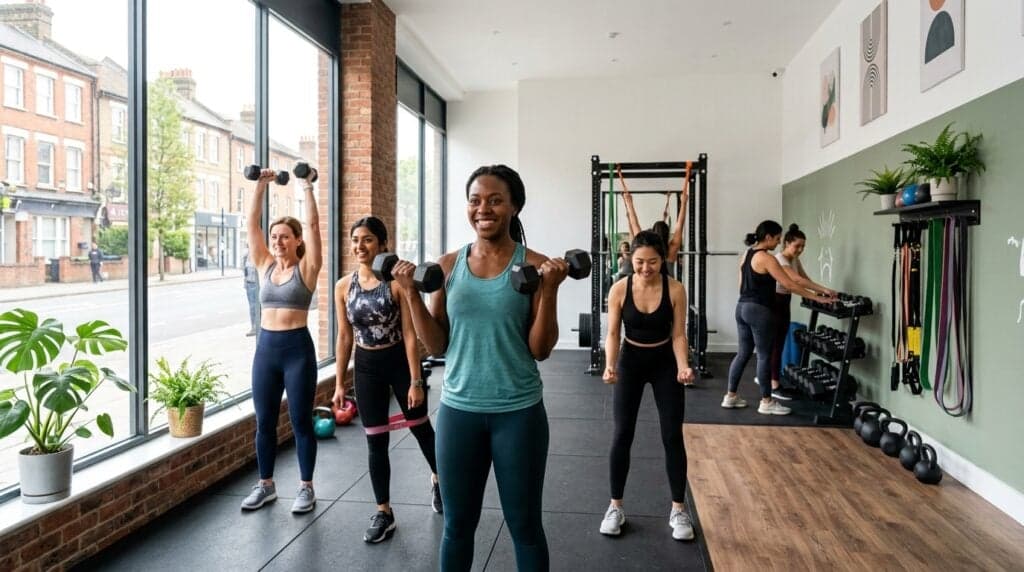
The exercises themselves vary by studio and instructor. Expect bodyweight movements (burpees, jump squats, mountain climbers), plyometrics (box jumps, lateral bounds), and sometimes kit-based exercises using dumbbells, kettlebells, resistance bands or rowing machines.
F45 classes use functional training circuits with a mix of cardio and resistance. Barry’s Bootcamp — which has UK studios in London, Manchester and Edinburgh — splits sessions between treadmill sprints and floor work. Your local gym’s HIIT class might be simpler, but equally effective. The common thread is this: you’re expected to work at 80–90% of your maximum effort during work intervals. If you feel fine at the end of a work period, you weren’t pushing hard enough.
How Fit Do You Need to Be?
Here’s the honest answer: you don’t need to be fit to start HIIT. You need to be fit enough to walk through the door.
HIIT classes are designed to be scalable. Every exercise has a lower-impact modification. Can’t do a burpee yet? Step out instead of jumping. Can’t do jump squats? Do regular squats. Can’t keep up with the pace? Slow down slightly. Good instructors make this explicit at the start of every class.
What you will find hard — especially in your first few sessions — is the cardiovascular intensity. Your lungs and heart will be working harder than you’re used to, and that’s genuinely uncomfortable. That discomfort is temporary and it’s the mechanism by which HIIT works. Within three or four sessions, your body adapts remarkably quickly.
A few sensible rules for session one:
- Don’t go all-out. Aim for a 7/10 effort, not 10/10. You don’t know the exercises yet and your body needs time to learn the movements properly.
- Tell your instructor it’s your first time. They’ll watch your form and offer modifications without you needing to ask.
- Eat something beforehand. Not a full meal — a banana or small snack about an hour before works well. Running on empty in a high-intensity class is miserable.
- Drink during rest intervals. The sessions are short but the sweat output is significant.
If you have any underlying health conditions — particularly cardiac or orthopaedic — check with your GP before starting a high-intensity programme. The NHS recommends that adults aim for 75 minutes of vigorous activity per week, and HIIT counts towards that target. Two or three HIIT sessions per week easily gets you there.
What Does a HIIT Class Cost in the UK?
Pricing varies considerably depending on where you go. Understanding your options helps you find something that fits both your schedule and your budget — and there’s a much wider range than most people realise.
Gym-based HIIT classes are the most affordable route. If you’re already a member at PureGym, The Gym Group, or JD Gyms, HIIT classes are typically included at no extra charge. These chains run at roughly £20–£35 per month, which — as the breakdown of UK gym membership costs in 2026 makes clear — represents genuinely strong value for unlimited group fitness sessions.
Boutique HIIT studios charge a premium. Expect to pay:
- Drop-in class: £18–£30
- Monthly class pack (8–12 classes): £80–£150
- Unlimited monthly membership: £100–£200
Studios like F45 and Barry’s Bootcamp sit at the top of that range in UK cities. The production quality is higher — better equipment, pumping sound systems, instructors who perform as much as they coach — but you’re paying for that experience.
Online and hybrid options have expanded significantly since 2020. Apps like Les Mills On Demand (£17.99/month) and popular YouTube channels from UK-based trainers offer solid HIIT workouts you can do at home. These lack the group energy that makes in-studio HIIT so effective, but they’re a useful low-commitment starting point.
For most people beginning their HIIT journey, the smart move is to use your existing gym membership first. Once you know you genuinely enjoy the format, then consider whether upgrading to a boutique studio is worth the extra spend.
HIIT vs Bootcamp: What’s the Difference?
People often use HIIT and bootcamp interchangeably. They’re not quite the same thing, and knowing the difference helps you choose the right class.
HIIT is a training methodology built on precise work-to-rest ratios. It’s primarily cardiovascular, though modern HIIT classes increasingly blend in resistance work. The defining characteristic is structured intervals: tracked work and rest periods, often displayed on-screen or called out by the instructor.
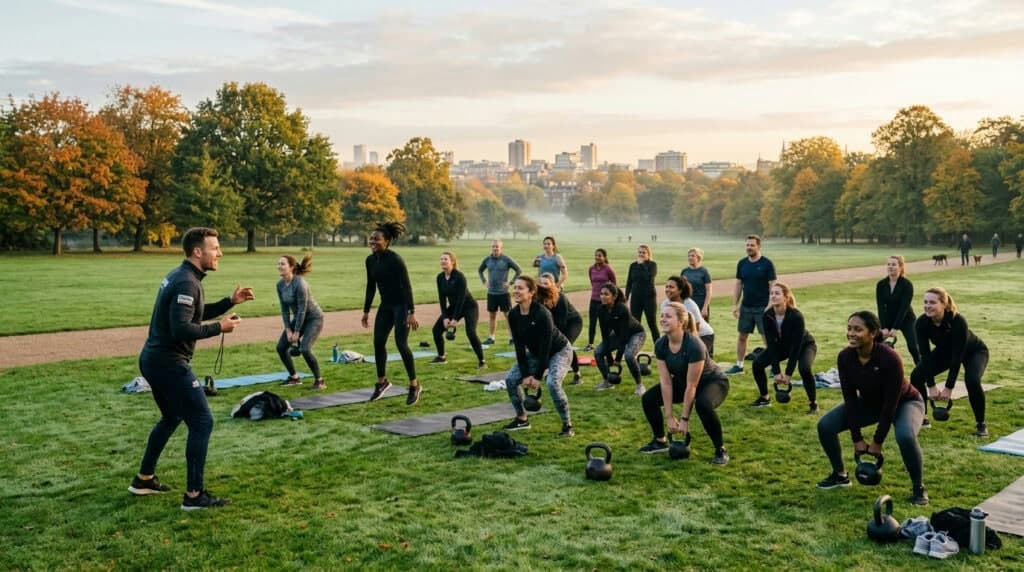
Bootcamp is a broader group fitness style inspired by military training. It tends to involve longer, more varied work periods, less strict timing, and sometimes outdoor settings. The goal is general conditioning and functional fitness rather than heart rate manipulation specifically.
In practice, many bootcamp sessions use HIIT principles — and many HIIT classes use bootcamp-style exercises. If you’re drawn to the results-focused, high-energy atmosphere of both, they’re more complementary than competing. The evidence on bootcamp training for weight loss suggests the calorie burn and metabolic effects overlap significantly with HIIT. The format that suits you depends on whether you prefer the structured timing of interval training or the more varied, instinctive feel of bootcamp.
Both work. The best one is the one you’ll actually keep turning up for.
Getting the Most From Your First Few Sessions
HIIT is effective, but it’s also demanding. Here’s how to get results without getting injured or burning out early on.
Don’t train HIIT every day. Two to three sessions per week is the sweet spot for most people. Your body needs recovery time between intense sessions — that’s when the adaptation actually happens. Fill the gaps with lower-intensity movement: a walk, a swim, or yoga gives you active recovery without adding physiological stress.
Prioritise form before intensity. In your first few sessions, focus on getting movements right before going as fast or heavy as possible. A controlled burpee is more valuable than a fast, sloppy one — and in high-intensity environments, poor form is how people pick up avoidable injuries.
Track how you feel, not just what you did. One of the genuinely satisfying things about HIIT is how quickly you improve. Your first session might feel absolutely horrific. By week four, you’ll be going harder during the rest breaks than you were during work intervals three weeks ago. Keeping a brief note after each session — even just a 1–10 effort rating — lets you see that progress clearly.
Fuel and recover properly. Post-session nutrition matters. HIIT depletes muscle glycogen significantly. Eating something with protein and carbohydrates within 30–60 minutes of finishing helps recovery and reduces next-day soreness.
If you want personalised guidance on exercise form or a programme built specifically around your goals, working with a personal trainer in the UK can make a substantial difference — especially in those early sessions when technique matters most.
How to Find a HIIT Class Near You
The UK has an enormous range of HIIT options — from national gym chains with classes included in membership to boutique studios, independent fitness spaces, and outdoor formats. The challenge is knowing what’s available near you and how to compare what’s on offer.
GymPal is the UK’s largest fitness venue finder, with thousands of gyms, studios, bootcamp venues and fitness spaces you can search by location. Whether you’re after a budget gym with HIIT classes included, a premium studio with state-of-the-art equipment, or something closer to home, GymPal makes it straightforward to compare your options and find somewhere worth joining.
When you’re evaluating a studio or gym, look for:
- Class size: Smaller classes (under 20 people) mean more instructor attention and better form feedback — important when you’re starting out.
- Instructor qualifications: A good HIIT instructor should hold a Level 3 Personal Training qualification or an accredited group fitness certification.
- Free trial: Most boutique studios offer a first class free or heavily discounted. Use it. Don’t commit to a membership without trying the class first.
- Timetable flexibility: HIIT’s 30–45 minute format is one of its biggest selling points. Check that the schedule has slots that genuinely fit your week before you sign up.
The Bottom Line
HIIT classes work — the evidence is solid, the format is time-efficient, and the group energy makes you push harder than most people ever manage training alone. You don’t need to be fit to start; you just need to show up and be willing to feel uncomfortable for half an hour.
The UK has no shortage of options, from budget-friendly gym HIIT classes included in a basic membership to premium boutique experiences that turn exercise into an event. Start with what’s accessible and affordable, build the habit, and upgrade when it makes sense.
Search for gyms and fitness studios near you on GymPal — find HIIT classes, bootcamps, and group fitness venues across the UK, all in one place.

I am Adam Hall, a dedicated fitness professional with over ten years of experience in the UK’s fitness industry. I earned my Master’s degree in Sports Science from Loughborough University and have worked with several top fitness studios across the UK. My certifications include a Level 3 Personal Trainer Certificate and a specialised Strength and Conditioning Coach accreditation.
Starting my career as a personal trainer, I quickly moved up to manage multiple gym locations, overseeing their operations and training programs. Beyond managing gyms, I regularly contribute to well-known fitness magazines and have been featured in articles for “Health & Fitness” and “Men’s Health”. My passion also extends online where I run a popular blog on GymPal’s AI-powered directory platform detailing insights into choosing the right fitness venues across the UK. With hundreds of posts reaching thousands of readers monthly, my goal is to influence positive changes in how people approach health and exercise throughout the country.