Aqua Fitness UK: The Pool Workouts That Go Way Beyond Swimming Lengths
Click Below To Share & Ask AI to Summarize This Article
Most people walk past the pool on the way to the gym floor without a second glance. Swimming lengths isn’t everyone’s thing — it can feel repetitive, technical, or just a bit lonely staring at the black line on the bottom of the pool. But what if the pool itself was the gym?
Aqua fitness has exploded across UK leisure centres and health clubs over the past few years, and for good reason. These classes use water’s natural resistance to torch calories, build strength, and protect your joints in ways a treadmill simply can’t match. Whether you’re coming back from injury, looking for a new challenge, or just fancy something different on a Wednesday morning, there’s a water workout for you.
This guide covers everything you need to know about aqua fitness in the UK — from the different class types to what to wear, how to find sessions near you, and why your local pool might just become your favourite place to train.
What Is Aqua Fitness (And What It Isn’t)?
Aqua fitness is an umbrella term for any structured exercise that takes place in water — typically a pool — where the movements are driven by resistance rather than buoyancy. You don’t need to be a strong swimmer. In most aqua classes, you’re standing in water between waist and chest height and the swimming part is entirely optional.
What makes water training unique is physics. Water is roughly 800 times denser than air, meaning every movement you make encounters resistance in all directions. Push forward, you push against water. Pull back, same again. This 360-degree resistance means your muscles work harder through a fuller range of motion than they would doing the same movement on land — often without you realising how hard you’re working until the next day.
The hydrostatic pressure of the water also supports your body weight (reducing impact by up to 90% compared to land), keeps your heart rate naturally lower than equivalent land exercise, and can actually improve circulation. For anyone with arthritis, recovering from surgery, or managing chronic pain, this makes aqua fitness genuinely transformative rather than just a nice alternative.
The Main Types of Aqua Fitness Classes in the UK
Walk into any large UK leisure centre and you’ll likely see a packed timetable of pool classes. Here’s what each one actually involves:
Aqua Aerobics
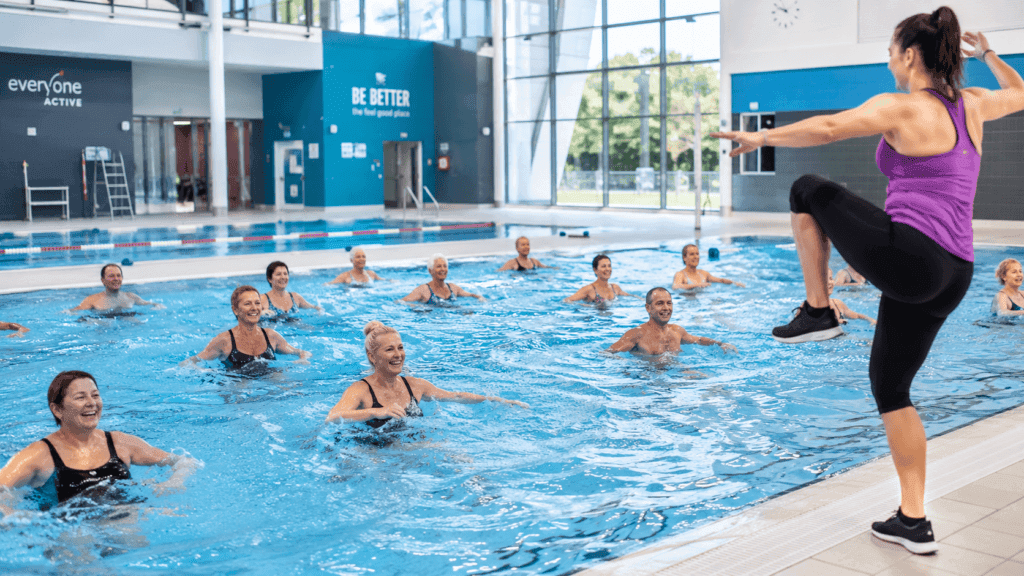
The classic. Aqua aerobics classes typically run 45–60 minutes and follow a structured cardio format — jumping jacks, jogging in place, kicks, punches, and high knees, all performed to upbeat music. An instructor on the poolside leads the session and adjusts the intensity throughout. These classes suit all ages and abilities, and the music tends to be cheerfully loud. Don’t let the “older demographic” stereotype put you off — a decent aqua aerobics instructor will leave you properly puffed.
Aqua HIIT
Think everything you know about HIIT training in the UK — short bursts of maximum effort followed by brief recovery — translated into the pool. The water resistance makes every interval substantially harder than its land equivalent, while the buoyancy protects your joints from the pounding that comes with standard HIIT. Sessions typically run 30–45 minutes and are genuinely intense. These classes are increasingly common at private gyms and health clubs with pools.
Aqua Jogging
Exactly what it sounds like. Using a buoyancy belt (provided by the facility) around your waist, you run in deep water without touching the bottom. It’s a favourite cross-training tool for injured runners — you maintain your cardiovascular fitness and running mechanics while completely eliminating impact. Some UK running clubs book pool lanes for group aqua jogging sessions during injury recovery periods.
Hydrospinning
Submerged cycling on specially designed waterproof bikes anchored to the pool floor. Hydrospinning is the aqua fitness equivalent of an indoor cycling class — the same music-driven intervals and instructor-led intensity, but with the added resistance and cooling effect of the water. You’ll typically be submerged from the waist down. It’s increasingly available at higher-end health clubs and spa facilities, and it’s a surprisingly exhilarating workout once you get past the novelty of pedalling in a pool.
Aqua Yoga and Aqua Pilates
Slower, more mindful sessions that use the water’s support to take traditional yoga and Pilates movements into a new dimension. The instability of moving water engages your core constantly, while the support makes deep stretches more accessible. These classes are particularly popular with older participants and those managing mobility issues, but they challenge everyone’s balance and body awareness.
Aqua Therapy / Hydrotherapy
Distinct from general aqua fitness, hydrotherapy sessions are clinically led — usually by physiotherapists — and designed for rehabilitation from specific injuries or conditions. Many NHS trusts and private physio practices offer hydrotherapy, and some gyms with pools run supervised therapeutic sessions. If you’re recovering from a knee replacement, hip surgery, or managing a chronic condition, ask your GP or physio whether hydrotherapy would be appropriate.
The Real Fitness Benefits of Training in Water
Aqua fitness punches above its weight when it comes to measurable health outcomes — and the evidence for this is well-established in UK fitness and physiotherapy communities.
Cardio without the impact. Your heart and lungs work just as hard in water as on land, but your knees, hips, ankles, and spine absorb a fraction of the force. This makes aqua fitness one of the few genuinely sustainable cardio options for people with osteoarthritis, joint problems, or post-injury limitations.
Whole-body muscle engagement. Because water resists movement in every direction, you recruit stabilising muscles that are largely dormant during machine-based gym work. Your core, in particular, works constantly to keep you upright and balanced against the current.
Calorie burn that surprises people. A 60-minute aqua aerobics class burns between 400–600 calories depending on intensity and body weight — comparable to a moderate cycling session. Aqua HIIT can push that higher. The water keeps you cool so you don’t feel like you’re working as hard as you are.
Mental health benefits. There’s growing evidence that exercising in water has a measurably positive effect on mood and anxiety. The sensory experience of warm water, combined with the social nature of group classes, makes aqua fitness one of the more enjoyable forms of structured exercise people actually stick to.
According to Sport England’s Active Lives research, regular aquatic exercise is associated with reduced risk of chronic illness, improved mental wellbeing, and stronger long-term adherence to physical activity compared to many land-based alternatives.
If you’re already a regular swimmer, adding aqua fitness classes to your routine offers a completely different stimulus — one that complements rather than duplicates your lane swimming. And if you’ve been swimming lengths as your main form of exercise, the world of pool-based fitness in the UK goes much further than you might have explored.
Who Is Aqua Fitness Right For?
The short answer: almost everyone. But there are some groups for whom it’s particularly well-suited.
Beginners and those returning to exercise. If the thought of a gym floor feels intimidating, a pool class is one of the most welcoming environments in fitness. The water hides your effort level from others (no one can see you gasping), the social atmosphere of group classes takes the pressure off, and the instructor paces the session for the whole group.
People managing injuries or chronic conditions. Aqua fitness is routinely recommended by UK physiotherapists for people with arthritis, back pain, fibromyalgia, and post-surgical recovery. Always clear new exercise with your GP or physio first, and let your class instructor know about any conditions before you start.
Older adults. Balance, coordination, bone health, and cardiovascular fitness — aqua fitness addresses all of them. Many UK leisure centres run dedicated 50+ aqua sessions, and the social aspect of these classes is an underrated part of their appeal.
Pregnant women. Aquatic exercise is one of the most recommended forms of exercise during pregnancy in the UK. The water supports the body weight, reduces the risk of overheating, and keeps impact to zero. Many leisure centres run dedicated antenatal aqua sessions.
Serious athletes looking for cross-training. Aqua jogging and aqua HIIT are increasingly used by competitive runners, cyclists, and footballers as injury-prevention and active recovery tools. The cardiovascular load is genuine while the recovery demand is substantially lower than equivalent land training.
What to Bring and What to Expect at Your First Class
Walking into your first aqua fitness class is low-stakes — here’s what to know so you’re not caught out.
What to wear. A standard swimsuit or swim shorts work fine. Women often prefer a secure-fitting one-piece or a swimsuit with a built-in top for active movement. Avoid any swimwear that’s too loose — it creates a parachute effect in water that’s more awkward than it sounds. Goggles aren’t usually needed as you won’t be putting your head under.
What the facility provides. Most UK leisure centres provide pool noodles, floats, resistance dumbbells, and buoyancy belts as part of the class. You don’t need to bring anything beyond your swimwear and a towel. Some hydrospinning classes may have specific footwear requirements — worth checking in advance.
Water temperature. Most UK pools run at 28–30°C for fitness classes — warmer than open water swimming but comfortable for sustained exercise. Hydrotherapy pools are often warmer (32–34°C). If the temperature matters to you for health reasons, call ahead to check.
The vibe. Most aqua fitness classes are genuinely friendly and unpretentious. Don’t worry about keeping up perfectly at first — the instructor will offer modifications, and nobody in the class can see your feet anyway. Give it two or three sessions before you decide whether it’s for you.
After the class. You might not feel like you’ve worked hard while you’re in the water — the cooling effect masks exertion. Don’t be surprised if your legs are more tired than expected the next morning. This is normal and means it’s working.
How to Find Aqua Fitness Classes Near You in the UK
Your best starting point is your nearest council leisure centre. Most local authority pools run aqua aerobics on their weekly timetable, typically in the mornings and early evenings when the lanes are less busy. Class memberships are often significantly cheaper than gym-only memberships and usually include unlimited pool access alongside the classes.
Private health clubs with pools — particularly the larger chains and independent health clubs — are increasingly adding aqua HIIT and hydrospinning to their timetables as demand grows. If you’re looking for a gym with pool and spa access, many health club memberships include all pool-based classes as standard.
GymPal makes it easy to find swimming pools and aqua fitness venues near you across the UK. Search for pools and aquatic venues on GymPal to see what’s available in your area, compare facilities, and find contact details for booking your first session.
When you’re evaluating a venue, ask specifically:
- How many aqua classes are on the weekly timetable?
- Are classes included in the membership or charged separately?
- What’s the pool temperature for fitness classes?
- Is equipment (noodles, floats, dumbbells) provided?
- Do they run any specialist sessions (aqua HIIT, hydrospinning, antenatal)?
Aqua Fitness in the UK: The Verdict
If you’ve never tried aqua fitness, it’s one of those workouts that consistently surprises people. The assumption going in is that it’s easy or only for certain demographics. The reality is that a well-run aqua class is a genuine full-body workout that gets your heart rate up, challenges your muscles in ways the gym floor doesn’t, and leaves you feeling both worked and refreshed rather than beaten up.
The joint-friendly nature means it’s accessible to almost anyone — and the social, music-driven atmosphere of group pool classes makes it one of those rare forms of exercise that people actually look forward to. That’s the real secret to long-term fitness: finding something you’ll still be doing in six months. For a lot of UK gym-goers, aqua fitness turns out to be exactly that.
Ready to take the plunge? Search for gyms and leisure centres with pools on GymPal and find your nearest aqua fitness class today.

I am Adam Hall, a dedicated fitness professional with over ten years of experience in the UK’s fitness industry. I earned my Master’s degree in Sports Science from Loughborough University and have worked with several top fitness studios across the UK. My certifications include a Level 3 Personal Trainer Certificate and a specialised Strength and Conditioning Coach accreditation.
Starting my career as a personal trainer, I quickly moved up to manage multiple gym locations, overseeing their operations and training programs. Beyond managing gyms, I regularly contribute to well-known fitness magazines and have been featured in articles for “Health & Fitness” and “Men’s Health”. My passion also extends online where I run a popular blog on GymPal’s AI-powered directory platform detailing insights into choosing the right fitness venues across the UK. With hundreds of posts reaching thousands of readers monthly, my goal is to influence positive changes in how people approach health and exercise throughout the country.