Bootcamp Classes UK: Everything You Need to Know Before Your First Session
Click Below To Share & Ask AI to Summarize This Article
If you’ve ever walked past a group of people doing burpees in a park at 7am and thought “that looks absolutely brutal, but also kind of brilliant” — you’re not alone. Bootcamp fitness classes are one of the fastest-growing workout formats in the UK, and for good reason. They’re sociable, results-driven, and genuinely addictive once you get going.
Whether you’re looking for something that’ll shift you from the sofa to properly fit in three months, or you’re a regular gym-goer who wants more variety and fresh air, bootcamp classes offer a full-body challenge that most indoor sessions just can’t replicate. This guide covers everything you need to know — what bootcamp actually involves, how much it costs, where to find sessions near you, and whether it’s the right fit for your fitness goals.
Spoiler: for most people, it absolutely is.
What Is a Bootcamp Fitness Class?
The term “bootcamp” gets thrown around a lot, but in UK fitness circles it typically refers to a high-intensity group training session that combines cardiovascular exercise, bodyweight movements, and strength work. Sessions usually last between 45 minutes and an hour, and are designed to keep your heart rate elevated throughout — meaning you burn a serious amount of calories in a short time.
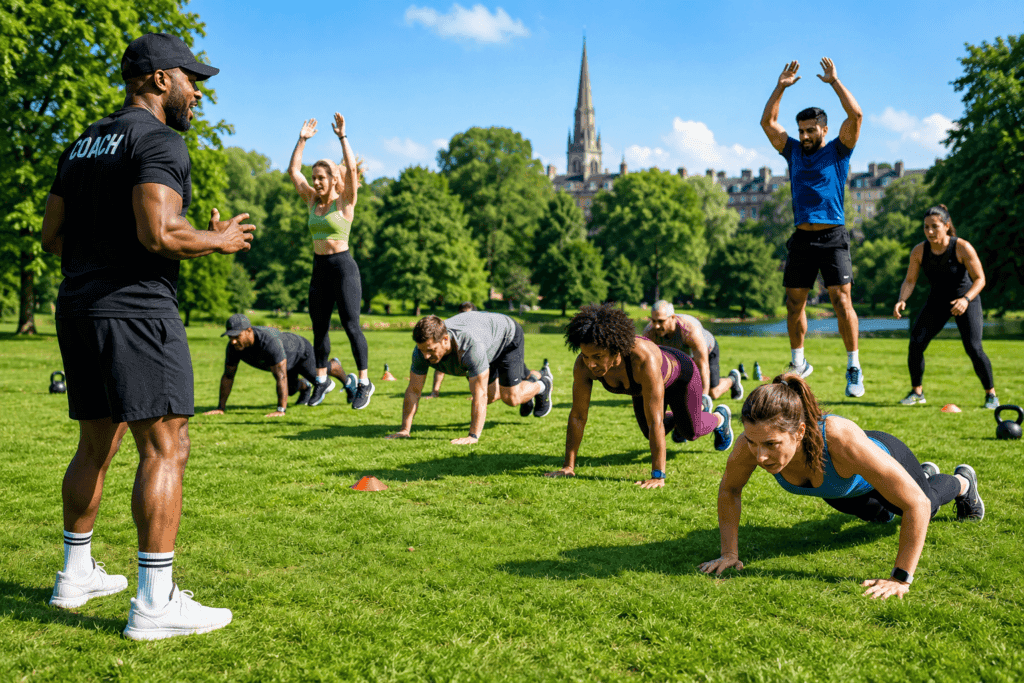
Most bootcamp sessions are led by a qualified personal trainer or fitness coach and take place outdoors — in parks, on playing fields, or on the beach. Some gyms and studios also run indoor bootcamp classes, particularly during winter months, but the outdoor format is the one most people associate with the name.
A typical session might include:
- Warm-up jog and dynamic stretches
- Interval circuits (30 seconds on, 15 seconds rest)
- Bodyweight exercises: press-ups, squats, lunges, mountain climbers, burpees
- Partner drills or team challenges
- Sprint intervals or shuttle runs
- Core finisher and cool-down stretches
The exact format varies between providers, but the common thread is intensity, variety, and a trainer who won’t let you give less than your best.
How Bootcamp Compares to Other Group Classes
It’s worth understanding how bootcamp stacks up against other popular formats before you commit. The short answer: bootcamp is harder than most, more varied than almost all, and better suited to people who want genuine results rather than a gentle weekly workout.
Compared to [HIIT classes at a gym or studio](https://askgympal.co.uk/blog/hiit-classes-uk-guide/), outdoor bootcamp tends to involve more running, more space, and a stronger community atmosphere. HIIT is typically done in a studio with equipment (kettlebells, dumbbells, battle ropes), while bootcamp relies primarily on your bodyweight and the terrain. Both formats are excellent, but they feel very different in practice — bootcamp has a rawness to it that many people find more motivating.
Compared to [functional fitness training](https://askgympal.co.uk/blog/functional-fitness-gyms-uk-guide/), bootcamp is generally more cardio-heavy and less focused on lifting mechanics. If you’re trying to build strength alongside conditioning, functional fitness might be a better primary focus — but bootcamp is a brilliant complement to it.
Spin classes, yoga, Pilates — all fantastic, but none of them will test your mental grit quite like a 6am hill sprint session in February. That’s bootcamp’s real selling point: it builds resilience as much as fitness.
The Benefits of Bootcamp Training
Bootcamp isn’t just hard for the sake of it — the format is built around proven principles of fitness training, and the results speak for themselves. Here’s why so many UK gym-goers are swapping the treadmill for the park:
1. Full-body conditioning in under an hour
Bootcamp hits every major muscle group in a single session. You’ll work your legs, chest, back, arms, shoulders, and core — often in the same circuit. For people with limited time, that efficiency is hard to beat.
2. The community effect
Research consistently shows that exercising with others improves adherence and performance. When you’re halfway through your third round of burpees and about to quit, the person next to you keeping going makes a genuine difference. Bootcamp groups develop a tight-knit culture — many participants say they look forward to seeing their class as much as the workout itself.
3. Adaptable to all fitness levels
Good bootcamp instructors provide modifications for every exercise. Knees can’t handle jump lunges? You do walking lunges instead. Press-ups on your toes too much? Drop to your knees. The intensity is high, but the barrier to entry isn’t — most providers explicitly welcome beginners.
4. Fresh air and the outdoors
The UK doesn’t always make outdoor exercise easy, but the benefits of training in fresh air are well-documented — improved mood, better sleep, reduced stress. Even on a grey Wednesday morning in Manchester, finishing a bootcamp session with endorphins and morning light is a different feeling from grinding away on a gym machine.
5. No gym membership required
You don’t need any equipment — just decent trainers and kit. For people who want effective training without paying for a gym they don’t always use, bootcamp offers real value.
How Much Do Bootcamp Classes Cost in the UK?
Prices vary quite a bit depending on location, provider, and class format. Here’s a realistic breakdown of what to expect across the UK:
| Format | Typical Cost |
|---|---|
| Drop-in single session | £8–£15 |
| Monthly unlimited membership | £40–£80 |
| Block booking (10 sessions) | £60–£100 |
| Corporate/team bootcamp | £150–£400 per session |
| Residential bootcamp weekend | £200–£600 |
In London, expect to pay towards the higher end of those ranges. In cities like Leeds, Birmingham, Manchester, and Bristol, prices tend to be more competitive. Rural providers — particularly those running sessions in countryside parks or coastal locations — are often the best value of all.
Many providers offer a free first session or discounted trial. Always ask — it’s a standard part of the industry, and a good way to try before you commit.
What to Wear and Bring to Your First Session
There’s no dress code for bootcamp, but a few practical considerations will make your first session much more comfortable:
- Trainers with good grip. You’ll be moving fast and doing lateral movements on grass and potentially wet surfaces. Running trainers work, but cross-trainers are better.
- Layers you can remove. You’ll warm up fast, so wear something you can strip back to without getting cold at the start.
- A water bottle. Non-negotiable — you’ll sweat a lot.
- A small towel. For floor-based exercises and wiping down if it’s a warm session.
- Gloves (optional but useful). Early morning grass can be cold and damp for press-up work.
Most outdoor bootcamp providers don’t use equipment beyond exercise mats, resistance bands, or the occasional kettlebell — everything else is you versus the ground. If the session uses additional kit, you’ll be told in advance.
Feeling Nervous? You’re Not Alone
First-session nerves are completely normal, particularly if you’re newer to group exercise. The energy of a bootcamp class can feel intimidating from the outside — everyone seems to know each other, the instructor is calling out exercises at pace, and you’re not sure where to stand.
The reality is that most bootcamp communities are genuinely welcoming to newcomers. If [gym anxiety has held you back from group classes](https://askgympal.co.uk/blog/gym-anxiety-uk-how-to-overcome-gymtimidation/) before, bootcamp in a park setting often feels less intimidating than a gym floor — there’s no mirrors, no posing, just a group of people getting it done.
Tell the instructor it’s your first session before you start. Every good coach will keep an eye on you, offer modifications when needed, and make sure you leave feeling good rather than broken.
Where to Find Bootcamp Classes Near You in the UK
Bootcamp sessions run in virtually every corner of the UK — from Hyde Park in London to Heaton Park in Manchester, from the Brighton seafront to Holyrood Park in Edinburgh. The challenge isn’t finding bootcamp near you; it’s finding the right one.
Here’s how to search effectively:
- Use GymPal. Search for bootcamp classes on GymPal to find verified sessions near your postcode across the UK — with real reviews, class times, and direct booking links.
- Check your local park. Many councils and community fitness groups run low-cost or free bootcamp sessions, particularly in larger urban parks.
- Ask at your gym. Many PT-led gyms and independent studios run outdoor bootcamp as a complement to their indoor timetable — your existing gym might already offer it.
- Instagram and Facebook. Local fitness coaches often promote their bootcamp sessions on social media. Search “[your town] bootcamp fitness” to find independent instructors.
When evaluating a provider, look for instructors with a Level 3 Personal Training qualification or equivalent, public liability insurance (always ask), and good reviews from existing clients. A well-run bootcamp should have a clear attendance policy, a way to track your progress, and a coach who actually knows your name.
UK Bootcamp Fitness: By the Numbers
Group fitness in the UK is bigger than ever. According to Sport England’s Active Lives survey, 15.3 million adults now participate in fitness activities — an increase of over 2 million since 2015-16. Outdoor and community-based formats like bootcamp have been a major driver of that growth, particularly post-2020 when people discovered the appeal of training outside the four walls of a gym.
There are now over 47 dedicated bootcamp and outdoor fitness providers listed on GymPal across the UK — and that number is growing. Sessions run year-round in every major city and many smaller towns, with early morning slots (6am–8am) and lunchtime sessions being the most popular.
Is Bootcamp Right for You?
Bootcamp isn’t for everyone, and there’s no shame in that. Here’s a quick honest assessment:
Bootcamp is probably for you if:
- You want results faster than your current routine is delivering
- You thrive with accountability and group energy
- You’re bored of the gym and want something that feels genuinely different
- You want to improve cardiovascular fitness and lose body fat simultaneously
- You like the idea of training outdoors
Bootcamp might not be right for you (yet) if:
- You’re currently recovering from injury — high-impact bootcamp puts stress on joints
- You’re completely new to exercise and haven’t built any base fitness — start with lighter classes and work up
- You need highly individualised programming due to a specific health condition
If you’re on the fence, try a single drop-in session. Most people who do come back. The energy of a good bootcamp class is one of those things that’s difficult to describe and easy to get hooked on.
Find Your Nearest Bootcamp Class
Ready to give it a go? Search bootcamp classes near you on GymPal — it’s the UK’s most comprehensive directory of fitness venues and classes, with over 7,000 listings across every region. Filter by location, class type, and availability to find a session that fits your schedule.
If you’d prefer to explore your options before committing, you can also browse all fitness venues near you on GymPal — gyms, studios, outdoor classes, and more — all in one place.
The Bottom Line
Bootcamp fitness classes are one of the most effective, sociable, and genuinely enjoyable ways to get fit in the UK. They’re accessible to most fitness levels, don’t require expensive kit, and deliver real results faster than most alternatives. The community you build along the way is a bonus that keeps you coming back long after the initial motivation wears off.
If you’ve been meaning to try bootcamp but haven’t taken the leap yet, there’s no better time. Find a class, turn up once, and see how you feel. Chances are you’ll be setting your alarm for 6am next week without a second thought.

I am Adam Hall, a dedicated fitness professional with over ten years of experience in the UK’s fitness industry. I earned my Master’s degree in Sports Science from Loughborough University and have worked with several top fitness studios across the UK. My certifications include a Level 3 Personal Trainer Certificate and a specialised Strength and Conditioning Coach accreditation.
Starting my career as a personal trainer, I quickly moved up to manage multiple gym locations, overseeing their operations and training programs. Beyond managing gyms, I regularly contribute to well-known fitness magazines and have been featured in articles for “Health & Fitness” and “Men’s Health”. My passion also extends online where I run a popular blog on GymPal’s AI-powered directory platform detailing insights into choosing the right fitness venues across the UK. With hundreds of posts reaching thousands of readers monthly, my goal is to influence positive changes in how people approach health and exercise throughout the country.