Gymtimidation: How to Beat Gym Anxiety in the UK
Click Below To Share & Ask AI to Summarize This Article
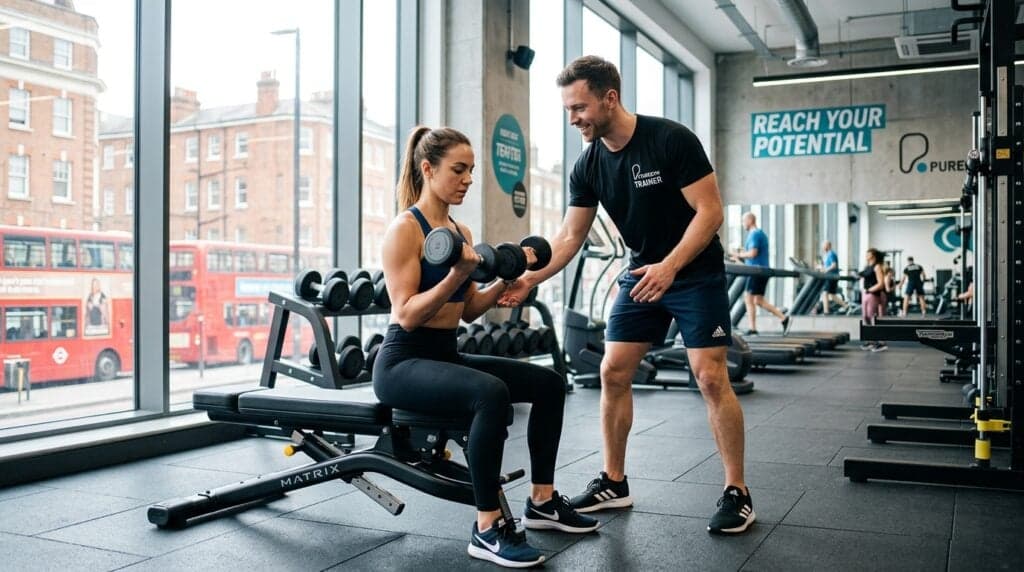
You’ve packed your kit bag three times this week and taken it out of the car twice. Sound familiar? If the thought of walking onto a gym floor makes your stomach drop, you’re not being dramatic and you’re definitely not alone. It’s got a name now: gymtimidation. And it stops more people from getting fit than dodgy weather or a packed diary ever could.
A recent UK fitness industry survey found that 56% of gym-goers admit to some form of gym-related anxiety, and the number climbs even higher among people who haven’t joined at all. Women are more than three times as likely as men to report feeling intimidated, and the 25-34 age group struggles the most, with the majority saying they simply don’t know how the equipment works or what they’re supposed to be doing.
The good news is that gymtimidation is entirely beatable, and it usually only takes a handful of visits before the fear fades. Here’s how to get through the door, actually enjoy the session, and keep coming back.
None of this is about toughening up or forcing yourself through discomfort. Most of the anxiety comes from a genuinely fixable gap between what you know and what a gym expects you to already know — how the machines work, where things go, what the unspoken rules are. Close that gap before you walk in and the nerves shrink dramatically.
What Gymtimidation Actually Is (and Why It’s So Common)
Gymtimidation isn’t a clinical term, but it describes something very real: the social anxiety that kicks in when you’re exercising in front of strangers who look like they know exactly what they’re doing. Surveys on the subject consistently point to the same trigger — around four in five people who feel intimidated say it’s specifically about being watched while they work out, not the exercise itself.
Add in unfamiliar machines, gym-floor jargon, and the fear of using something wrong, and it’s easy to see why so many people quietly cancel plans to go. None of this means you’re unfit for the gym. It means the environment is unfamiliar, and unfamiliar things are always a bit uncomfortable until you’ve done them a few times.
Reading the Room Before You Even Join
A huge chunk of gym anxiety comes down to picking the wrong gym in the first place. A cavernous free-weights warehouse full of competitive lifters is a very different environment to a small community studio, and neither is objectively “better” — but one will suit your confidence levels far more than the other right now. Working through a proper gym selection checklist before you sign anything means you can filter for things like off-peak quiet hours, beginner-friendly staff, and induction sessions, rather than just picking whatever’s closest to home.
It’s also worth visiting in person at the time of day you’d actually train. A gym that feels calm at 10am on a Tuesday can feel like a completely different building at 6pm, and there’s no shame in choosing quieter hours while you find your feet.
Sort Your Kit So One Less Thing Feels Unfamiliar
Nerves multiply when you’re also worrying about whether you’re wearing the right thing. Turning up in the wrong trainers, without a towel, or unsure whether you need your own padlock adds friction that has nothing to do with fitness. Getting your gym kit sorted in advance means you can walk in looking and feeling like you belong there, which does more for your confidence than any pep talk.
Pack the same bag every time until it becomes automatic. Water bottle, trainers, a lock for the locker, headphones charged. Removing the small decisions leaves more headspace for the actual workout.
Learn the Unwritten Rules Before Day One
Most gym anxiety isn’t about lifting the wrong weight — it’s about accidentally breaking a rule nobody told you about. Not wiping down a bench, hovering near someone’s set, or not knowing where to put dumbbells back can feel mortifying in the moment, even though every single regular gym-goer has done exactly the same thing at some point. Spending ten minutes with a guide to gym etiquette before your first session removes most of that risk, and it means you’ll spot the few genuine faux pas to avoid rather than guessing.
It’s also worth remembering that most people at the gym are far too focused on their own session to be scrutinising yours. That sounds like a cliché, but it holds up — the “everyone’s watching me” feeling is almost always louder in your head than it is in reality.
Practical Ways to Build Confidence, Session by Session
A few habits make a genuine difference in the first month:
- Book the induction. Nearly every UK gym offers a free induction or equipment walkthrough for new members. Take it, even if you’ve trained before — it’s a guilt-free way to ask questions and get shown exactly how the kit works.
- Go at off-peak times. Weekday mornings and early afternoons tend to be far quieter than the 6-8pm rush. A quieter gym floor means fewer eyes, more space, and more time with the equipment.
- Have a plan before you arrive. Deciding what you’re doing in advance — even just three exercises scribbled on your phone — stops the awkward standing-around-looking-lost feeling that fuels anxiety.
- Start with machines, not free weights. Machines guide your form and feel far less exposed than a barbell in the middle of the floor. You can graduate to free weights once you’re comfortable.
- Bring a mate for the first few visits. Having someone alongside you, even if you’re both beginners, cuts the self-consciousness dramatically.
None of these require any extra fitness. They just remove the friction points that make new gym-goers quit in week two.
Group Classes and Beginner Programmes Are Built for This
If the open gym floor feels like too big a leap, a class is often the gentler way in. Every studio-format session — spin, HIIT, beginner strength circuits, aqua aerobics — starts with an instructor telling everyone exactly what to do, when to do it, and how to modify it. There’s no ambiguity about whether you’re doing it “right,” because the whole room is following the same instructions at the same time. It also removes the awkward wondering-what-to-do-next feeling entirely, since the class structure does that thinking for you.
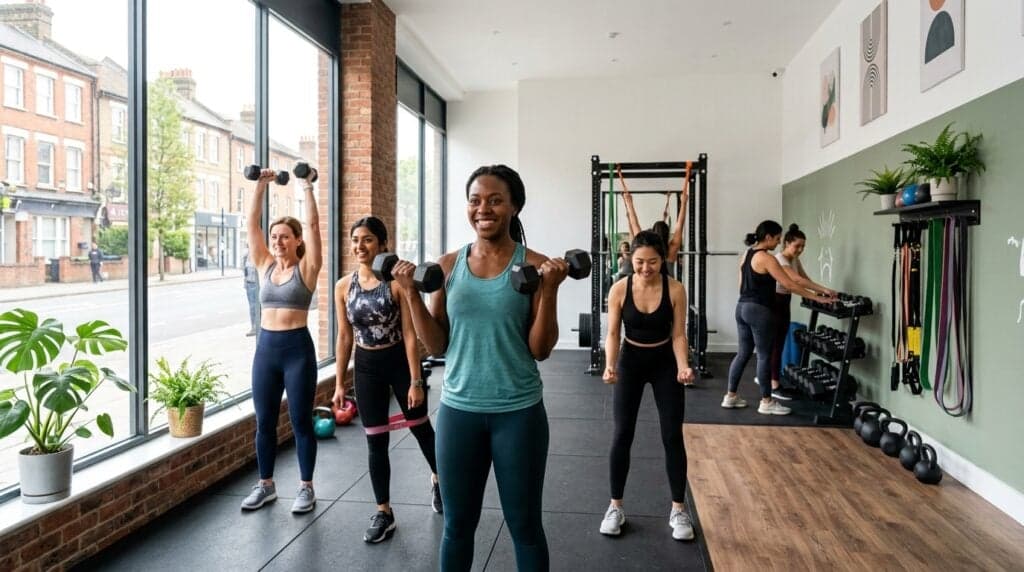
Many UK gyms and leisure centres now run dedicated “beginner” or “back to fitness” weeks, particularly around September and January, with slower-paced versions of their usual classes and staff briefed to expect first-timers. It’s worth asking at reception whether anything like this is running, since it’s a low-pressure way to get several sessions of instructor-led practice before you’re expected to navigate the free weights area solo. Small-group personal training sessions work the same way — you get direct coaching without the one-to-one spotlight of a private PT session, at a fraction of the cost.
What to Do If the Anxiety Doesn’t Fade
For the vast majority of people, gymtimidation eases naturally within three to five visits as the environment becomes familiar. But if you’re still dreading every session weeks in, or you find yourself cancelling plans specifically to avoid the gym, it’s worth being honest with a member of staff about it. Most UK gyms and leisure centres have dealt with this before and can offer a quieter corner to start in, a buddy system, or extra time with an instructor — you just have to ask, which is often the hardest part.
The Mental Health Side Nobody Talks About
Gym anxiety is a form of social anxiety, and it’s worth treating it that way rather than just “pushing through.” According to the mental health charity Mind, regular physical activity can reduce your risk of depression by up to 30%, but that only works if you can actually get through the door in the first place. If gym anxiety is tipping into something that affects your wider wellbeing — not just nerves before a session — it’s worth talking to your GP or a mental health professional rather than assuming it’s something you should white-knuckle through alone.
For most people, though, gymtimidation genuinely does fade with exposure. The third visit is nearly always easier than the first, and by visit ten most people can’t remember what they were nervous about.
Finding a Gym That Actually Fits You
The single biggest lever you have over gym anxiety is choosing the right environment in the first place. A women’s-only studio, a quiet local leisure centre, or a small independent gym with a strong beginner culture can make an enormous difference compared with a huge, high-energy chain that isn’t the right fit for where you are right now. This is exactly the kind of thing GymPal is built for — search by location and read what real members say about the atmosphere, class sizes, and how welcoming a gym actually is for beginners, so you can walk in already knowing it’s the right room for you.
The Bottom Line
Gymtimidation is common, it’s got nothing to do with your fitness level, and it almost always gets better with a bit of preparation and a few visits under your belt. Pick a gym that suits your confidence level, sort your kit in advance, learn the basic etiquette, and take the free induction. Do those four things and you’ll have removed most of what makes that first session feel so daunting — and you might even enjoy it.

I am Adam Hall, a dedicated fitness professional with over ten years of experience in the UK’s fitness industry. I earned my Master’s degree in Sports Science from Loughborough University and have worked with several top fitness studios across the UK. My certifications include a Level 3 Personal Trainer Certificate and a specialised Strength and Conditioning Coach accreditation.
Starting my career as a personal trainer, I quickly moved up to manage multiple gym locations, overseeing their operations and training programs. Beyond managing gyms, I regularly contribute to well-known fitness magazines and have been featured in articles for “Health & Fitness” and “Men’s Health”. My passion also extends online where I run a popular blog on GymPal’s AI-powered directory platform detailing insights into choosing the right fitness venues across the UK. With hundreds of posts reaching thousands of readers monthly, my goal is to influence positive changes in how people approach health and exercise throughout the country.