Gym Motivation When the Clocks Go Back: A UK Guide
Click Below To Share & Ask AI to Summarize This Article
Here’s a date to put in your diary that has nothing to do with payday: Sunday 25 October. That’s when the clocks go back in the UK, and with it goes an hour of daylight you were relying on to get your training done. One week you’re finishing a 6pm session in daylight, the next you’re fumbling for your keys in the dark at half four.
It’s not just in your head. Gym check-in data across the UK shows a consistent dip in attendance through late October and November, right as New Year’s resolutioners are still months away from flooding the car park. The people who keep training through this stretch aren’t more disciplined than everyone else — they’ve just built a routine that doesn’t depend on daylight to work.
This guide covers exactly how to do that: shifting your schedule before the clocks change rather than after, making the dark mornings and evenings work in your favour, fuelling a body that would rather stay under the duvet, and building a winter routine sturdy enough to survive a wet Tuesday in November.
None of what follows requires a New Year’s-style overhaul. It’s a handful of small, boring adjustments made now, while you’ve still got daylight to plan by, rather than in a panic once the evenings have already caught you out.
Why Motivation Drops the Moment the Clocks Go Back
The clock change itself is only an hour, but the psychological effect is bigger than that. Suddenly it’s dark on the walk to the gym and dark on the walk home. Your body’s natural cortisol and melatonin rhythms shift with the reduced daylight, which is part of why so many of us feel sluggish and less motivated to move in winter — not weak-willed, just biologically nudged towards hibernating on the sofa.
There’s also a simple logistics problem. A lot of people train around work, which means early mornings or after-work evenings — exactly the windows that go dark first. If your routine only works when it’s light outside, the clock change quietly breaks it. The fix isn’t more willpower. It’s redesigning the routine so darkness doesn’t get a vote.
Temperature plays a part too. It’s not just darker, it’s colder, and getting changed out of warm layers into gym kit in an unheated hallway at 6am is a genuinely bigger barrier than most training plans admit. Understanding that the resistance you feel isn’t laziness — it’s a predictable combination of biology, temperature and logistics — makes it much easier to plan around rather than just try to power through with gritted teeth.
Shift Your Session Times Before the Clocks Change, Not After
The single biggest mistake people make is waiting until the mornings are already dark to think about adjusting their schedule. By then you’re reacting, and reacting is exhausted, demotivated decision-making at 6am in the cold.
Instead, treat late October the way you’d treat any other training reset. If you found a routine that worked after summer, the same structured approach applies here — in fact a lot of the groundwork in our September gym reset guide holds up just as well for a winter restart, particularly the bit about anchoring sessions to existing habits rather than willpower alone. Look at your diary for the first week of November and pre-book your sessions like you’d book a dentist appointment. If your gym does classes, book onto three for the week ahead right now — a class with your name against it is far harder to skip than a vague intention to “go later.”
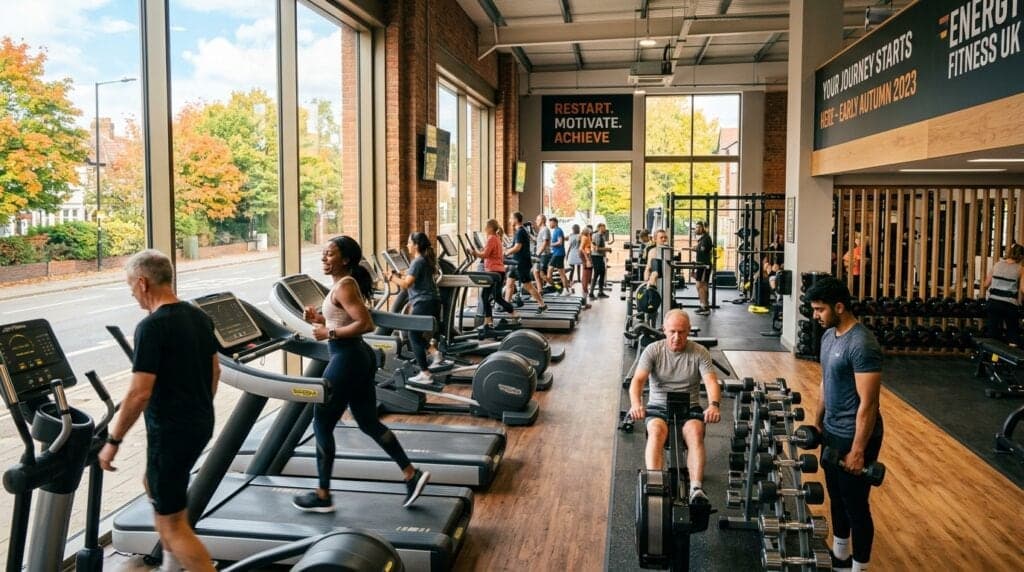
If your usual slot is a pre-work run or an evening outdoor session, this is also the moment to scout an indoor backup. Plenty of GymPal-listed gyms and leisure centres run 24-hour access or early-opening slots specifically because this is when demand for indoor, lit, weatherproof training spikes.
Make the Dark Mornings and Evenings Work For You
You don’t have to fight the dark — you can just plan around it properly. A few practical swaps make a bigger difference than they sound like they should:
- Move outdoor sessions to lunchtime. If you run or walk outside, midday is the only UK daylight window that doesn’t move much through winter. A 20-minute lunch loop keeps the habit alive without needing a head torch.
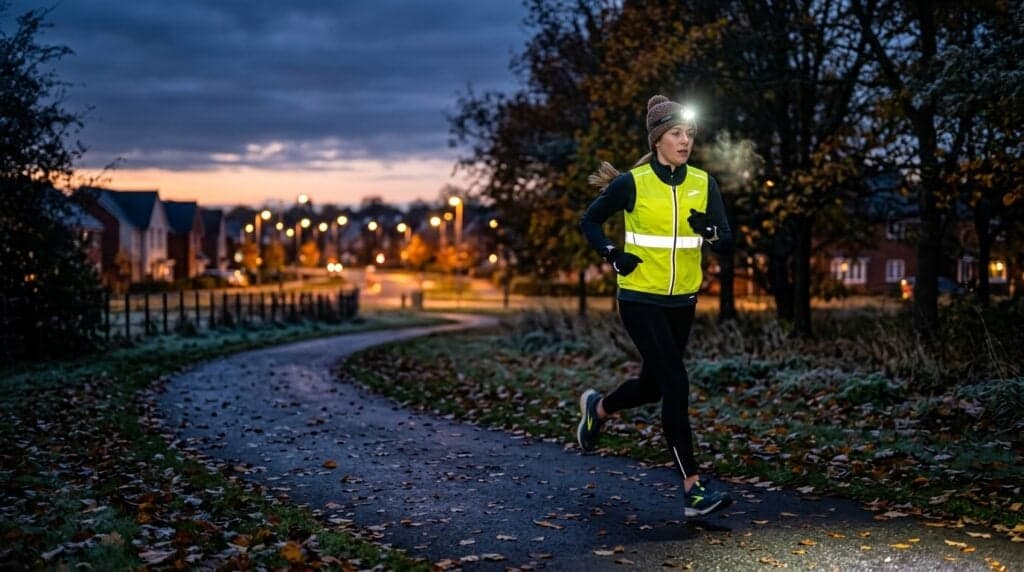
- Invest in proper visibility kit. A decent head torch and a reflective gilet cost less than one month of a typical gym membership and remove the single biggest excuse for skipping an outdoor session.
- Use daylight, even brief daylight, deliberately. Ten minutes outside at lunch does more for your mood and alertness than staying under office lighting all day.
- Consider a SAD lamp if mornings genuinely floor you. Seasonal low mood is common and well documented, and regular exercise is one of the things the NHS specifically recommends alongside light therapy for managing seasonal affective disorder — so keeping your training going through winter isn’t just about fitness, it’s doing real work for your mental health too.
None of this requires a personality transplant. It requires deciding, once, how you’re going to handle the dark — rather than relitigating it every single morning when the alarm goes off.
Fuelling a Body That Would Rather Stay Under the Duvet
What you eat and drink before a dark, cold session matters more in winter than it does in June, mostly because your body is working harder to keep itself warm before it even starts exercising. A few adjustments help:
- Don’t train fully fasted on the coldest mornings. A small carbohydrate snack 30–45 minutes beforehand — a banana, a slice of toast — gives you enough readily available energy that the session doesn’t feel twice as hard as it needs to.
- Warm drinks work as a psychological cue, not just a comfort. A warm squash or herbal tea before an early session can make the idea of leaving the house feel less brutal, and hydration matters just as much in winter as summer even though you feel thirsty less often.
- Protein at your next meal matters more when sessions are shorter or less frequent. If winter naturally trims your training volume, keeping protein intake consistent helps you hold onto strength and muscle through the leaner weeks rather than losing ground you’ll have to rebuild in spring.
None of this needs to be precise or tracked to the gram. The goal is simply removing friction — a body that’s warm, fuelled and hydrated finds a dark 6am session a lot more manageable than one that’s running on empty.
Reframe Rest as Part of the Plan, Not a Failure
One reason people abandon training in winter is that they treat every missed session as proof the plan isn’t working, then quietly stop altogether. Winter is exactly the time to build in deliberate rest rather than accidental rest. A planned recovery day feels completely different to a guilt-ridden skipped session, even though the training outcome is often identical.
If you’ve never properly separated the two, it’s worth reading through our guide to rest and recovery, which covers how sleep, deload weeks and genuine rest days actually support consistency rather than undermine it. Colder weather also means more soft-tissue niggles if you skip your warm-up, so budget an extra five minutes for mobility work before anything explosive.
The gym-goers who train consistently right through to March aren’t the ones who never miss a session — they’re the ones who never let one missed session turn into three.
Find Your People: Training Is Easier When You’re Not Doing It Alone in the Dark
Solo motivation is hardest precisely when conditions are worst, which is why winter is the best time of year to train with other people. A class, a running club, or even just a gym buddy who expects you to show up removes the decision entirely — you’re not deciding whether to train, you’re just turning up because someone’s waiting.
If running outdoors in the dark feels daunting on your own, building the habit somewhere lit and social first can make a real difference — our Couch to 5K guide is written with exactly that kind of gradual, low-pressure build-up in mind, and plenty of people shift it onto a treadmill for the darkest months before heading back outside in spring.
If your current gym doesn’t have the class timetable, opening hours, or atmosphere that suits a winter routine, it’s worth checking what else is nearby. Use GymPal to search gyms in your area by opening hours and facilities, so you can find somewhere that’s properly lit, open early, and actually convenient for a 6am November session rather than a June one.
Build a Winter Routine You Can Actually Stick To
Pull it together into something concrete before 25 October arrives:
- Pick your two or three fixed training slots for the week ahead and book them in like appointments.
- Identify one daylight window (usually lunchtime) you can protect for anything outdoors.
- Buy or dig out proper visibility kit if you’re training outside in the dark at all.
- Line up a training partner, class, or club for at least one session a week.
- Plan your rest days in advance, so they’re a decision, not a default.
None of this is complicated, and that’s rather the point. The routines that survive a UK winter are boring, repeatable ones, not ambitious ones. Sort your schedule now, before the clocks actually change, and you’ll be one of the people still training in January rather than starting again from scratch.
Ready to find a gym that fits a winter routine — early opening, well-lit, close to home? Search GymPal to compare gyms, classes and facilities near you and lock in your training before the dark mornings do it for you.

I am Adam Hall, a dedicated fitness professional with over ten years of experience in the UK’s fitness industry. I earned my Master’s degree in Sports Science from Loughborough University and have worked with several top fitness studios across the UK. My certifications include a Level 3 Personal Trainer Certificate and a specialised Strength and Conditioning Coach accreditation.
Starting my career as a personal trainer, I quickly moved up to manage multiple gym locations, overseeing their operations and training programs. Beyond managing gyms, I regularly contribute to well-known fitness magazines and have been featured in articles for “Health & Fitness” and “Men’s Health”. My passion also extends online where I run a popular blog on GymPal’s AI-powered directory platform detailing insights into choosing the right fitness venues across the UK. With hundreds of posts reaching thousands of readers monthly, my goal is to influence positive changes in how people approach health and exercise throughout the country.