Zone 2 Training: The UK Gym Trend Everyone Is Talking About
Click Below To Share & Ask AI to Summarize This Article
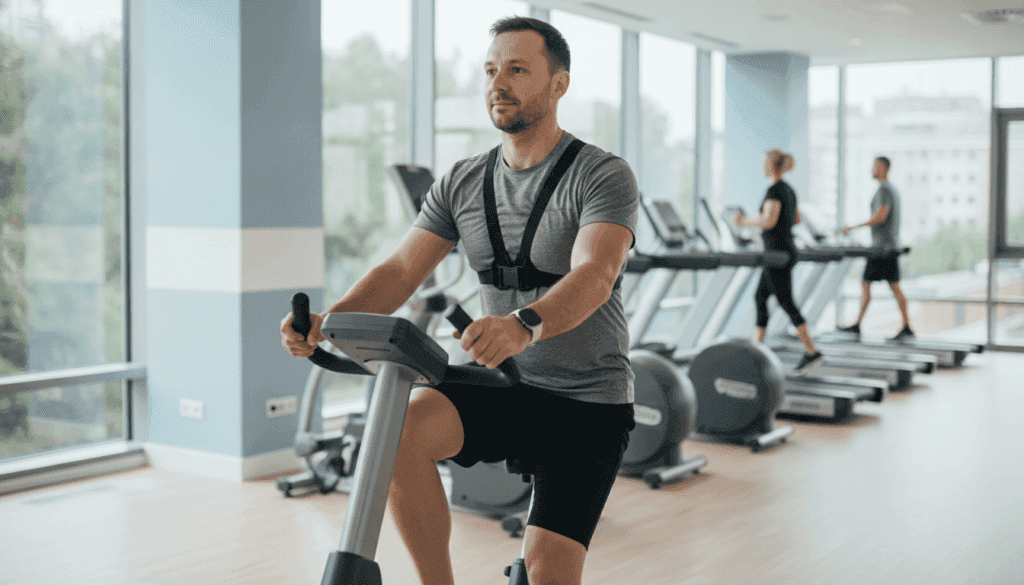
Walk into pretty much any UK gym this autumn and you’ll spot it: someone pedalling an exercise bike at a pace they could maintain while holding a full conversation, watching a heart rate number rather than a speed number. That’s Zone 2 training, and it’s gone from niche endurance-coach jargon to one of the most talked-about cardio trends on UK gym floors.
The idea sounds almost too simple to be useful — go slower, not faster. But the physiology behind it is solid, and it’s reshaping how a lot of regulars structure their cardio sessions, whether they’re training for a 10k or just trying to get fitter without wrecking their knees every week.
Here’s what Zone 2 training actually is, how to find your own zone without expensive lab testing, and why so many UK gyms are now building classes and equipment settings around it.
What Zone 2 Training Actually Means
Your heart rate during exercise is usually split into five “zones”, each representing a percentage of your maximum heart rate. Zone 2 sits at roughly 60-70% of your max heart rate — comfortably aerobic, but not easy enough to count as a rest day. At this intensity, your body relies predominantly on fat as fuel and your mitochondria (the energy-producing structures in your cells) get noticeably more efficient with consistent training.
Crucially, Zone 2 isn’t about maximising calorie burn in a single session. It’s about building a bigger aerobic engine over weeks and months, so that your “easy” pace gets faster and your harder efforts become more sustainable. Endurance athletes have trained this way for decades; it’s only recently become mainstream gym-floor vocabulary thanks to a wave of longevity-focused doctors and coaches popularising it online.
Finding Your Zone Without Lab Testing
You don’t need a £200 VO2 max test to find your Zone 2. The most practical method for most gym-goers is the talk test: you should be able to hold a conversation in full sentences, but not sing. If you’re gasping between words, you’ve drifted into Zone 3.
For a slightly more precise estimate, use the standard formula of 220 minus your age to estimate max heart rate, then calculate 60-70% of that figure. A 35-year-old would get a max heart rate estimate of 185, putting Zone 2 at roughly 111-130 beats per minute. It’s a rough guide rather than gospel — individual variation is real — but it’s a solid starting point if you’re training without a lab-grade test. Those building toward a specific event often pair this with structured cardio progressions like a 5K to 10K training plan, where most weekly mileage is deliberately kept at this easier effort.
Most modern cardio machines and fitness trackers will display your heart rate in real time, which makes staying in zone far easier than it used to be. If your gym’s bikes or treadmills don’t have heart rate monitoring built in, a simple chest strap or wrist-based monitor does the job.
Why UK Gyms Are Taking Notice
Independent gyms and the bigger budget chains alike have picked up on the trend, and it’s changing what’s on the timetable. Some clubs now run dedicated “steady state” or “aerobic base” classes alongside their usual HIIT offerings, recognising that not every member wants to leave every session drenched in sweat. Cardio equipment is increasingly sold and marketed around heart rate zone displays rather than just speed and incline.
It helps that Zone 2 training is low-impact and genuinely accessible — you don’t need to be fit to start, and the injury risk is much lower than repeated high-intensity sessions. That makes it a natural fit for members returning from injury, older gym-goers, or anyone who’s been put off by the all-out intensity culture that dominated gym marketing for the last decade.
Where It Fits Alongside Harder Training
Zone 2 isn’t a replacement for strength training or harder cardio efforts — it’s a complement to them. Most coaches recommend that 70-80% of your total weekly cardio volume sits in this easier zone, with the remaining 20-30% reserved for genuinely hard efforts. If you’re already tracking VO2 max training sessions on top of your weekly routine, Zone 2 work is what makes those harder efforts actually productive rather than just exhausting — your aerobic base has to be built before high-intensity work pays off properly.
The NHS’s physical activity guidelines for adults recommend at least 150 minutes of moderate-intensity activity a week, and Zone 2 training slots neatly into that moderate-intensity bracket — so sessions you’re already doing for general health guidelines count directly toward your aerobic base.
Picking the Right Equipment for Zone 2 Sessions
Not every cardio machine makes Zone 2 training equally comfortable. Rowing machines are a particular favourite because they engage the whole body at a controllable, joint-friendly effort — if you haven’t used one properly, a guide to rowing machine workouts for beginners is worth a read before your first long steady piece. Stationary bikes, inclined treadmill walks, and cross-trainers all work just as well; the key is picking something you can sustain for 30-60 minutes without your form falling apart.
If your usual gym doesn’t have the cardio kit or heart-rate displays to make this easy, it’s worth checking what’s on offer elsewhere locally — GymPal lets you search gyms near you and compare their cardio equipment and class timetables before you commit to a membership.
The Mistakes Most Beginners Make
The single biggest mistake is going too hard. Because Zone 2 feels almost embarrassingly easy at first — especially if you’re used to gym culture telling you “no pain, no gain” — there’s a strong pull to creep the pace up until you’re drifting into Zone 3. The moment you can’t comfortably chat, you’ve left the zone and you’ve lost most of the specific benefit of the session. It’s worth checking your heart rate every five minutes or so until pacing by feel becomes second nature.
The second mistake is expecting fast results. Zone 2 adaptations happen at a cellular level, and they build gradually over 6-12 weeks of consistent training rather than the two-week transformation promised by most fitness marketing. If you’re chasing a quick win before a holiday or event, this isn’t the tool for that — it’s a long-game investment in your fitness, not a crash plan.
The third is doing it on a day you’re genuinely fatigued or under-recovered, then wondering why your heart rate is 15 beats higher than usual for the same effort. Elevated resting and exercise heart rate is a reliable signal that you need more sleep or an easier week, not a sign you’re getting unfit.
How Long Before You Notice a Difference
Most people training Zone 2 consistently — meaning 2-4 sessions a week of 30-60 minutes — start to notice their “easy” pace getting genuinely faster at the same heart rate within about six to eight weeks. This is usually described as “decoupling”: early on, your heart rate climbs steadily through a session even at a fixed pace, but as your aerobic base improves, you can hold that same pace with a flatter heart rate response.
Longer term, three to six months of consistent Zone 2 work tends to show up in harder efforts too — intervals feel more manageable, recovery between sets is quicker, and resting heart rate often drops slightly. None of this shows up overnight, which is exactly why patience is the actual hard part of this kind of training, not the physical effort.
Zone 2 Through a UK Winter
Darker evenings and colder mornings make outdoor Zone 2 sessions trickier for a good chunk of the year, which is one reason indoor cardio equipment sees a real uptick in use from October through to March. A treadmill set to a brisk incline walk or a stationary bike in a heated gym removes the weather variable entirely, and you can hold a far more consistent heart rate indoors than fighting wind and ice outside.
If you do prefer training outdoors through winter, layer appropriately and expect your heart rate to run slightly higher in the cold for the same effort — your body is working harder to regulate temperature on top of the aerobic demand. Dropping your target pace slightly on cold days keeps you honestly in zone rather than just hitting a number that used to work in September.
Getting Started This Week
You don’t need to overhaul your whole training week to try this. Swap one of your usual cardio sessions for 30-40 minutes at a conversational pace, track how it feels against the talk test, and resist the urge to speed up. The benefits of Zone 2 training come from consistency over weeks, not from any single brutal session — which, for once, makes “take it easy” genuinely solid gym advice.
A sensible way to ease in is to pick one session a week to start, see how your heart rate and energy respond, then build up to two or three sessions once the pacing feels natural. Within a couple of months you’ll likely find your “easy” pace has quietly become faster, your harder sessions feel more controlled, and you’ve built a level of base fitness that supports everything else you do in the gym — without a single session that left you wrecked for the rest of the day.

I am Adam Hall, a dedicated fitness professional with over ten years of experience in the UK’s fitness industry. I earned my Master’s degree in Sports Science from Loughborough University and have worked with several top fitness studios across the UK. My certifications include a Level 3 Personal Trainer Certificate and a specialised Strength and Conditioning Coach accreditation.
Starting my career as a personal trainer, I quickly moved up to manage multiple gym locations, overseeing their operations and training programs. Beyond managing gyms, I regularly contribute to well-known fitness magazines and have been featured in articles for “Health & Fitness” and “Men’s Health”. My passion also extends online where I run a popular blog on GymPal’s AI-powered directory platform detailing insights into choosing the right fitness venues across the UK. With hundreds of posts reaching thousands of readers monthly, my goal is to influence positive changes in how people approach health and exercise throughout the country.