Surviving the January Gym Rush: A UK Guide
Click Below To Share & Ask AI to Summarize This Article
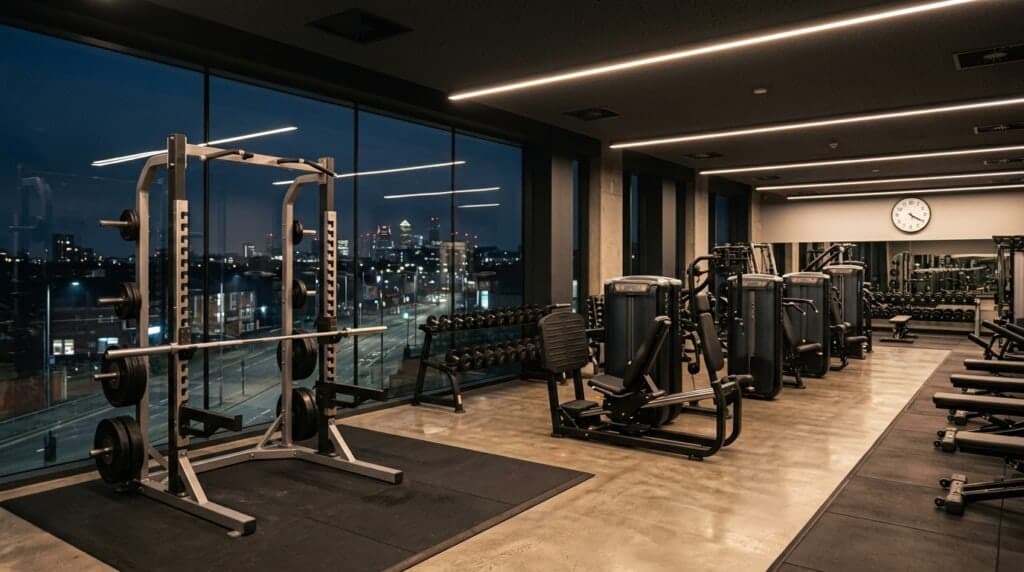
Right now, in early November, your gym probably feels pretty normal. The car park has space, the squat rack is free more often than not, and you can get on a treadmill without waiting. Enjoy it while it lasts — because in nine weeks’ time, that same gym is going to be unrecognisable.
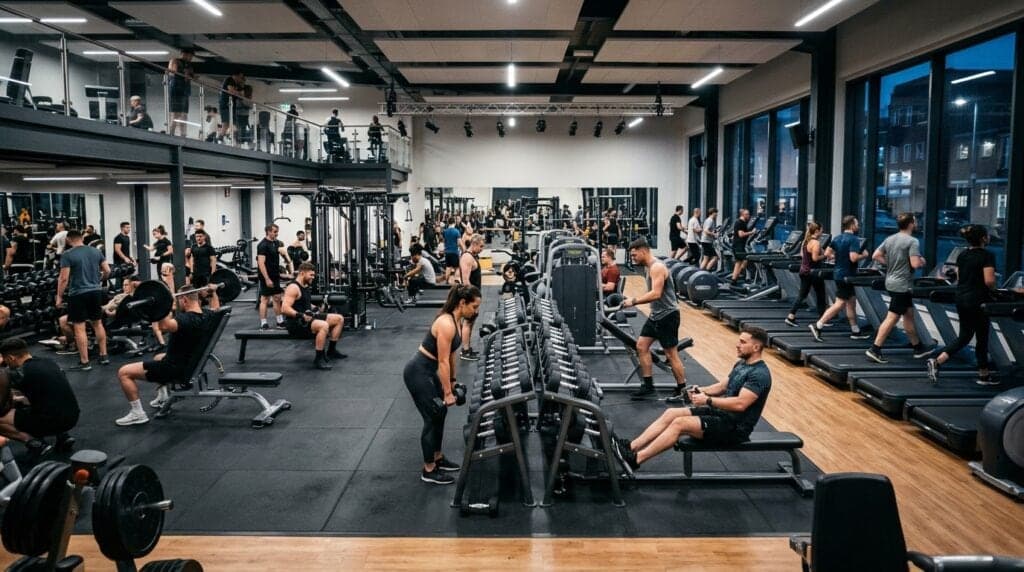
Every January, UK gyms fill up with new joiners chasing resolutions, and existing members who’ve been quietly skipping sessions since October suddenly reappear. The smart move isn’t to panic about it in January — it’s to plan for it now, while there’s still time to actually do something useful with the information.
Adam Hall here. Let’s get you ready before the rush hits.
Just How Busy Does January Actually Get?
This isn’t exaggeration for effect. UK gym data consistently shows January running around 28% busier than December, and roughly 10% busier than October, November and December combined — with more than one in ten new members joining specifically in January to kick off a New Year’s resolution. That’s not a gentle uptick; it’s a genuine capacity crunch concentrated into a few weeks.
The flip side is well documented too: within four weeks, a huge share of those January sign-ups stop showing up, so the crush eases by February. Which means the smart play is working around four to six weeks of genuine chaos rather than reorganising your entire routine for the long term.
It’s also worth knowing why the surge happens in the first place, because it changes how you should think about the crowd. Health and wellbeing consistently tops the list of reasons people cite for joining in January, often tied to managing stress, anxiety, or a specific health condition rather than pure vanity or habit. The gym floor in January isn’t full of people who don’t belong there — it’s full of people taking a genuine first step, many of whom are more nervous about being there than you are about the queue for the squat rack.
Book Your Induction or PT Session Now, Not in January
If you’ve been meaning to book a gym induction, a programme review, or a block of personal training sessions, November is a far better time to do it than January. Trainers’ diaries fill up fast once resolution season hits, and you’ll get far more attentive, less rushed coaching booking now while things are quiet, rather than squeezed into a fifteen-minute slot between back-to-back January clients.
The same logic applies to anything administrative: updating your membership details, querying a billing issue, or asking staff for a quick form check on a lift. Reception and coaching staff have noticeably more time for this kind of thing in November than they will from the first week of January onwards, when they’re fielding a steady stream of new-member questions on top of their usual workload.
Shift Your Training Times Before You Need To
The 6-8pm weekday slot is always the busiest at any gym, and it gets considerably worse in January. If your schedule has any flexibility at all, use November and December to experiment with training at different times — early morning before work, lunchtime, or mid-afternoon if you can swing it — so that by January, shifting your routine isn’t a scramble, it’s already a habit. Gyms with 24-hour access make this especially easy, since you’re not limited to standard opening hours at all; our breakdown of whether round-the-clock gym access is actually worth it covers what to weigh up if you’re considering switching for exactly this reason.
Even a modest shift — training at 7am instead of 7pm — can be the difference between a normal session and fighting over equipment with a queue of people in January. Weekends shift too: Saturday and Sunday mornings get noticeably busier in January, while late weekend afternoons tend to stay comparatively quiet, so it’s worth experimenting with your weekend timing as well as weekdays if that’s when you usually train.
Etiquette Matters More When It’s Crowded
A packed gym floor tests everyone’s patience, and small etiquette lapses that go unnoticed in a quiet gym become genuinely annoying when there’s a queue for every machine. Resharing equipment promptly, not resting on machines between sets while others wait, and wiping down kit you’ve used all matter more in January than at any other time of year. If you want a refresher before the crowds arrive, this guide to UK gym etiquette covers the unwritten rules worth brushing up on now.
It cuts both ways, too — expect new members in January to be less familiar with gym norms than regulars are. A bit of patience with someone clearly new and slightly lost goes a long way, and it’s exactly the kind of thing that was probably true of you once.
Changing rooms and showers get hit just as hard as the gym floor, often harder, since everyone tends to arrive and leave around the same handful of peak slots. Building a few minutes of buffer into your plans either side of your session — rather than assuming you’ll be in and out in the usual time — saves a lot of frustration in the first few weeks of January specifically.
Have a Backup Plan for Peak Hours
Build a shortlist of exercises or a backup session you can do when your usual equipment is occupied. If the squat rack has a queue, have a dumbbell or machine alternative ready rather than standing around waiting or skipping the movement entirely. Some gyms also offer outdoor or studio class options that run on a fixed schedule rather than first-come equipment — booking into a class guarantees your spot regardless of how busy the main floor gets.
It’s also worth checking whether your gym allows online booking for popular equipment or classes in January specifically — plenty of UK gyms add temporary booking systems for peak season precisely because of the January crunch, and knowing that in advance saves a wasted trip.
Protect the Habits You’ve Already Built
If you’ve been training consistently since the summer or autumn, January is also the month where existing routines are most likely to get knocked off course — not because you’re less committed, but because a familiar, quiet environment suddenly feels unfamiliar and crowded. Write down your current routine now, in detail, while it’s working well. Having it on paper (or in your phone) makes it far easier to adapt around disruption in January without losing the structure entirely, rather than abandoning it and starting from scratch once things calm down in February.
The same applies to any progress tracking you’re doing. If you’ve been logging lifts, times, or body measurements, keep that going through the disruption. It’s tempting to let tracking slip when your normal routine gets interrupted, but that’s exactly when having a record matters most — it’s much easier to get back on track in February if you can see clearly where you left off in December.
If You’re Thinking of Switching Gyms, Start Now
January is also peak season for new sign-ups and promotional offers, which makes it tempting to wait and switch gyms then. The problem is you’ll be comparing options while gyms are at their most crowded and least representative of what a normal visit looks like. Doing the comparison now, while gyms are quieter and staff have more time to actually show you around properly, gives you a far clearer picture — working through a proper gym checklist covering facilities, hours and contract terms is much easier to do thoroughly in November than in a rushed January visit squeezed between appointments.
If you do end up joining somewhere new in January anyway, try to visit at the time of day you’d actually train rather than taking a tour whenever the sales team offers one. A gym that looks calm and spacious during a weekday tour at 11am can be a completely different environment at 6pm in the first week of January — seeing it under realistic conditions, even just once, tells you far more than any sales pitch.
The Bottom Line
January’s gym rush is predictable, well-documented, and entirely plannable around if you start now. Book any PT sessions or inductions you’ve been putting off, start shifting your training times before you’re forced to, brush up on etiquette, and do any gym-switching research while things are calm. By the time January actually arrives, you’ll be one of the people calmly working around the crowd instead of fighting through it.
Comparing gyms or looking for one with better off-peak access? Search GymPal to find real listings and opening hours near you before the rush hits.

I am Adam Hall, a dedicated fitness professional with over ten years of experience in the UK’s fitness industry. I earned my Master’s degree in Sports Science from Loughborough University and have worked with several top fitness studios across the UK. My certifications include a Level 3 Personal Trainer Certificate and a specialised Strength and Conditioning Coach accreditation.
Starting my career as a personal trainer, I quickly moved up to manage multiple gym locations, overseeing their operations and training programs. Beyond managing gyms, I regularly contribute to well-known fitness magazines and have been featured in articles for “Health & Fitness” and “Men’s Health”. My passion also extends online where I run a popular blog on GymPal’s AI-powered directory platform detailing insights into choosing the right fitness venues across the UK. With hundreds of posts reaching thousands of readers monthly, my goal is to influence positive changes in how people approach health and exercise throughout the country.