How to Run Paid Ads for Your Gym on a Small Budget — Facebook and Google Basics for Gym Owners
Click Below To Share & Ask AI to Summarize This Article
Why Paid Ads Work Differently for Local Gyms Than for Most Businesses
Most guides to Facebook and Google advertising are written for businesses with national audiences, large budgets, and the ability to run extended testing cycles. An independent gym has none of these — but also does not need them. A gym’s target audience is geographically small and highly specific: people within a realistic travel distance who are interested in fitness and have not yet joined your gym. This tight geographic targeting is actually an advantage in paid advertising, because you are not competing with every gym in the UK for every impression — you are competing only for the attention of the right people in your postcode. According to ukactive State of the UK Fitness Industry report
A gym owner can run effective paid ads with £50–£150/month if the targeting is precise and the creative is honest. This guide covers the basics of Facebook and Google ads specifically for independent gym owners, including what to spend, what to say, and how to measure whether it is working.
Facebook and Instagram Ads: Best for Awareness and Offers
Facebook ads (which also run on Instagram through the same platform, Meta Ads Manager) are the most accessible starting point for a gym owner running ads for the first time. They work on an interruption model — your ad appears in someone’s feed whether they were looking for a gym or not — which makes them most effective for awareness campaigns and time-limited offers rather than capturing people who are actively searching.
When Facebook ads work well for gyms
- Promoting a specific offer with a deadline: “Join this week, no joining fee” or “Free trial week for new members — ends Sunday”
- Announcing an open day or event
- Reaching local people who match the demographic profile of your existing best members
- Retargeting people who visited your website but did not join (requires the Meta pixel installed on your website)
Targeting setup for a local gym
In Meta Ads Manager, create a campaign with the objective “Leads” or “Traffic” (leads if you want them to fill in a form; traffic if you want them to visit your website). Set your audience:
- Location: A radius around your gym — start with 3 miles, adjust based on where your members actually come from. Do not use broad city targeting; you pay for every impression and impressions outside your catchment area are wasted.
- Age: Your core demographic. For most independent gyms, 22–55 is a reasonable starting range; adjust based on who your gym actually serves.
- Interests: Fitness, gym, health, and wellness interests narrow the audience to people who are already fitness-aware. This improves conversion rates versus untargeted local audiences.
- Exclude current members: Upload your current member email list as a Custom Audience to exclude, so you are not spending money on people who already joined.
Creative that converts for gyms
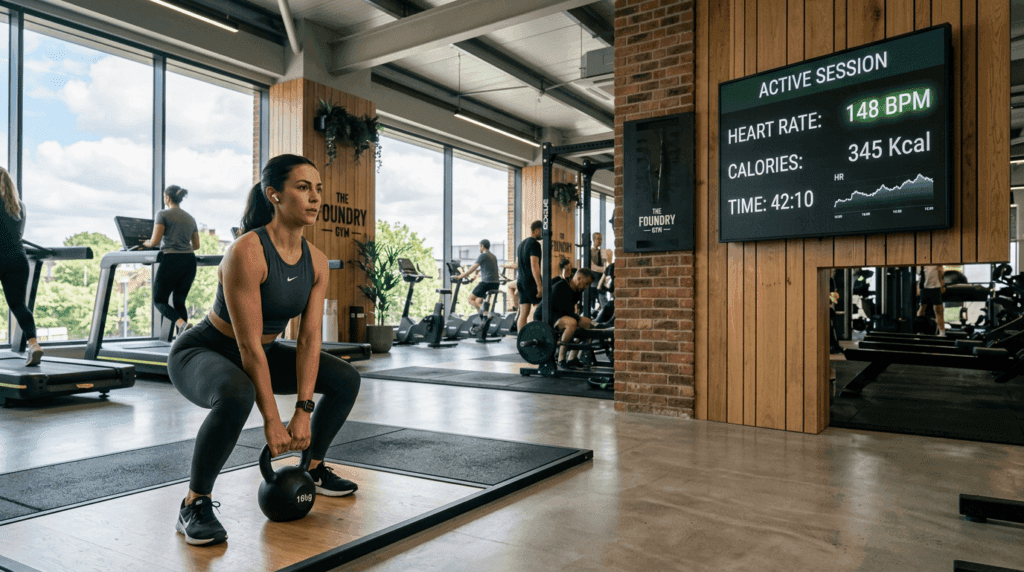
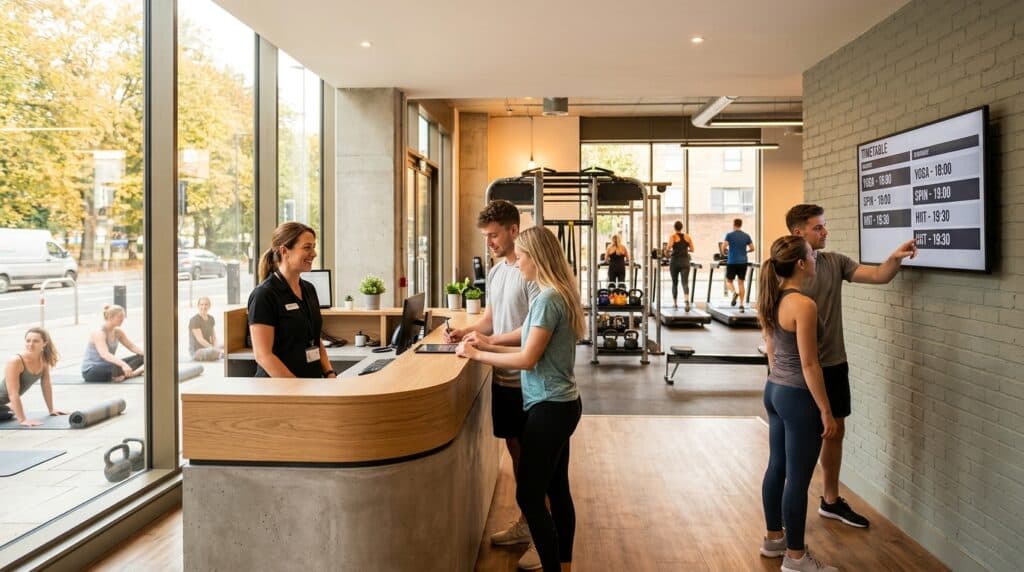
The single most reliable creative format for a local gym ad is a genuine photo or short video of your gym with an honest, clear message. Avoid stock photography — it signals inauthenticity and performs poorly for local businesses. A real photo of your gym floor, a real class in session, or a real member (with permission) with a clear headline converts better than polished creative every time.
Effective headline formulas:
- “Join [Gym Name] in [Town] — no joining fee this week”
- “Independent gym in [Area] — small community, serious training”
- “[Town]’s best-kept fitness secret — free week trial, no commitment”
Budget
Start with £5–7/day (£35–50/week). At this budget, a well-targeted ad in a medium-sized town will reach 500–1,500 relevant local people per week. Run the ad for a minimum of two weeks before drawing conclusions — Facebook’s algorithm needs time to optimise delivery.
Google Ads: Best for Capturing Active Searchers
Google ads (Search campaigns) work on a pull model: your ad appears when someone actively searches for what you offer. For a gym, the highest-intent search terms are “gym near me”, “gym in [town], “personal trainer [town]”, and “gym membership [area]”. These people are already looking — your ad just needs to be there and credible.
When Google Search ads work well for gyms
- When you are not appearing prominently in the organic Google map pack (a well-optimised Google Business Profile is free and should come first — ads fill the gap)
- When you want to capture peak demand periods (January, September) more aggressively
- When a local competitor’s gym has closed and you want to capture their displaced members quickly
Campaign setup basics
Create a Search campaign in Google Ads. Select “Local store visits and promotions” or “Website traffic” as the goal. Set your geographic targeting to your town or a radius around your gym (not the whole UK). Your keyword list should be small and specific:
- “gym [your town]”
- “gym near me” (Google will serve this to people searching near your location)
- “personal trainer [your town]”
- “gym membership [your area]”
- Your gym name (branded term — inexpensive and prevents competitors from capturing branded searches)
Use phrase match or exact match keywords rather than broad match. Broad match will spend your budget on irrelevant searches (“gym bag”, “gym equipment for sale”) very quickly.
Ad copy
Each Google ad has a headline (up to 15 options, Google rotates them) and description lines. Include your location in at least one headline. Include a specific offer or differentiator. Include a clear call to action: “Book a Free Tour”, “Claim Your Free Trial Week”, “View Membership Options”.
Budget
Local gym search terms in most UK towns outside London cost £0.50–£2.50 per click. A budget of £5–10/day gives you a meaningful number of clicks. Monitor your search terms report weekly (under Reports) and add negative keywords for any irrelevant searches consuming budget.
Measuring Whether Your Ads Are Working
The metric that matters is cost per new member, not cost per click or cost per impression. To track this:
- Ask every new member how they heard about the gym (include “saw an ad on Facebook/Instagram/Google” as options)
- Track new member sign-ups in the weeks you are running ads versus comparable weeks you are not
- Divide your total ad spend by the number of new members attributable to ads to calculate your cost per acquisition
A cost per new member under £30–40 is good for most UK independent gym markets. If you are spending more than that, either the targeting needs refining or the creative needs changing before increasing budget.
Do not judge a campaign in the first week. Most gym ad campaigns need 2–4 weeks to stabilise before the data is meaningful enough to act on.
GymPal lists independent gyms across the UK — a free listing that works alongside your paid ads to give prospective members a complete picture of your gym before they commit. Claim your GymPal listing to ensure every ad click lands on a credible, well-presented gym profile. According to Sport England Active Lives survey

I am Adam Hall, a dedicated fitness professional with over ten years of experience in the UK’s fitness industry. I earned my Master’s degree in Sports Science from Loughborough University and have worked with several top fitness studios across the UK. My certifications include a Level 3 Personal Trainer Certificate and a specialised Strength and Conditioning Coach accreditation.
Starting my career as a personal trainer, I quickly moved up to manage multiple gym locations, overseeing their operations and training programs. Beyond managing gyms, I regularly contribute to well-known fitness magazines and have been featured in articles for “Health & Fitness” and “Men’s Health”. My passion also extends online where I run a popular blog on GymPal’s AI-powered directory platform detailing insights into choosing the right fitness venues across the UK. With hundreds of posts reaching thousands of readers monthly, my goal is to influence positive changes in how people approach health and exercise throughout the country.