How to Find a Personal Trainer in the UK: What to Look For, What to Pay, and What to Ask
Click Below To Share & Ask AI to Summarize This Article
Hiring a personal trainer is one of the smartest investments you can make in your fitness — but only if you get it right. The wrong PT can leave you lighter in the pocket and no closer to your goals. The right one can completely transform the way you train, accelerate your results, and give you a level of accountability that is hard to replicate on your own.
The UK has more personal trainers than ever. Thousands of qualified professionals work across the country — from boutique studios in Central London and Manchester to independent gyms in smaller market towns across Yorkshire, the Midlands, and everywhere in between. That is great news for choice, but it also means knowing how to separate the genuinely qualified from the also-rans matters more than ever.
Whether you are a complete beginner who has never properly trained, or an experienced gym-goer who has hit a frustrating plateau, this guide walks you through everything: what qualifications to look for, how much to budget, where to search, and the questions that separate a great PT from a mediocre one.
What Does a Personal Trainer Actually Do?
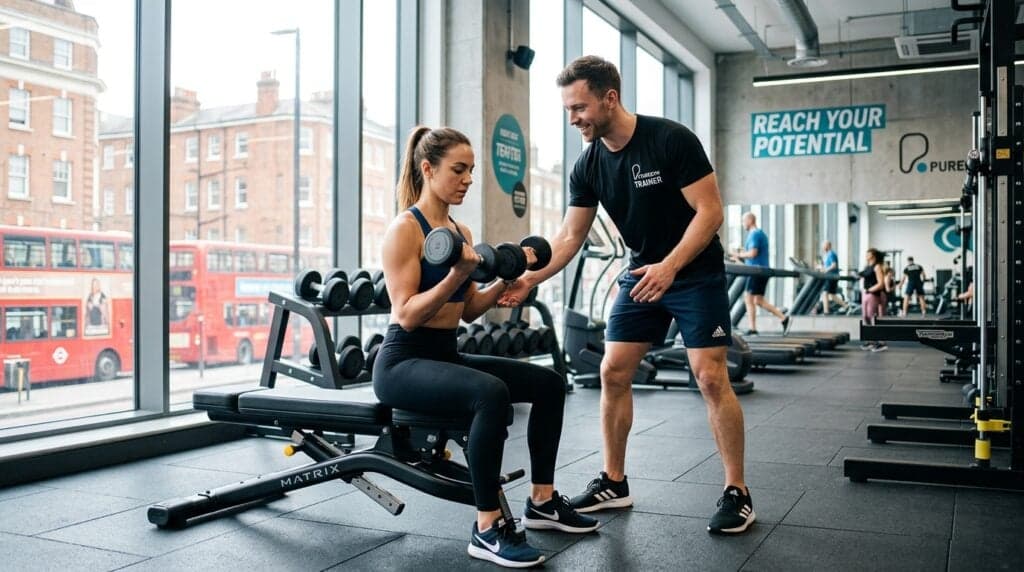
A personal trainer designs exercise programmes tailored specifically to you — your goals, your current fitness level, your schedule, and any injuries or health conditions you are working around. That sounds straightforward, but it is a world away from following a generic plan off the internet or copying what somebody else does at the gym.
In a typical session, your PT will:
- Assess your current fitness level and movement patterns
- Design a programme that progresses week on week
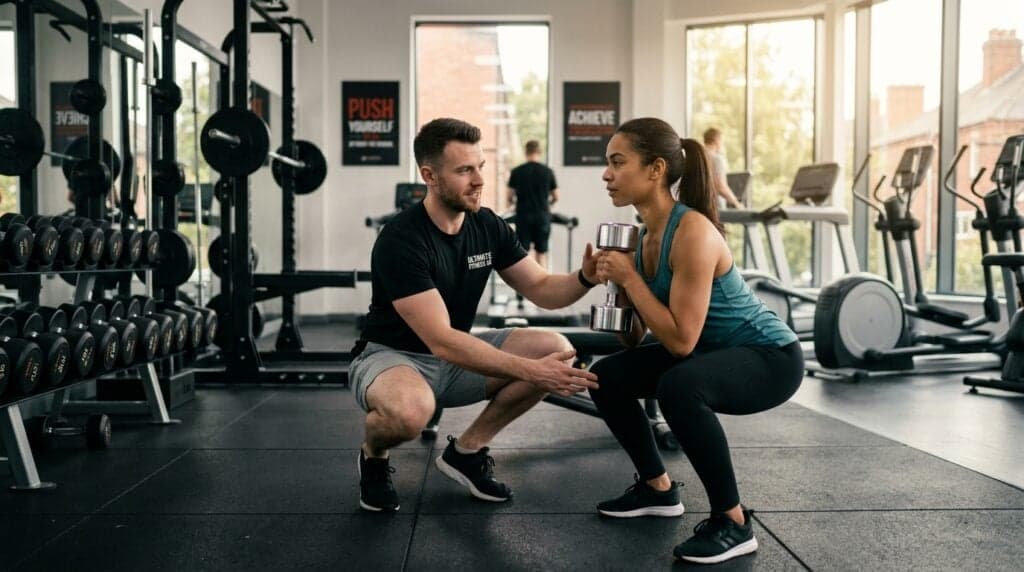
- Coach your technique in real time, reducing injury risk
- Hold you accountable when motivation dips
- Adapt your plan as your fitness improves
Many PTs specialise in specific areas: weight loss, strength and conditioning, post-natal fitness, injury rehabilitation, sport-specific performance, or working with older adults. Finding someone whose specialism aligns with your goal makes a significant difference to your results.
Sessions typically last 45–60 minutes and can take place at a gym, in a park, at your home if the PT is mobile, or online via video call. Many trainers now offer hybrid packages — some in-person sessions with online check-ins in between — which can stretch your budget considerably further.
The Cost of a Personal Trainer in the UK (2026 Guide)
PT pricing varies considerably by location, experience, and format. Here is a realistic picture:
- London: £50–£120 per session
- Major cities (Manchester, Birmingham, Leeds, Bristol): £35–£70 per session
- Smaller towns and rural areas: £25–£50 per session
- Online PT (programming plus check-ins, no live sessions): £60–£200 per month
Block bookings almost always work out cheaper — buying 10 sessions upfront can knock 15–20% off the per-session rate. If budget is a real constraint, ask about semi-private training (two or three clients sharing one PT), which brings costs down sharply without losing much of the personalisation.
If personal training feels financially out of reach right now, outdoor bootcamp sessions across the UK offer coached, structured group workouts at a fraction of the one-to-one cost — a solid way to build a base before investing in individual time.
Qualifications to Look For When Choosing a PT
The UK fitness industry is largely self-regulated, which means doing your own due diligence is essential. Do not be embarrassed to ask about qualifications — any professional trainer will expect it and be happy to provide evidence.
Essential qualifications:
- Level 3 Personal Training Certificate — the industry standard minimum for PTs working with the public. It should come from a recognised awarding body such as YMCA Awards, Active IQ, CYQ, or Premier Global.
- First Aid certificate — should be current (typically renewed every three years).
- Public liability insurance — mandatory for any self-employed PT. Ask to see the certificate before you book anything.
Professional body membership:
Look for trainers registered with CIMSPA (the Chartered Institute for the Management of Sport and Physical Activity), the UK body for the sport and physical activity sector. Membership confirms a trainer meets current professional standards and commits to ongoing continuing professional development.
Additional specialisms:
If you have specific goals or health considerations, look for additional credentials — Level 4 certificates in strength and conditioning, obesity management, or lower back pain; pre and post-natal fitness qualifications; or sport-specific coaching licences if you are training for a particular discipline.
If anyone cannot clearly explain their qualifications or is reluctant to show insurance details — walk away. No exceptions.
Where to Find a Personal Trainer Near You
The best PT for you might be working out of your existing gym, freelancing at a local park, or running a small private studio. Here is where to look.
At your gym: Ask at reception whether the gym employs PTs directly or rents floor space to independent trainers. Training with a PT at the gym you already use is the most convenient setup, and many members find it more affordable because there is no travel involved.
GymPal: GymPal lists personal trainers across the UK, searchable by location and specialism. It is one of the fastest ways to see who is available near you. Search for personal trainers on GymPal by your town, city, or postcode and filter by what matters most to you.
Social media: Many PTs build their audience on Instagram. Browsing their content, training style, and client results gives you a genuine sense of their personality and coaching approach before you commit any money.
Word of mouth: Ask at your gym, running club, or workplace. A personal recommendation from someone whose results you can actually see remains one of the most reliable routes to a good trainer.
Red flags to watch for: trainers who are aggressively pushy, make unrealistic claims about timelines, cannot clearly explain their qualifications, or pressure you into long-term contracts before you have had a single session together.
Questions to Ask Before You Commit
Before handing over money — especially for a block booking — ask these questions and pay attention to how they answer them:
- What is your Level 3 qualification and who issued it? Any legitimate trainer will answer immediately and clearly.
- Are you insured, and can I see your certificate? Non-negotiable.
- What is your cancellation policy? Know the rules before you agree to them.
- Have you worked with clients at my fitness level with similar goals? Ask for specifics — vague answers are a warning sign.
- What does a first session look like? A good PT starts with a proper assessment, not just throwing you into a workout.
- How do you track and review progress? Regular check-ins against measurable goals are the mark of a structured, professional approach.
- What are your rates and what packages do you offer? Get this in writing before you commit.
Most trainers offer a free or discounted introductory session. Always take them up on it. It is the single best way to determine whether your personalities, communication styles, and training philosophies are genuinely compatible before any money changes hands.
Making the Most of Your Personal Training Sessions
Hiring a PT is only half the work. How you show up to each session matters just as much as the person delivering it.
Arrive prepared. Do not turn up to a strength session having skipped lunch. Fuel and hydrate properly, and come ready to focus. Your PT can only get so much out of you if you are running on empty.
Be honest when something hurts. Say so immediately — do not push through pain in silence. A good trainer adapts on the spot. Ignoring discomfort leads to injuries that set you back weeks or months.
Do the work between sessions. Your PT cannot train you every day. Ask them to set homework — additional sessions, movement drills, or nutrition habits — and actually follow through. Most physical adaptation happens outside of your paid sessions.
Keep track of your own progress. A simple training diary or an app makes a real difference. Log how much you lifted, how you felt, and any changes you have noticed. Sharing this with your PT helps them programme more intelligently over time.
Many clients also find that adding pilates to their routine alongside PT sessions produces results that neither alone could achieve — the body awareness, core stability, and movement quality from pilates translates directly into better performance in the gym and faster recovery between sessions.
Ready to Find Your PT?
The UK personal training market has never been more accessible, but quality varies enormously. Do your homework: check qualifications, verify insurance, take the trial session, and trust your instincts when something does not feel right.
Set realistic expectations. A good PT will not promise you a transformation in four weeks — they will give you a structured, progressive plan that compounds over months. The results, when you commit to the process, are worth every pound.
Start your search now — GymPal lists qualified personal trainers across every corner of the UK, searchable by location, specialism, and availability. Find the right one for you and make 2026 the year your training finally delivers.

I am Adam Hall, a dedicated fitness professional with over ten years of experience in the UK’s fitness industry. I earned my Master’s degree in Sports Science from Loughborough University and have worked with several top fitness studios across the UK. My certifications include a Level 3 Personal Trainer Certificate and a specialised Strength and Conditioning Coach accreditation.
Starting my career as a personal trainer, I quickly moved up to manage multiple gym locations, overseeing their operations and training programs. Beyond managing gyms, I regularly contribute to well-known fitness magazines and have been featured in articles for “Health & Fitness” and “Men’s Health”. My passion also extends online where I run a popular blog on GymPal’s AI-powered directory platform detailing insights into choosing the right fitness venues across the UK. With hundreds of posts reaching thousands of readers monthly, my goal is to influence positive changes in how people approach health and exercise throughout the country.