Bootcamp Classes UK: The Group Workout That Gets Real Results
Click Below To Share & Ask AI to Summarize This Article
There’s something about being outside at 6:30am, breathless in the damp British air, doing burpees alongside a dozen strangers who quickly feel like teammates, that you simply can’t replicate on a treadmill.
Bootcamp classes have been part of the UK fitness scene for years — but they’ve surged in popularity as more people seek variety, community, and results that go beyond what a gym membership alone can deliver. Whether it’s a Saturday morning session in the park, a weekday evening class on the seafront, or a purpose-built indoor circuit, bootcamps are everywhere right now.
This guide covers what to expect from a UK bootcamp class, how much they typically cost, who they suit best, and how to find a great one near you.
What Is a Bootcamp Class?
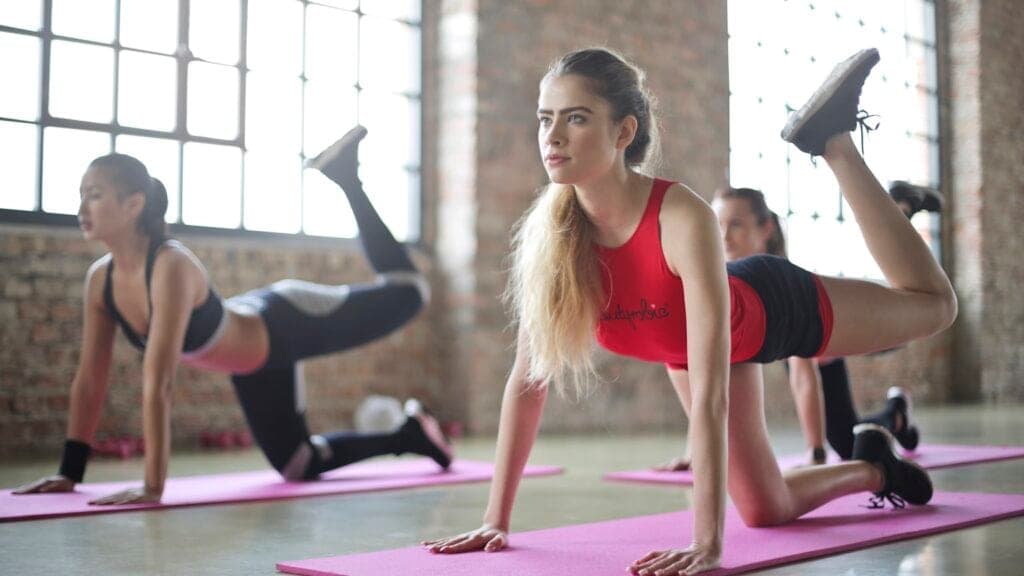
The word “bootcamp” gets used loosely, but in a fitness context it typically means a structured group workout session led by a qualified instructor. Sessions are usually high-intensity, mixing cardiovascular exercise with resistance work — think sprints, press-ups, squats, kettlebells, and bodyweight circuits, often in rapid succession.
The military-inspired name is no accident. Early bootcamp classes borrowed the intensity and discipline of armed forces training, though modern sessions are far more inclusive and adaptive. You’re just as likely to find a Saturday morning park bootcamp in Harrogate as you are an intense indoor circuit class in Manchester’s Northern Quarter.
What sets bootcamps apart from standard gym classes is the combination of cardio, strength, and mental grit — all in a group setting where the energy of those around you drives you harder than you’d ever push yourself alone.
What Happens in a Typical Session?
Sessions usually last between 45 and 60 minutes and follow a similar structure:
Warm-up (5–10 minutes) — Light jogging, dynamic stretching, and mobility work to raise your heart rate and get your joints moving.
Main circuit (30–40 minutes) — The instructor rotates you through a series of stations or exercises. These might include bodyweight movements (press-ups, squats, lunges, burpees), resistance exercises (kettlebell swings, medicine ball slams, battle ropes), and cardio bursts (sprints, box jumps, skipping). Work intervals are typically 30–45 seconds with short rests in between.
Cool-down (5–10 minutes) — Static stretching and a gentle wind-down to support recovery and reduce next-day soreness.
Group sizes vary from six or eight people in smaller bespoke sessions up to 30 or 40 in large park bootcamp programmes. The social element is a major part of the appeal — there’s a camaraderie in suffering together that keeps people coming back week after week.
How Much Do Bootcamp Classes Cost in the UK?
Pricing varies depending on location, format, and whether the class is indoors or outdoors:
- Drop-in sessions: £8–£15 per class
- Monthly membership (unlimited classes): £40–£80 per month
- Block bookings (8–12 sessions): £60–£120
- Corporate or private group bootcamp: £150–£400 per session
Outdoor park-based bootcamps tend to be cheaper than indoor equivalents, partly because overhead costs are lower. Some councils and community organisations also offer subsidised or free sessions in public parks — particularly in larger cities like Sheffield, Birmingham, and Cardiff.
Compared to a standard gym membership, a quality bootcamp programme with two to three sessions per week can deliver excellent value — especially when you factor in the coaching, community, and variety that’s baked in from day one.
Is a Bootcamp Class Right for You?
Bootcamps suit people who get bored easily on gym equipment, thrive in social and group environments, want a coached session without the cost of a one-to-one arrangement, or are looking for a mix of cardio and strength in a single hit. They’re particularly good if you want to train outdoors at least part of the time and want the accountability that comes with showing up to a scheduled class.
They’re not just for the super-fit. Good instructors adapt exercises on the fly — offering lower-impact options for people with injuries or lower fitness levels. That said, bootcamps are generally more physically demanding than yoga or Pilates, so some baseline fitness is helpful.
If you have specific training goals or rehabilitation needs, it’s worth knowing that a personal trainer who designs bespoke programmes around your individual requirements can be an excellent bridge before you move into group bootcamp sessions — they’ll build your foundation so you get more from every class.
Outdoor vs Indoor Bootcamp: What’s the Difference?
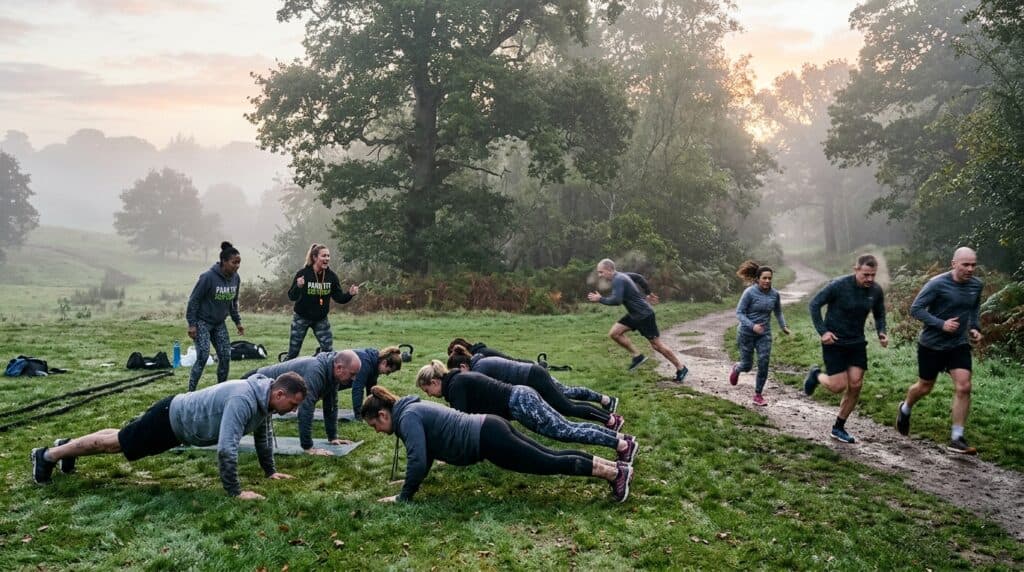
Outdoor bootcamps happen in parks, playing fields, beaches, or car parks. They’re particularly popular in spring and summer but run year-round across the UK — British weather notwithstanding. The lack of equipment is often deliberate: a skilled bootcamp instructor can run an entire session using only bodyweight, a few cones, and natural terrain.
Popular outdoor bootcamp programmes include BM|Fitness (formerly British Military Fitness), with sessions running in parks across London, Manchester, Leeds, Edinburgh, and beyond. Local independent operators run brilliant sessions in Roundhay Park in Leeds, Victoria Park in Bristol, Kelvingrove Park in Glasgow, and dozens of town parks across England, Wales, and Scotland.
Indoor bootcamps use gym floors, studios, or purpose-built functional training spaces. They tend to incorporate more equipment — barbells, plyometric boxes, resistance bands, battle ropes — and can run whatever the forecast. Many gyms now offer bootcamp-style classes as part of their timetable, including dedicated functional fitness areas built exactly for this kind of training.
How Bootcamp Compares to Other High-Intensity Group Workouts
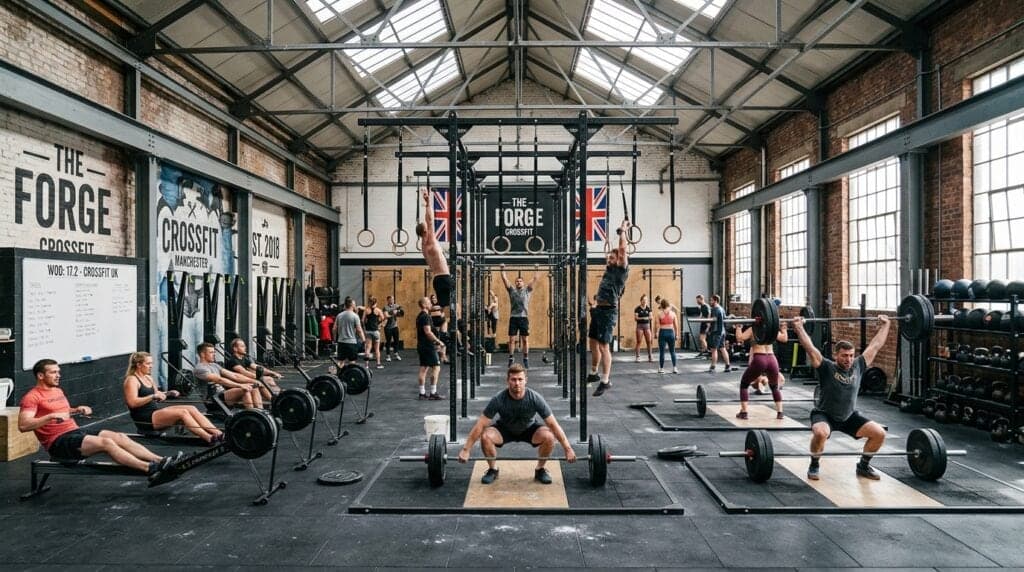
A question that often comes up: is bootcamp just CrossFit with a different name? Not exactly, though there’s genuine overlap. CrossFit in the UK follows a licensed methodology with standardised workouts (WODs), Olympic lifting, and gymnastic movements, all tracked for performance improvement over time. It’s highly structured and deliberately competitive. Bootcamp is more varied and informal — the instructor has creative freedom, and the focus is typically on general fitness and consistency rather than performance benchmarks.
Bootcamp is also distinct from spin, yoga, and Pilates in that it’s full-body, high-intensity, and usually blends aerobic and resistance training into the same session. It sits closest to HIIT classes in terms of format but with more variety and a much stronger outdoor tradition.
What to Look for in a Good Bootcamp Provider
Not all bootcamps are created equal. Here’s what to check before committing:
Instructor qualifications — Look for a Level 2 or Level 3 Personal Trainer qualification, ideally with additional outdoor fitness or group exercise training. Any reputable operator should be happy to share credentials on request.
Class size — Smaller groups (under 15) mean more coaching attention per person. Larger groups can still work well, but ask how many coaches are present during the session.
Safety and first aid — Outdoor sessions in particular should have a qualified first aider present. Ask about this before you book, especially for park-based sessions in more remote locations.
Trial sessions — Most bootcamps offer a free or discounted first class. Take it. Chemistry with the coach and the group matters enormously to whether you’ll stick with it.
Progress tracking — The better programmes track your results over weeks and months, not just throw you into a circuit and send you home. Look for operators who take a baseline assessment and revisit it periodically.
Insurance and liability — Legitimate operators carry public liability insurance. If you’re ever unsure, ask to see proof. It’s a basic standard, not an awkward request.
Building Your Week Around Bootcamp
Two or three bootcamp sessions per week is plenty for most people, particularly when you’re starting out. Your body needs recovery time — especially if sessions are high-intensity — so resist the temptation to go every day in the first fortnight.
A well-rounded week might look like this: two bootcamp sessions (say Tuesday and Saturday), one active recovery day with a long walk or gentle swim, and two complete rest days. If you want to add an extra training day, a boxing session mid-week is an excellent complement — the footwork, coordination, and upper-body conditioning balance beautifully against the lower-body-heavy circuits that many bootcamps favour.
Nutrition and sleep matter as much as the sessions themselves. You won’t get the results you want from three hard bootcamps a week if you’re running on five hours of sleep and skipping breakfast.
The Health Benefits Are Backed Up
Bootcamp-style training delivers measurable benefits across multiple fitness dimensions simultaneously. You’re building cardiovascular endurance, muscular strength and endurance, coordination, agility, and — arguably the most underrated benefit — mental resilience. Showing up in the rain, finishing a set when your legs are burning, and doing it week after week builds consistency that crosses over into every area of life.
The UK fitness sector is at record levels. According to the UK Health and Fitness Market Report 2026 by ukactive, 18% of the UK population now holds a fitness club membership, with visits up 10% year on year. Group fitness classes — bootcamp among them — are a major driver of that growth as people increasingly seek coached, social experiences over solitary treadmill sessions.
Finding a Bootcamp Class Near You
The UK bootcamp market is fragmented. Unlike gym chains, most bootcamp providers are local businesses or sole traders — which means they’re often hard to find through a Google search alone. You can spend an hour scrolling Instagram and still not know who’s running the best session in your postcode.
GymPal lists bootcamp providers across the UK alongside gyms, studios, and fitness venues of every type. You can filter by location and class type to find quality outdoor and indoor bootcamp sessions near you — far quicker than trawling through Facebook groups and local notice boards.
It’s also worth checking community leisure centre timetables, local council park event programmes, and Parkrun — which, while not strictly bootcamp, attracts a similar community-minded, no-excuses fitness crowd and is completely free to join.
The Bottom Line
Bootcamp classes are one of the most versatile, sociable, and cost-effective ways to get seriously fit in the UK. They strip away the noise of a commercial gym floor and replace it with purpose, community, and a coach who won’t let you skip a rep.
Whether you’re a complete beginner looking to build a real fitness habit, or a regular gym-goer who wants more variety and accountability, there’s a bootcamp out there that fits. The hard part isn’t the session itself — it’s finding the right one and turning up for the first time.
Search bootcamp classes near you on GymPal and book a taster session this week. Your future self will thank you at the end of the first circuit.

I am Adam Hall, a dedicated fitness professional with over ten years of experience in the UK’s fitness industry. I earned my Master’s degree in Sports Science from Loughborough University and have worked with several top fitness studios across the UK. My certifications include a Level 3 Personal Trainer Certificate and a specialised Strength and Conditioning Coach accreditation.
Starting my career as a personal trainer, I quickly moved up to manage multiple gym locations, overseeing their operations and training programs. Beyond managing gyms, I regularly contribute to well-known fitness magazines and have been featured in articles for “Health & Fitness” and “Men’s Health”. My passion also extends online where I run a popular blog on GymPal’s AI-powered directory platform detailing insights into choosing the right fitness venues across the UK. With hundreds of posts reaching thousands of readers monthly, my goal is to influence positive changes in how people approach health and exercise throughout the country.