Pilates for Beginners UK: What to Expect, What It Costs, and How to Get Started
Click Below To Share & Ask AI to Summarize This Article
Pilates has gone from quietly niche to absolutely everywhere. You can't scroll through Instagram, walk past a leisure centre, or chat with colleagues on a Monday morning without someone mentioning it. And unlike most fitness trends, this one has substance behind the buzz.
But if you've never tried it, starting can feel more daunting than it should. Which type of Pilates? Which studio? What do you even wear? This guide cuts through the noise and gives you everything you need to walk confidently into your first session.
Whether you're recovering from an injury, trying to build a stronger core, or simply tired of pounding the treadmill, Pilates might be exactly what your body has been waiting for.
Why Pilates Is Everywhere Right Now (and Whether the Hype Is Real)
There are now over 1,980 verified Pilates studios across 117 UK cities, according to the State of UK Pilates 2026 industry report — a number that has grown year on year as demand has consistently outpaced supply. Monthly Google searches for 'Pilates near me' have risen 22% year on year, and reformer Pilates searches have surged 49% in the same period.
The reasons aren't complicated. Pilates works. It builds genuine core strength without hammering your joints, improves posture that modern desk-based life has destroyed, and leaves you feeling taller and more mobile rather than wrecked and exhausted. It suits every fitness level — from someone who hasn't exercised in years to elite athletes using it as a recovery tool.
The community aspect has also played a role. Pilates studios have done a better job than most gyms of creating welcoming, non-intimidating spaces where newcomers don't feel judged. The class structure is forgiving, instructors typically offer modifications for every exercise, and no one is racing anyone.
So yes, the hype is real. And the good news for beginners is that the UK has never had more affordable, accessible options for getting started.
Mat Pilates vs Reformer Pilates: Where Should You Start?
This is the question most beginners get stuck on. The honest answer: start with mat Pilates, unless cost isn't a concern and you're particularly drawn to the reformer.
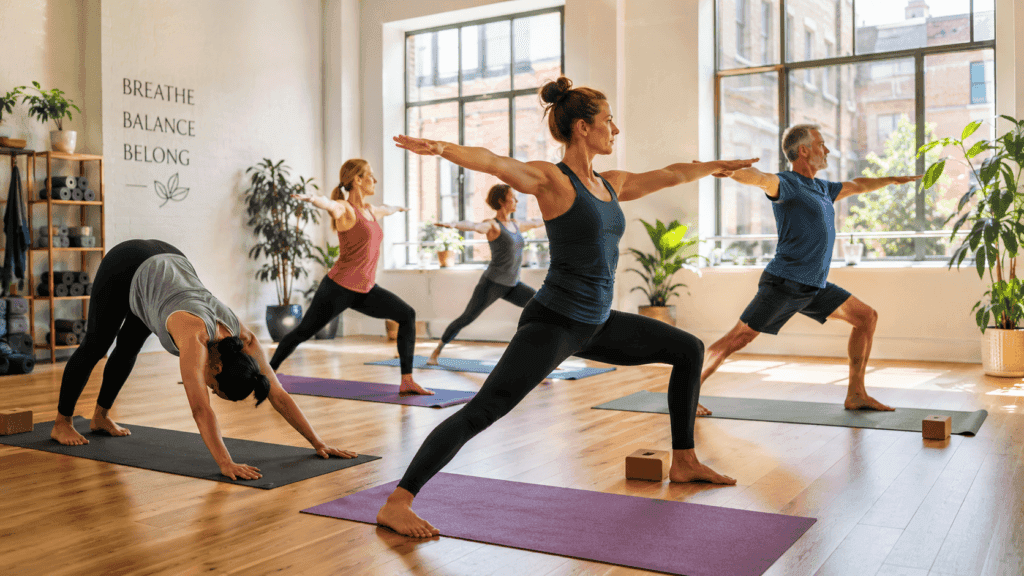
Mat Pilates is performed on the floor using your bodyweight, a mat, and occasionally small props like resistance bands, Pilates rings, or small balls. It's the original form of the practice, teaches you the foundational principles — breathing, neutral spine, core activation — and is available in leisure centres, community halls, gyms, and dedicated studios across the country. Classes often cost £8–£15, making it by far the more accessible entry point.
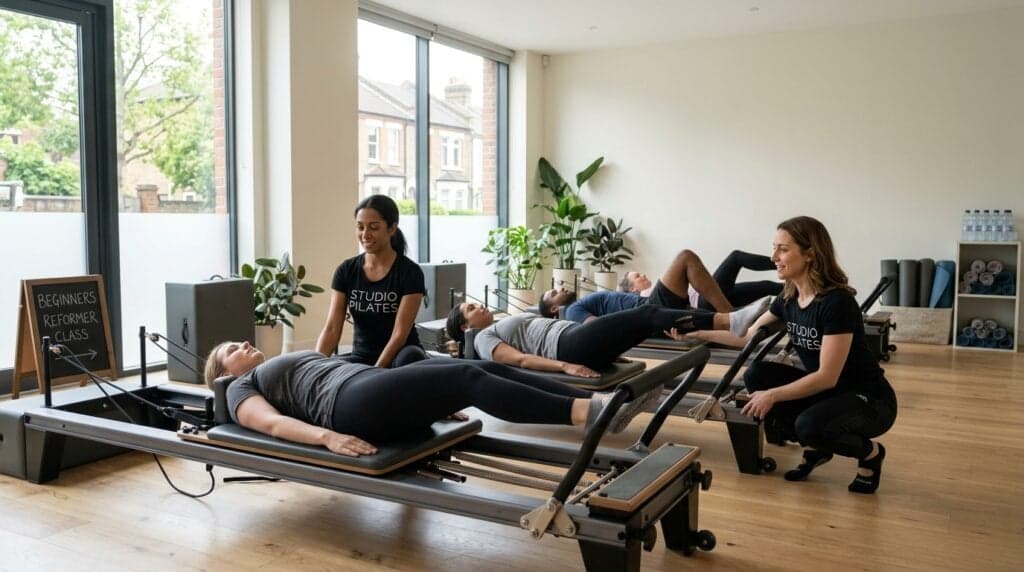
Reformer Pilates uses a spring-loaded sliding carriage with a system of straps and pulleys. It adds resistance and instability that can make exercises both more challenging and more supportive, and it's particularly useful for rehabilitation. The reformer has its own premium price point — typically £20–£45 per class — but reformer Pilates has a steeper learning curve too, which is why most instructors recommend building your mat foundations first. Once you understand how to engage your core, breathe with the movement, and follow the basic vocabulary of exercises, you'll get far more out of the reformer than someone walking in cold.
What Happens at Your First Pilates Class?
Knowing what to expect is half the battle. The format varies slightly between studios, but a typical beginner mat Pilates class looks something like this:
The warm-up (5–10 minutes)
You'll usually start with gentle breathing exercises and mobilisation work — rolling down through the spine, opening the shoulders, activating the deep abdominals. Don't underestimate this section; it's where you start to understand the principles that underpin everything else.
The main sequence (30–40 minutes)
Exercises like the hundred, single leg stretch, rolling like a ball, and spine stretch are Pilates classics you'll encounter in your first sessions. The instructor will cue alignment and breathing throughout. Expect modifications to be offered constantly — beginners take the easier variation, and that's not just acceptable, it's actively encouraged.
The cool-down (10 minutes)
A slower sequence of stretches, often including a child's pose or supine twist, rounds things off. You should leave feeling lighter, calmer, and standing about an inch taller. If you're stiff after your first couple of sessions, that's normal — you've woken up muscles that haven't had much attention.
One thing worth knowing: Pilates studios are consistently among the most welcoming spaces in UK fitness. If you've been putting things off because of the self-consciousness that comes with walking into a new class, it's worth knowing that the gym anxiety that plagues so many people in traditional gym settings tends to be far less pronounced in Pilates environments — classes are deliberately small, instructors introduce themselves to newcomers, and the atmosphere is quiet and focused rather than loud and performative.
Always tell the instructor before class if you have any injuries or health conditions. Good Pilates instructors take this seriously and will give you appropriate modifications throughout.
What to Wear and Bring
Pilates kit is genuinely simple. Here's what you actually need:
Clothing: Close-fitting but comfortable. Leggings and a fitted t-shirt or vest are ideal — baggy clothing makes it harder to see your alignment, and the instructor needs to be able to cue your positioning. Avoid anything with a drawstring at the back that might dig in when you're lying down.
Grip socks: Most studios now require these. They give you traction on the mat, which matters more than you'd expect once you're doing footwork on the reformer or anything involving lateral movement. Expect to pay £8–£15 on-site if you don't have a pair — or bring your own from Amazon or a sports shop. Some studios lend them for your first visit; worth asking when you book.
Water: Bring a bottle. Classes aren't typically sweaty enough to leave you dehydrated, but you'll want something to sip.
Mat: Most studios provide mats, so you don't need to buy one for your first session. If you fall in love with Pilates and plan to attend regularly, a good-quality 6mm non-slip mat is worth buying eventually — they run from £20–£60 and make a noticeable difference to comfort on harder studio floors.
That's genuinely it. No special shoes, no expensive equipment, no dedicated wardrobe required.
How Much Does Pilates Cost in the UK?
This varies significantly depending on where you are in the country and what type of class you're attending. Here's a realistic breakdown:
Community and leisure centre classes: Often the best value in the country. Local councils and leisure trusts frequently run mat Pilates for £5–£10 per session in small, friendly groups taught by qualified instructors. Check your local leisure centre timetable or council leisure programme — this is a seriously underrated route for beginners.
Gym classes included in membership: If you're already a gym member, there's a decent chance Pilates is on the timetable at no extra cost. PureGym, Nuffield Health, Bannatyne, and many independent gyms include mat Pilates as part of their classes offering. Worth checking before paying for a separate studio.
Dedicated Pilates studios: Group mat classes typically run from £12–£20 outside London, with London drop-in prices ranging from £18–£28. Reformer classes cost more — £15–£26 in regional cities, up to £32–£45 in central London. Most studios offer a discounted introductory deal: a first class at half price, or a three-session beginner pack. This is by far the best way to trial a studio before committing to a monthly membership.
Monthly memberships: Unlimited studio memberships generally run from £50–£90 outside London and £80–£150 in major cities. These make sense if you're attending three or more times a week, but for beginners building a habit, a class pack is often smarter until you know how often you'll actually go.
Online Pilates: Platforms like Pilates Anytime offer unlimited access for £10–£20 per month. Excellent for home practice, though nothing replaces in-person instruction for learning the fundamentals properly.
Is Pilates Actually a Proper Workout?
This is the question that holds a lot of people back — especially those who associate real exercise with being out of breath and dripping in sweat. The short answer: it depends on the class, and your definition of a workout.
A beginner mat Pilates class is not a cardiovascular workout. If elevated heart rate and calorie burn are your primary goals, you'll need to pair Pilates with something else — and there's nothing wrong with that. A lot of people run HIIT classes two or three times a week alongside Pilates, getting cardio and conditioning from the high-intensity work while using Pilates for mobility, core strength, and recovery. The two complement each other well.
But Pilates is absolutely a legitimate strength and conditioning workout. After a month of consistent attendance, most beginners notice measurable improvements in posture, flexibility, balance, and the kind of functional strength that makes everyday life easier. People with desk jobs frequently report that persistent back pain decreases significantly. Runners use Pilates to correct the muscle imbalances that cause injury. Older adults use it to maintain mobility and range of motion.
The misconception that it's too gentle comes from comparing it to the wrong things. Compare it to yoga, and it's more active. Compare it to CrossFit, and it's lower intensity. Compare it to doing nothing, and for a large number of people it's genuinely transformative.
How to Find Pilates Classes Near You
With nearly 2,000 dedicated studios across the UK — plus Pilates on the timetable at thousands of gyms, leisure centres, and community venues — there are more options than most people realise, even in mid-sized UK towns and cities.
GymPal lists Pilates classes and studios across the UK, covering dedicated reformer and mat Pilates studios, gyms with included timetable classes, and leisure centres. Search for Pilates near you on GymPal to compare options in your area without trawling through multiple websites.
When comparing studios, look for:
- Class size: Smaller is better for beginners. A class of 8–12 people means the instructor can see what you're doing and correct you. Classes of 20+ make personalised instruction much harder.
- Instructor qualification: Look for instructors trained through the Pilates Foundation, Body Control Pilates, or STOTT Pilates — the main recognised UK qualification pathways.
- Introductory offer: Almost all studios offer one. Use it — it's the lowest-risk way to decide whether the studio and instructor are right for you before committing to a membership.
- Beginner-specific classes: Where available, take these over general classes for your first few sessions. They move at a pace that lets you build the foundations properly rather than scrambling to keep up.
Ready to Give It a Go?
If you've been curious about Pilates but haven't yet taken the step, the barrier is lower than you think. Start with a mat class — your local leisure centre is a great first port of call — arrive in comfortable clothes with a pair of grip socks, tell the instructor you're new, and give it three or four sessions before forming a firm opinion. Most people who do that become regulars.
Pilates isn't a miracle, and it won't replace every other form of exercise. But as a practice that genuinely improves how your body feels, moves, and copes with the demands of daily life, it earns its place at the top of UK fitness trends for good reason.
Find your nearest class, studio, or gym offering Pilates on GymPal's UK fitness finder — and make 2026 the year you actually try it.

I am Adam Hall, a dedicated fitness professional with over ten years of experience in the UK’s fitness industry. I earned my Master’s degree in Sports Science from Loughborough University and have worked with several top fitness studios across the UK. My certifications include a Level 3 Personal Trainer Certificate and a specialised Strength and Conditioning Coach accreditation.
Starting my career as a personal trainer, I quickly moved up to manage multiple gym locations, overseeing their operations and training programs. Beyond managing gyms, I regularly contribute to well-known fitness magazines and have been featured in articles for “Health & Fitness” and “Men’s Health”. My passion also extends online where I run a popular blog on GymPal’s AI-powered directory platform detailing insights into choosing the right fitness venues across the UK. With hundreds of posts reaching thousands of readers monthly, my goal is to influence positive changes in how people approach health and exercise throughout the country.