Reformer Pilates UK: What to Expect, What It Costs, and Whether It’s Worth It
Click Below To Share & Ask AI to Summarize This Article
If you’ve scrolled through social media in the last year or so, you’ve almost certainly spotted it — the sleek machine with springs, a sliding carriage, and people performing exercises that somehow look effortless and punishing at the same time. That’s a Pilates reformer, and the studios offering reformer Pilates classes have exploded across the UK.
From boutique studios in Shoreditch and Soho to independent spaces in Sheffield, Exeter, and Edinburgh, reformer Pilates has made the leap from physiotherapy clinic to mainstream fitness culture. But is it actually worth the price premium? What do you do in a class? And who is it actually for?
This guide covers everything you need to know before booking your first reformer session — from how the equipment works and what a typical class looks like, to honest cost breakdowns across the UK and what to look for when choosing a studio.
What Is Reformer Pilates?
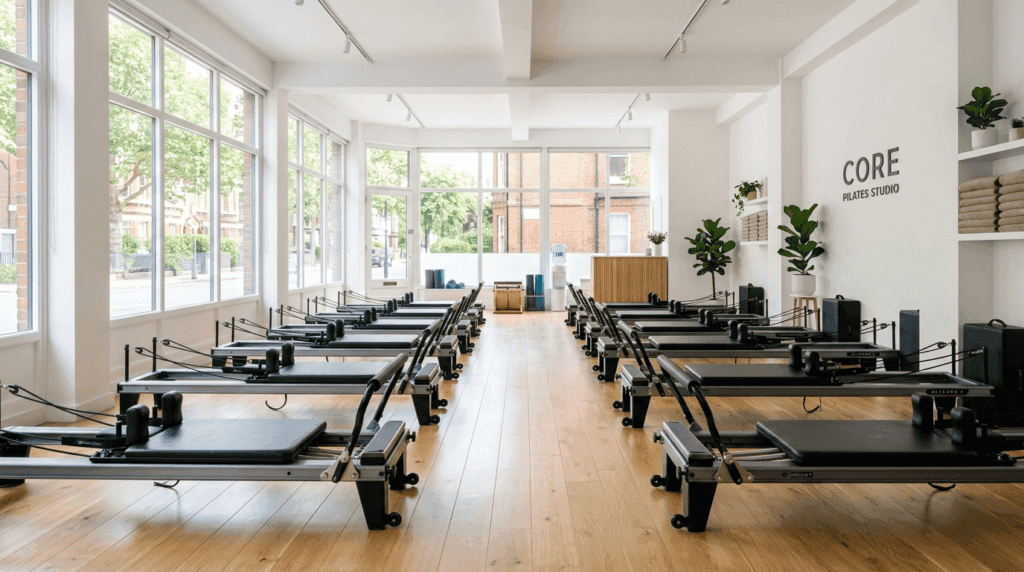
The reformer is a bed-like frame with a flat platform — the carriage — that rolls back and forth on wheels. A set of springs connects the carriage to the frame, providing adjustable resistance, and you use footbars, straps, and handles to perform a wide range of exercises while lying down, sitting, kneeling, or standing.
Joseph Pilates originally designed the reformer in the early 20th century, initially improvising with hospital bed springs to help injured soldiers rehabilitate. The fundamental design hasn’t changed much — but the classes, studios, and community around the reformer have grown dramatically.
What makes reformer Pilates different from almost every other piece of gym kit is its ability to simultaneously train strength, flexibility, balance, and co-ordination. The spring resistance means your muscles work on both the push and the pull, and the unstable carriage demands that your stabilising muscles are active throughout every movement. That combination creates the long, functional muscle tone that reformer devotees consistently rave about.
Reformer vs Mat Pilates: Is One Better?
This is one of the most common questions from people new to Pilates — and the honest answer is that they complement each other rather than compete. But they’re not the same workout.
Mat Pilates uses your bodyweight and gravity as resistance. It’s highly accessible — you can do it at home, in a park, or in most gyms — and it’s excellent for learning the foundational Pilates principles: core engagement, spinal articulation, controlled breathing, and alignment. If you’re brand new to Pilates, a few mat sessions help you understand the movement vocabulary before you step onto a reformer.
Reformer Pilates adds spring tension to every exercise, which lets you increase resistance (making things harder) or use the springs for assistance (making certain positions accessible for injured or deconditioned bodies). This adaptability is why reformer Pilates is used in professional physiotherapy and elite athletic performance programmes alike.
For anyone ready to progress beyond beginner mat Pilates classes, the reformer offers a genuinely new challenge — even seasoned gym-goers find their first few reformer sessions humbling. There’s always another level.
What Happens in a Reformer Pilates Class?
Walk into any reformer studio across the UK and you’ll find rows of machines — typically eight to twelve in a boutique setting, more in a larger wellness space. Classes usually run for 50 to 60 minutes and are capped at around 10–14 people, which is part of what justifies the higher price: you get real instructor attention, not a crowded spin-bike experience.
A typical class follows this structure:
Warm-up (5–10 minutes): Footwork on the reformer, lying on your back with feet on the footbar. You’ll work through different foot positions — parallel, V-shape, single leg, heel raises — to warm up the legs and establish a connection with your deep core muscles.
Core and lower body (20–25 minutes): A sequence targeting the glutes, hamstrings, hip flexors, and deep abdominals. Expect variations on lunges, leg presses, bridging, and lateral leg work using the straps and footbar.
Upper body (10–15 minutes): Row variations, chest presses, planking, and shoulder stability exercises using the carriage and straps — targeting the arms, back, and shoulders in ways that traditional resistance training often misses.
Stretching and cool-down (10 minutes): The reformer excels at facilitating deep, supported stretches, and the final section takes full advantage. You’ll leave feeling longer, looser, and noticeably calmer.
A good instructor will modify exercises around any injuries or limitations you flag at the start. Reformer Pilates often works around problem areas rather than aggravating them — one of its most appealing qualities for people managing ongoing niggles.
How Much Does Reformer Pilates Cost in the UK?
Reformer Pilates is not cheap — and it’s worth understanding why before you balk at the price. The boutique model means specialist equipment, small class sizes, and highly trained instructors. That adds up, and the honest truth is that most studios couldn’t keep their doors open charging less.
Here’s what you can expect to pay across the UK in 2026:
| Location | Single Class | 10-Class Pack | Monthly Unlimited |
|---|---|---|---|
| London (Central) | £28–£42 | £220–£340 | £220–£360 |
| London (Outer) | £22–£32 | £170–£260 | £160–£260 |
| Manchester / Leeds | £18–£28 | £140–£220 | £120–£200 |
| Bristol / Edinburgh | £18–£26 | £135–£205 | £110–£185 |
| Smaller UK towns | £14–£22 | £110–£170 | £85–£150 |
Class packs almost always give better value than single drop-ins. If you’re committed to going two or three times a week, a monthly unlimited membership can bring the per-class cost down considerably — often to around £10–£15 per session outside London.
It’s also worth noting that some leisure centres and health clubs include reformer Pilates classes as part of a wider membership. Well-equipped gym and spa venues across the UK sometimes bundle reformer classes into their timetable alongside swimming, spa access, and other group fitness — making these all-in memberships excellent value if you use the full range of facilities.
Almost every decent studio also offers a discounted introductory offer for new clients — typically a first class for £10–£15, or a starter pack of three sessions at a reduced rate. Always take advantage of these before committing to a monthly contract.
The Benefits of Reformer Pilates — And Who It’s Best For
Reformer Pilates has built its reputation on tangible results, and the science increasingly backs what practitioners have known for decades:
Core strength and stability: The spring resistance engages your deep stabilising muscles — the transverse abdominis, multifidus, and pelvic floor — in ways that traditional gym exercises rarely achieve. Over time, this translates to better posture, reduced back pain, and more functional power in every sport or daily activity you do.
Flexibility and mobility: The reformer facilitates a supported range of motion that’s difficult to achieve through stretching alone. Instructors often describe it as “strength through length” — you’re developing flexibility while also building the strength to control it.
Low joint impact: Because much of the work is done lying down or with partial weight-bearing through springs, reformer Pilates is significantly gentler on the joints than running, HIIT classes, or heavy compound lifting. It’s consistently popular among people returning from injury, managing chronic pain, or over-50s looking for sustainable long-term fitness.
Athletic performance: Professional athletes across multiple UK sports use reformer Pilates for injury prevention and functional strength. Premier League clubs, professional cyclists, and Olympic athletes all incorporate it into their training. The BBC has reported on its growing use in elite sport settings.
Mental clarity: Like other mind-body disciplines, reformer Pilates demands concentration — you can’t scroll your phone while performing a plank on a moving carriage. That focused awareness has real benefits for stress relief and mental wellbeing, similar to the effects that regular practitioners of yoga and mindful movement often describe.
According to ukactive, Pilates and yoga remain among the fastest-growing fitness activities in the UK, with particularly strong uptake among adults over 35 and those returning to exercise after a break — a trend that’s driven the proliferation of reformer studios in towns and cities across Britain.
How to Find a Reformer Pilates Studio Near You
Reformer studios have spread well beyond London. You’ll now find dedicated reformer Pilates spaces in cities like Sheffield, Southampton, Exeter, Cardiff, Inverness, and Belfast — as well as in smaller market towns where boutique fitness has gradually taken hold.
When choosing a studio, here’s what matters most:
Instructor qualifications: Look for instructors trained through APPI (Australian Physiotherapy and Pilates Institute), Stott Pilates, BASI Pilates, or Body Control Pilates — all recognised bodies that require significant training hours and anatomical understanding. This is non-negotiable for safe, effective teaching.
Class size: Ideally no more than 12 reformers per instructor. Smaller classes mean more individual attention and safer corrections — especially important when you’re just starting out and learning the movement patterns.
Equipment quality: Most reputable studios use Balanced Body, Gratz, or Merrithew reformers. If you can, visit before booking to check that the equipment is well maintained and not showing signs of wear on the springs or straps.
Introductory offer: Any good studio will offer a new-client deal. Be cautious of studios that push you into a long annual contract without a trial period — you want to make sure the teaching style, studio atmosphere, and timetable work for you before committing.
GymPal lists Pilates studios and reformer specialists across the UK, making it easy to search by location and compare your options. Find Pilates venues near you on GymPal to see what’s available in your area.
Is Reformer Pilates Worth It?
For most people who stick with it consistently over six to eight weeks: yes. It’s the rare fitness format that delivers measurable strength and mobility improvements while being genuinely kind to your body — a combination that’s hard to find at any price point.
It won’t replace high-intensity training for cardiovascular fitness, and it won’t build the kind of mass you’d get from heavy barbell work. But if you want functional strength, better movement quality, reduced injury risk, and a workout you actually look forward to attending — reformer Pilates consistently delivers on that promise.
The cost is the main barrier for most people in the UK. If single-session drop-ins feel steep, look for introductory offers, class pack deals, or health clubs that include reformer classes within a broader membership. The value becomes much clearer when you’re still training pain-free and moving well at 60.
Ready to find your nearest reformer Pilates studio? Search GymPal’s Pilates listings and discover the best studios and leisure centres in your area.

I am Adam Hall, a dedicated fitness professional with over ten years of experience in the UK’s fitness industry. I earned my Master’s degree in Sports Science from Loughborough University and have worked with several top fitness studios across the UK. My certifications include a Level 3 Personal Trainer Certificate and a specialised Strength and Conditioning Coach accreditation.
Starting my career as a personal trainer, I quickly moved up to manage multiple gym locations, overseeing their operations and training programs. Beyond managing gyms, I regularly contribute to well-known fitness magazines and have been featured in articles for “Health & Fitness” and “Men’s Health”. My passion also extends online where I run a popular blog on GymPal’s AI-powered directory platform detailing insights into choosing the right fitness venues across the UK. With hundreds of posts reaching thousands of readers monthly, my goal is to influence positive changes in how people approach health and exercise throughout the country.