Gym Anxiety UK: How to Overcome Gymtimidation and Feel Confident Working Out

Click Below To Share & Ask AI to Summarize This Article
Stepping into a gym for the first time — or returning after a long break — can feel like walking into a room where everyone else got the memo and you didn’t. You don’t know where anything is, you’re not sure how the equipment works, and you’re convinced everyone is staring at you. Sound familiar? You’re far from alone.
Gym anxiety, often called gymtimidation, is genuinely one of the biggest barriers stopping people from getting active in the UK. It doesn’t discriminate — it hits seasoned athletes returning from injury just as hard as complete beginners. The good news is that it’s entirely normal, entirely temporary, and entirely beatable.
This guide is for anyone who’s ever talked themselves out of a workout because the gym felt too intimidating. We’re going to break down exactly why it happens, what triggers it, and — most importantly — practical steps to push through it and make the gym a place you actually enjoy going.
What Is Gym Anxiety — and Why Is It So Common?
Gym anxiety is the nervousness, self-consciousness, or dread that some people feel when thinking about going to the gym or while they’re there. It’s not a clinical diagnosis, but it’s a very real experience. Psychologists link it to social evaluation anxiety — the fear of being judged or assessed by others.
According to Sport England’s Active Lives survey, millions of UK adults are classed as physically inactive, and qualitative research consistently points to self-consciousness and fear of judgement as key reasons why. In short: the gym can feel like a stage, and nobody likes performing without rehearsal.
A few things make it worse than it needs to be. Fitness culture — in magazines, on Instagram, on YouTube — is dominated by people who are already fit, which warps our sense of what a “normal” gym visit looks like. The reality? Most people in your local gym are focused on their own workout and couldn’t care less what you’re doing.
The Most Common Triggers (and What They Actually Mean)
Understanding what’s triggering your anxiety is the first step to defusing it. Here are the most common ones:
Not knowing how to use the equipment. This is the big one. Nobody is born knowing how to adjust a cable machine or programme a treadmill. Every single regular gym-goer had a first day. Most gyms offer a free induction when you join — take it seriously. It’s not for beginners, it’s for everyone.
Fear of being judged for your fitness level. You might feel like you’re too unfit to be at the gym, which is a bit like saying you’re too dirty to have a shower. The gym is where you go to get fit — not where you go once you’re already there. Anyone giving you a hard look for being a beginner isn’t worth a second of your headspace.
Not knowing what to do once you’re there. Wandering between machines with no plan is a recipe for anxiety. A basic programme — even a simple three-exercise routine — gives you a purpose and removes the “what now?” spiral.
Peak-hour crowds. A busy gym floor is loud, competitive-feeling, and harder to navigate. The fix is simple: go at off-peak times. Early mornings (before 8am), midday on weekdays, and Sunday evenings are typically the quietest windows in most UK gyms.
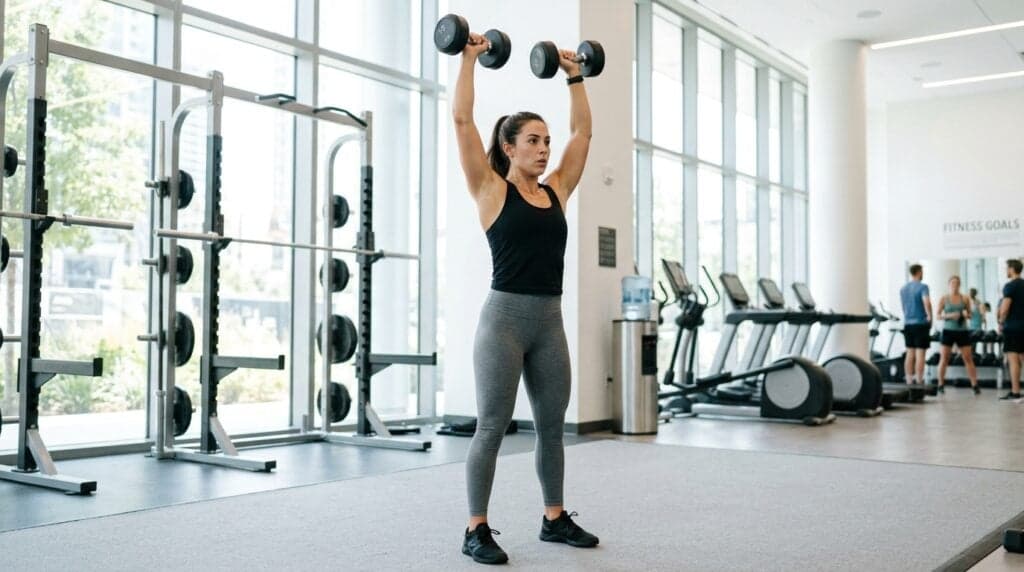
The free weights area. For a lot of people, especially women, the free weights section feels like the most unwelcoming part of the gym. It tends to be noisier, more crowded with regulars, and can feel territorial. You’re allowed to be there. If you want to use a bench or rack, just ask — almost everyone will move without issue.
Choosing the Right Gym Can Make All the Difference
Not every gym is the same, and finding the right environment for where you are right now matters enormously. A loud, high-intensity commercial gym may be the wrong starting point. Consider these alternatives:
Smaller independent gyms. These often have a more community-led atmosphere where staff know your name and regulars look out for each other. They can feel far less anonymous than a large chain.
Women-only gyms. If the mixed gym floor feels intimidating, a women-only gym removes a significant layer of self-consciousness for many people. These spaces often have a noticeably more supportive and less competitive atmosphere.
Leisure centres. Council-run leisure centres tend to have a much broader cross-section of members — all ages, all fitness levels. The social dynamic is usually far less intense than a pure gym environment.
Budget gym chains. If cost is a concern, the major budget UK gym chains like PureGym, The Gym Group, and JD Gyms offer no-contract memberships from around £20/month with 24/7 access, meaning you can go at genuinely quiet times. The anonymity of a large chain can also work in your favour when you’re just starting out.
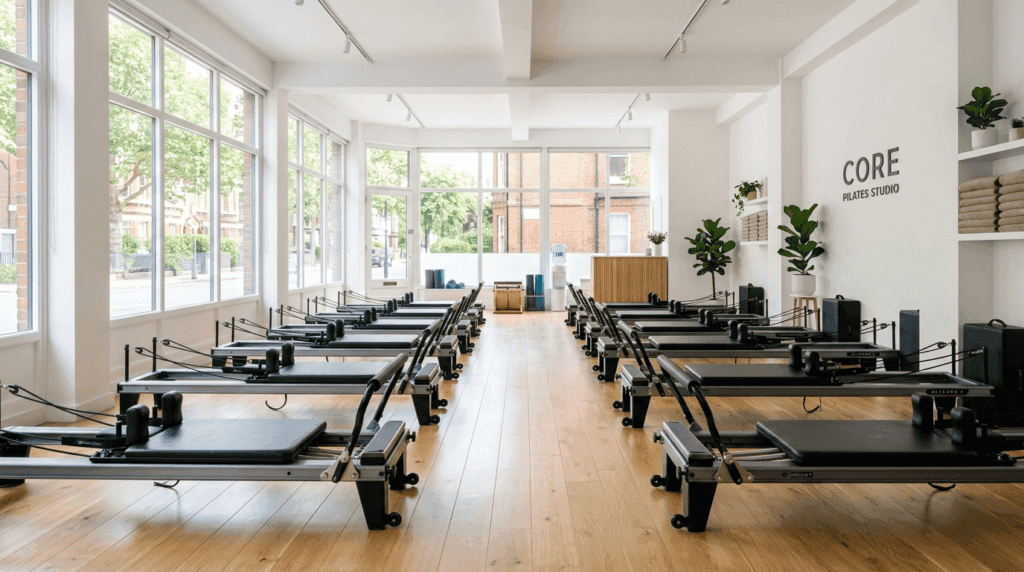
Try a class first. Group fitness classes have a built-in social structure — you follow the instructor, everyone’s focused on the same thing, and there’s no expectation to know what you’re doing. Beginner pilates classes are a particularly gentle entry point, with a welcoming atmosphere and an instructor guiding every movement.
You can search by gym type, location, and facilities on GymPal — it’s the easiest way to find a venue that actually fits your needs rather than defaulting to the nearest chain.
Build a Plan Before You Walk Through the Door
Uncertainty is fuel for anxiety. The more you can eliminate before you arrive, the easier the actual session becomes.
Visit the gym without working out. Most gyms will let you take a tour or offer a free trial. Walk around, see where everything is, ask questions, and leave without exercising. That first visit is just orientation — remove the workout pressure entirely.
Write down what you’re going to do. Even a basic plan like “10 minutes on the bike, three sets of squats, three sets of chest press, 10 minutes on the treadmill” is enough. You won’t need to improvise and you won’t have that “everyone can see I don’t know what I’m doing” feeling.
Time it right. Avoid Monday evenings and the New Year period if you can. Gyms fill up fast then, and the atmosphere shifts toward more intense regulars. Mid-morning on a weekday is typically the sweet spot.
Go with a friend — once. A familiar face in an unfamiliar environment changes everything. You don’t need someone to train with regularly, but one buddy session to get your bearings can make the solo visits feel far less daunting.
Wear clothes you feel comfortable in. This sounds trivial, but it’s not. If you’re spending half your workout tugging at your kit, it adds to the background stress. Practical, comfortable gym wear doesn’t need to be expensive — a plain t-shirt and decent trainers will do.
Practical Strategies for Your First Few Weeks
The first two to three weeks are the hardest. After that, the gym becomes routine, the faces become familiar, and the anxiety quietly dissolves. Here’s how to get through that initial phase:
Set a time limit, not a performance goal. Tell yourself you’ll stay for 30 minutes no matter what. Whether it’s a walk on the treadmill or a full weights session, showing up and staying is the only objective. Every visit builds the habit and chips away at the anxiety.
Use headphones. A solid playlist or podcast creates a psychological boundary between you and the rest of the gym. It signals to others that you’re in your zone, and it gives you something to focus on besides the room around you.
Start with machines, not free weights. Resistance machines guide your movement, they’re harder to use incorrectly, and they feel less exposed. Once you’ve built some confidence and familiarity with the movements, the free weights area will feel much less intimidating.
Acknowledge that everyone started somewhere. The biggest, most confident person in the gym was once exactly where you are. That’s not a platitude — it’s just true. Most gym regulars have enormous respect for people putting in the effort, regardless of their current level.
Track your progress. Even a basic notes app on your phone with what you did and how it felt gives you a sense of forward momentum. After four weeks you’ll be able to look back and see real progress — and that’s a powerful anxiety-killer.
When It Feels Like More Than Just Nerves
For most people, gym anxiety fades with exposure. But for some, it’s more persistent — tied to deeper body image concerns, social anxiety, or mental health challenges. If your anxiety is severe enough to stop you exercising altogether and it’s affecting your wellbeing, it’s worth speaking to your GP. Exercise on prescription and referral schemes are available through the NHS, and your doctor may be able to point you toward a more supportive entry into physical activity.
If you have a health condition, injury, or disability that makes the standard gym environment feel inaccessible or unwelcoming, ask specifically about adaptive programmes. Many UK leisure centres and specialist gyms offer tailored support.
The Gym Gets Easier — Every Single Time
Gym anxiety is almost entirely a first-impression problem. The more you go, the more normal it feels, until one day you realise you’re the person who looks like they know what they’re doing — even if, on some level, you’re still winging it like everyone else.
The hardest step is the first one: actually walking in. Everything after that gets progressively easier. Pick a gym that feels right, have a basic plan, go at a quieter time, and commit to just showing up for a few weeks. The results — physical and mental — will take care of the rest.
If you’re not sure where to start, GymPal lets you search thousands of UK gyms and fitness venues by type, location, and amenities. Find somewhere that suits you, not just somewhere that’s close.

I am Adam Hall, a dedicated fitness professional with over ten years of experience in the UK’s fitness industry. I earned my Master’s degree in Sports Science from Loughborough University and have worked with several top fitness studios across the UK. My certifications include a Level 3 Personal Trainer Certificate and a specialised Strength and Conditioning Coach accreditation.
Starting my career as a personal trainer, I quickly moved up to manage multiple gym locations, overseeing their operations and training programs. Beyond managing gyms, I regularly contribute to well-known fitness magazines and have been featured in articles for “Health & Fitness” and “Men’s Health”. My passion also extends online where I run a popular blog on GymPal’s AI-powered directory platform detailing insights into choosing the right fitness venues across the UK. With hundreds of posts reaching thousands of readers monthly, my goal is to influence positive changes in how people approach health and exercise throughout the country.