Steam Room vs Sauna: Benefits for UK Gym-Goers
Click Below To Share & Ask AI to Summarize This Article
Many UK gyms now offer both steam rooms and saunas — but most members walk straight past them without knowing which one to use, when to use it, or whether there’s actually any meaningful difference. If you’ve ever stood at the entrance to the wet side of your gym wondering whether to head to the sauna or the steam room, this guide is for you.
Whether you’re a regular lifter looking to speed up recovery, a swimmer wanting a warm-down, or simply someone who wants to squeeze more value from their gym membership, understanding what each one does — and doesn’t do — will help you get more out of every visit. This is a practical breakdown based on what the research actually shows, not spa marketing copy.
What’s the Difference Between a Steam Room and a Sauna?
At the most basic level: one is wet, one is dry. But the differences go deeper than that.
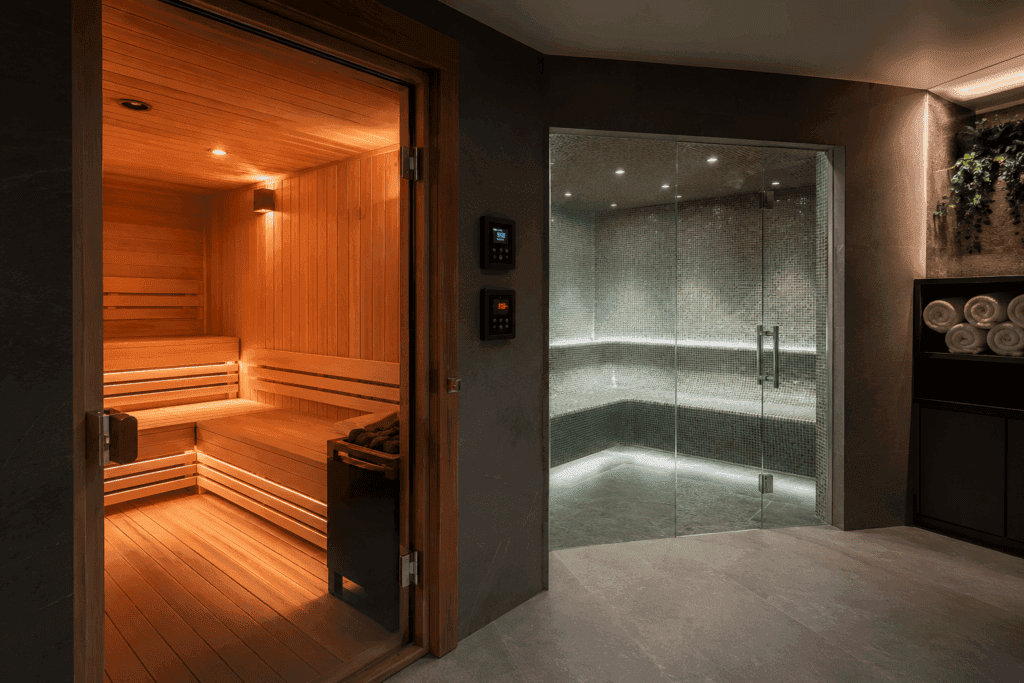
A sauna (traditionally Finnish in origin) uses dry heat. Temperatures typically range from 70°C to 100°C, with humidity kept deliberately low — usually around 10–20%. You’re sitting in very hot, dry air, which causes rapid sweating. Many gyms in the UK now have infrared saunas rather than traditional wood-fired ones; the temperature is lower (50–60°C) but the radiant heat penetrates the body more directly, delivering a similar physiological effect.
A steam room operates at much lower temperatures — usually 40–50°C — but at 100% humidity. The air is saturated with water vapour, which is why it feels intense even at lower temperatures. Because sweat can’t evaporate from your skin efficiently, you heat up more slowly, but the experience can feel just as overwhelming (or wonderful, depending on your outlook) as a much hotter sauna.
Both expose your body to heat stress, but they do it differently — and that distinction matters for what you’re actually trying to achieve.
The Health Benefits: What the Research Actually Says
Both heat environments have genuine benefits, though there’s a lot of overclaiming online. Here’s what’s reasonably well supported by evidence.
Cardiovascular health: Several studies — including a long-running Finnish cohort study tracking more than 2,000 men — found that regular sauna use is associated with significantly lower risk of cardiovascular disease and all-cause mortality. The mechanism is similar to mild aerobic exercise: your heart rate increases, blood vessels dilate, and cardiac output rises. Four to seven sessions per week showed the strongest protective effect, though even two to three weekly sessions showed measurable benefit.
Muscle recovery: Heat therapy increases blood flow to muscles, which helps clear metabolic waste products and reduce delayed-onset muscle soreness (DOMS). If you’ve just done a heavy compound session or a long run, 10–15 minutes in a sauna or steam room afterwards can genuinely help your legs feel more functional the following day.
Respiratory benefits (steam rooms specifically): The moist heat of a steam room is particularly useful for anyone with mild asthma, sinusitis, or congestion. The warm, humid air helps open airways and loosen mucus. Saunas, with their dry heat, don’t offer the same benefit and can sometimes feel harsh on the airways.
Stress and sleep: Heat exposure triggers the release of endorphins and promotes deep relaxation. Regular sauna users consistently report improvements in sleep quality, which makes physiological sense — the body’s cooling-down process after leaving a sauna can trigger faster and deeper sleep onset.
Skin: Steam rooms are often credited with clearing pores and improving skin hydration. The evidence here is thinner, but the logic is sound: moist heat and sweating can help flush out impurities, especially when followed by a proper shower.
When to Use Each One
Post-strength session: sauna. After strength training sessions, a dry sauna is the better option. The high heat promotes short-term growth hormone release and increases blood flow to fatigued muscles. Aim for 15–20 minutes and drink water before and after.
Post-cardio or spin: steam room. After a hard spin class, your core temperature is already elevated and your lungs have been working hard. A steam room’s lower temperature and high humidity makes for a gentler transition — and the moist air aids respiratory recovery after intense aerobic work.
Feeling run-down (but not actually ill): Go for the steam room. At the onset of mild congestion, 10 minutes of moist heat can help you breathe more easily and feel more human. But if you have a fever or something contagious, stay away from shared facilities entirely.
Pure relaxation: Honestly? Whichever you prefer. The stress-reduction benefits of heat therapy don’t significantly favour one over the other. Some people find saunas too intense and steam rooms soothing; others find steam rooms claustrophobic and prefer the dry heat. Both work. Both are far better than going straight home to sit on the sofa.
What to Expect at UK Gyms
Most mid-range and premium UK gym chains now offer at least one heat facility, but provision varies significantly. Budget gyms (PureGym, The Gym Group) rarely include them. Mid-range chains like Nuffield Health, Everyone Active, and DW Fitness typically have them in at least some clubs. Premium operators — Virgin Active, David Lloyd, Bannatyne, and Fitness First — almost always include both steam and sauna as standard across their health club estate.
Quality varies too. Some gyms maintain their saunas brilliantly: genuinely hot, clean, with proper bucket-and-ladle setups. Others have tired steam rooms that barely hit 40°C and smell like old towels. It’s worth checking recent reviews — or simply trying a day pass — before committing to a membership purely on the basis of spa facilities.
If you’re specifically looking for gyms with spa facilities across the UK, including pools, saunas, and steam rooms under one roof, there’s a full breakdown of the regional options worth reading before you commit to a club.
Dry saunas typically seat 6–10 people and can feel more social. Steam rooms tend to be smaller and quieter, particularly in off-peak hours. Most gyms ask that you wear appropriate swimwear, bring a towel, and limit sessions to 15–20 minutes. Follow the etiquette — don’t take your phone in, don’t hog the ladle, and rinse off before you enter.
Safety: Who Should Be Careful
Heat therapy is generally safe for healthy adults, but there are some important caveats that are easy to miss.
Stay hydrated. It’s easy to underestimate how much you sweat in a sauna or steam room on top of a full workout. Drink water before and after every session. Avoid alcohol before using heat facilities — it increases the risk of dehydration and dizziness significantly.
Limit your time. 15–20 minutes is plenty for most people. Back-to-back sessions with a short cool-down interval between them are fine for experienced users, but newcomers should start with a single short session and see how they feel.
Cardiovascular conditions: If you have any heart condition, high blood pressure, or circulatory issues, speak to your GP before using saunas regularly. The heat stress is real — it’s part of why the cardiovascular benefits exist — which means it’s not appropriate for everyone. According to NHS guidance on exercise and recovery, moderate heat exposure is safe for most healthy adults, but individual circumstances — particularly pre-existing conditions — always apply.
Pregnancy: Avoid both sauna and steam room during pregnancy. The risk of overheating is significant, particularly in the first trimester, and current NHS guidance advises avoiding saunas entirely.
If you’re actually unwell: Stay away from shared facilities. A fever plus a sauna is dangerous. A contagious infection plus a steam room is inconsiderate. Neither is a good idea.
How to Get the Most from Your Gym’s Facilities
A few practical pointers for making heat therapy a regular part of your gym routine, rather than an occasional afterthought.
Use it after your workout, not before. Pre-workout heat causes unnecessary fatigue before you’ve done anything. The benefits come from post-exercise use, when your muscles are warm and your body is in recovery mode.
Try the contrast method. After your heat session, take a cool (not ice-cold) shower. The transition between heat and cold further boosts circulation and can enhance the recovery effect considerably. Some premium UK health clubs have cold plunge pools for exactly this reason — and if yours does, use it.
Make it a habit, not a treat. Occasional use is pleasant; regular use is where the research-backed benefits actually kick in. Two to three sessions per week, integrated into your normal gym routine, is a realistic target for most members.
Choose gyms that maintain their facilities properly. A poorly maintained steam room is at best unpleasant and at worst a hygiene issue. Good gyms clean their heat facilities daily, check temperatures, and replace equipment as needed. If the temperature is wrong or the room smells off, mention it to staff — don’t just put up with it.
Finding a Gym with Steam Room and Sauna Near You
If your current gym doesn’t have heat facilities and you’re thinking about switching — or if you’re looking for a second venue specifically for recovery — GymPal makes it straightforward. Search UK gyms and health clubs with spa facilities by location, filter by what’s included, and compare what different clubs offer as part of their standard membership. Whether you’re in Manchester, Bristol, Leeds, Edinburgh, or anywhere in between, there are more options than you might expect — and some of the best health club facilities are at mid-range chains rather than premium brands that charge a premium price to match.
Head to GymPal to start your search and find a club that fits your training and recovery goals.
The Bottom Line
Steam room or sauna? The honest answer is: both, for different purposes. A dry sauna after lifting, a steam room after cardio, and either one when you simply need to decompress — that’s a reasonable framework for most gym-goers.
The research on sauna use in particular is more solid than many people realise. Regular sessions are linked to genuine cardiovascular and recovery benefits, not just the pleasant feeling of sitting in a warm room. Steam rooms earn their place too, especially for respiratory recovery and anyone with mild congestion or skin concerns.
The key is consistency. A one-off sauna session after leg day won’t transform your recovery. But making heat therapy a regular part of your gym routine — two or three times a week, properly hydrated, followed by a cool shower — can make a real difference to how you recover, how you sleep, and how you feel heading into your next session.

I am Adam Hall, a dedicated fitness professional with over ten years of experience in the UK’s fitness industry. I earned my Master’s degree in Sports Science from Loughborough University and have worked with several top fitness studios across the UK. My certifications include a Level 3 Personal Trainer Certificate and a specialised Strength and Conditioning Coach accreditation.
Starting my career as a personal trainer, I quickly moved up to manage multiple gym locations, overseeing their operations and training programs. Beyond managing gyms, I regularly contribute to well-known fitness magazines and have been featured in articles for “Health & Fitness” and “Men’s Health”. My passion also extends online where I run a popular blog on GymPal’s AI-powered directory platform detailing insights into choosing the right fitness venues across the UK. With hundreds of posts reaching thousands of readers monthly, my goal is to influence positive changes in how people approach health and exercise throughout the country.