Strength Training for Women UK: Why Lifting Weights Is the Best Thing You Can Do for Your Health
Click Below To Share & Ask AI to Summarize This Article
There’s a quiet revolution happening on the weight room floor. Walk into any decent gym in the UK right now and you’ll see women deadlifting, squatting, pressing — not apologetically tucked into a corner, but owning the space. The days of women being steered towards the treadmill and the little pink dumbbells are, thankfully, numbered.
And it’s about time. Because the evidence for strength training — actual, progressive, load-bearing resistance work — is stacked high, and it’s especially compelling for women. If you’ve been hovering at the edge of the weights section, unsure whether it’s for you, this guide is here to settle the question.
We’ll break down what strength training does to your body, bust the biggest myths, and give you a practical roadmap for getting started at a gym near you.
What Strength Training Actually Does to Your Body
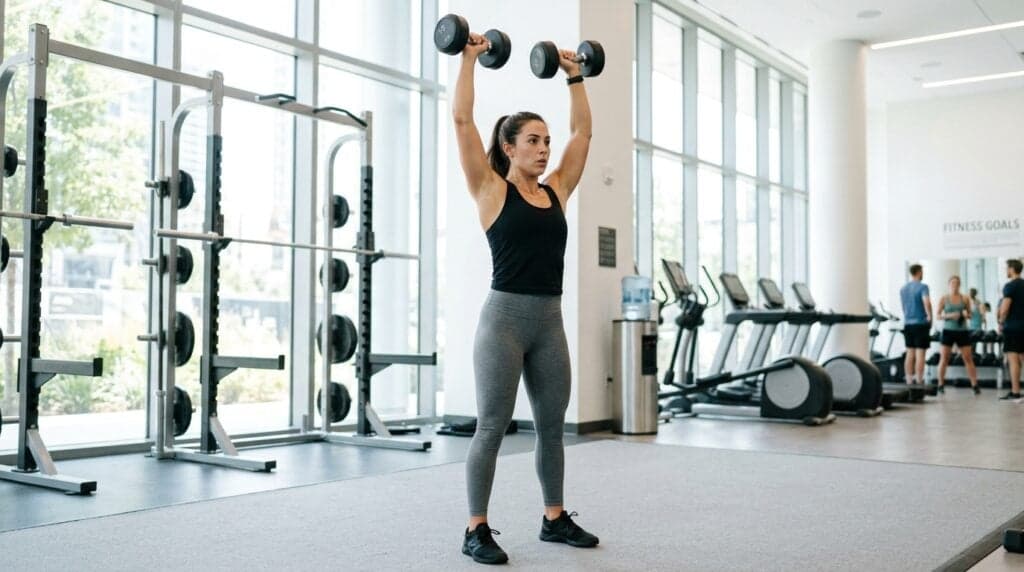
Let’s start with the basics. Strength training — also called resistance training or weight training — is any exercise that makes your muscles work against an external resistance. That might be free weights, barbells, cable machines, resistance bands, or your own bodyweight.
When you lift something challenging, you create micro-tears in your muscle fibres. Your body repairs these tears and builds the muscle back slightly stronger. Repeat this over weeks and months, gradually increasing the load, and you get meaningfully stronger, more muscular, and more physically capable.
The process also triggers significant hormonal and metabolic responses. Your resting metabolic rate increases, meaning you burn more calories even at rest. Insulin sensitivity improves. Blood glucose regulation gets better. Inflammatory markers typically decrease with consistent training. And your bones? They respond to mechanical load by becoming denser — which matters enormously for women, as we’ll get to shortly.
The Biggest Myth: Will You Get Bulky?
You’ve heard it. Maybe you’ve said it yourself: “I don’t want to get too bulky.”
Here’s the truth: for the vast majority of women, adding significant muscle mass is extraordinarily difficult. Women produce roughly 10 to 20 times less testosterone than men, and testosterone is the primary hormonal driver of muscle hypertrophy. Building the kind of visible, substantial muscle that the word “bulky” conjures requires years of dedicated structured training, very high caloric intake, and often pharmaceutical assistance.
What strength training will do is give you a leaner, more defined physique. The women who look “toned” — which essentially means visible muscle beneath low body fat — got there through strength training, not endless cardio. Cardio burns calories during the session. Strength training changes body composition over time by building muscle and reducing relative body fat percentage. The look most women describe when they say they want to “tone up” is produced by exactly the thing they’re nervous about: lifting heavy.
The Health Benefits That Go Way Beyond How You Look
Here’s where the case for strength training gets genuinely compelling — particularly for women in their 30s, 40s, and beyond.
Bone density is non-negotiable. Women are disproportionately affected by osteoporosis: according to NHS guidance on osteoporosis, around 1 in 2 women will experience a fracture related to the condition in their lifetime. Bone density peaks in your late 20s and begins to decline after 35, with the sharpest drop occurring at menopause when oestrogen levels fall. Resistance training is one of the few interventions proven to stimulate new bone formation and slow this decline — the mechanical load you place on your skeleton sends signals that prompt bone-building cells to get to work. Cardio simply doesn’t produce the same effect.
Mental health benefits are real and substantial. Multiple studies have found strength training effective in reducing symptoms of depression and anxiety — sometimes as effective as medication for mild-to-moderate cases. There’s something grounding about the discipline of lifting: the focus it demands, the measurable progress, the growing sense of physical competence. Many women who start lifting describe it as the most reliably mood-boosting thing in their week.
Your metabolism gets a significant, lasting upgrade. Muscle is metabolically active tissue — it burns energy just to maintain itself. The more muscle you carry, the higher your resting metabolic rate. A woman who has been lifting consistently for two years will burn meaningfully more calories at rest than before she started, even if her weight hasn’t changed. This matters enormously for long-term weight management and for the natural metabolic slowdown that comes with age.
Strength training improves how you move in everyday life. Picking up children, carrying shopping, climbing stairs without your knees protesting — all of this is underpinned by functional strength. If you’re drawn to the idea of training that translates directly to real life, functional fitness gyms across the UK build programmes around exactly the same fundamental movement patterns — hinge, squat, push, pull — that underpin quality strength training.
It’s especially powerful during perimenopause and beyond. As hormone levels shift in your 40s and 50s, many women find cardio-only approaches stop delivering in the way they used to. Resistance training helps preserve muscle mass (which drops sharply post-menopause), supports bone density, improves sleep quality, and helps manage body composition changes. It’s arguably the single most valuable health tool available to women over 45.
How to Start Strength Training in the UK
You don’t need a complicated programme on day one. Here’s a practical framework.
Start with the fundamental movements. The foundations of strength training are five patterns: squat, hinge (like a deadlift), horizontal push (bench press or push-up), horizontal pull (barbell or dumbbell row), and vertical pull (lat pulldown). If you can perform serviceable versions of these, you have everything you need for a complete full-body programme.
Use your gym induction. Most UK gyms include a free induction session when you join. Use it properly — ask the trainer to walk you through the key movements with light weight and give you form feedback. If you want more structured coaching, investing in even a handful of sessions with a personal trainer who specialises in strength training can compress months of trial and error into a few focused hours.
Follow a beginner programme. A three-day-per-week full-body programme is ideal when starting out. This gives you enough frequency to build movement patterns quickly while allowing adequate recovery. Look for beginner-friendly structures like StrongLifts 5×5, GZCLP, or Starting Strength — all built around progressive overload, which is the engine of strength progress.
Eat to support your training. You cannot build muscle in a sustained caloric deficit. If you’re eating very little, your body won’t have the raw material to repair and grow muscle tissue. You don’t need to eat dramatically more, but consuming sufficient protein — around 1.6–2g per kg of bodyweight per day — is genuinely important. This is the most commonly neglected piece of women’s strength training advice.
Track your progress. Keep a simple training log — even in your phone’s notes app. Record exercises, sets, reps, and weights. Seeing your numbers go up week on week is one of the most motivating aspects of strength training, and it stops you drifting through sessions without purpose.
What to Look for in a Gym for Strength Training
Not all gyms are equally suited to lifting. Here’s what actually matters when choosing somewhere to train.
Free weights are essential. If a gym only has resistance machines and a dumbbell rack topping out at 15kg, you’ll hit a ceiling quickly. Look for: a squat rack or power rack, a full barbell setup, a comprehensive dumbbell range (ideally to 40kg or beyond), and a deadlift platform if possible.
Atmosphere matters enormously. The best gyms for female lifters are welcoming, not territorial. Before committing to a membership, visit and observe the weights area. Is it a mixed crowd? Do women seem comfortable lifting there? If the floor feels dominated by men guarding the squat racks, trust your instincts and look elsewhere.
Consider a women-only environment. If gym intimidation is a genuine barrier, women-only gyms across the UK offer an excellent environment for building confidence with weights without the social dynamics of a mixed space. Many have strong free weights sections and female coaches who understand the specific physiological and psychological needs of women training for strength.
Finding the right gym is much easier with GymPal’s UK gym search, which lets you filter by location, gym type, and facilities — so you can find a strength-friendly gym or women’s fitness space near you without trawling through pages of Google results.
A Beginner Training Week: What It Looks Like in Practice
For beginners, three full-body sessions per week — Monday, Wednesday, Friday — is the sweet spot. Here’s a simple alternating structure:
Session A
Barbell squat: 3 sets × 5 reps
Bench press or dumbbell press: 3 × 5
Barbell or dumbbell row: 3 × 5
Accessory: Romanian deadlift 3 × 10, plank 3 × 30 seconds
Session B
Barbell squat: 3 × 5
Overhead press: 3 × 5
Deadlift: 1 × 5 (heavier single working set)
Accessory: Dumbbell reverse lunges 3 × 10, lat pulldown 3 × 10
Alternate A and B each session. Add 2.5kg to upper body lifts and 5kg to squats and deadlifts each time you complete all your reps with good form. When you can’t hit the target reps at a given weight, drop back 10% and rebuild. This simple progressive overload model drives rapid strength gains through the first six to twelve months of training.
Rest days between sessions are non-negotiable. Muscle grows during recovery, not during the workout itself. Trying to train every day as a beginner will slow your progress, not speed it up.
The Bottom Line
Women and weights go together brilliantly. The science is clear, the results are real, and the fitness culture in the UK is changing fast — you’ll see it in the queues for the squat rack in any well-equipped gym. Whether you’re 25 or 65, whether your goal is to feel stronger, manage your weight, protect your bones, improve your mental health, or simply feel genuinely capable in your own body, strength training is worth starting.
Find a gym with good free weights, learn the basic movement patterns, follow a structured programme, and eat enough protein. That’s really all it takes to get going — everything else is details you’ll figure out along the way.
Ready to find a gym that’s right for you? Search GymPal to discover strength-friendly gyms and women’s fitness spaces across the UK — filter by your area and find somewhere you’ll genuinely want to train.

I am Adam Hall, a dedicated fitness professional with over ten years of experience in the UK’s fitness industry. I earned my Master’s degree in Sports Science from Loughborough University and have worked with several top fitness studios across the UK. My certifications include a Level 3 Personal Trainer Certificate and a specialised Strength and Conditioning Coach accreditation.
Starting my career as a personal trainer, I quickly moved up to manage multiple gym locations, overseeing their operations and training programs. Beyond managing gyms, I regularly contribute to well-known fitness magazines and have been featured in articles for “Health & Fitness” and “Men’s Health”. My passion also extends online where I run a popular blog on GymPal’s AI-powered directory platform detailing insights into choosing the right fitness venues across the UK. With hundreds of posts reaching thousands of readers monthly, my goal is to influence positive changes in how people approach health and exercise throughout the country.