Wild Swimming in the UK: The Rise of Open Water Fitness
Click Below To Share & Ask AI to Summarize This Article
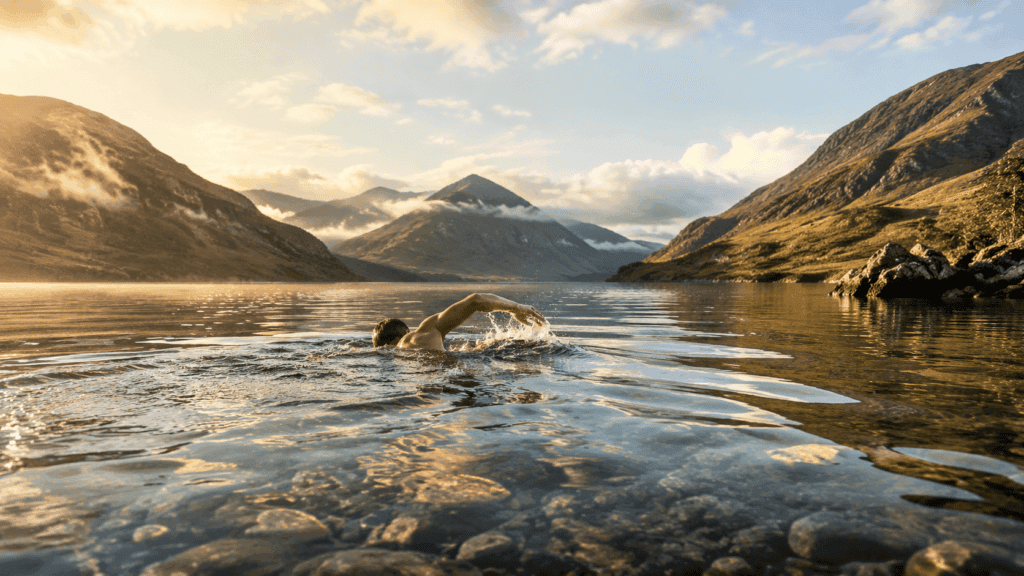
There is a quiet revolution happening in the UK’s relationship with water. From the glacial lakes of the Lake District to the chalk streams of the South Downs, from Scottish lochs to urban reservoirs in the Thames Valley, more people than ever are stripping off their wetsuits — or dispensing with them entirely — and plunging into open water. Wild swimming, once the preserve of hardened eccentrics, has become one of the most talked-about fitness trends in Britain.
The numbers tell the story. According to Swim England, outdoor swimming participation has increased dramatically over the past five years, with tens of thousands of new participants entering open water each year. The pandemic played a part — when pools shut, lakes and rivers stayed open — but the trend has continued long after the restrictions lifted. Something deeper is pulling people out of their temperature-controlled indoor pools and into the cold embrace of natural water.
Whether you are a seasoned swimmer looking for a new challenge or a curious beginner wondering whether wild swimming is for you, this guide covers everything you need to know: the health benefits, where to swim safely in the UK, what to wear, and how to get started.
What Is Wild Swimming and Why Is It Different?
Wild swimming refers to swimming in natural bodies of water — lakes, rivers, reservoirs, the sea, and waterfalls — rather than purpose-built swimming pools. It is sometimes called open water swimming or outdoor swimming, though purists will tell you these terms carry slightly different meanings: open water swimming often refers to the sport of distance swimming in lakes and seas, while wild swimming emphasises the connection to nature and the informality of the experience.
The key differences from pool swimming are immediately apparent when you get in. Natural water is rarely still, rarely warm, and never a predictable 25 metres long. You navigate around weeds, rocks, and currents. You cannot see the bottom. The temperature changes as you move deeper. These challenges are precisely what many swimmers find so compelling — wild swimming demands presence and awareness in a way that pool swimming simply cannot replicate.
Water temperatures in the UK vary enormously by location and season. Inland lakes in summer can reach a surprisingly comfortable 18–20°C. The same lake in February may be 4–6°C. The sea around the British coastline averages 12–17°C in summer, dropping to 6–9°C in winter. Understanding and respecting these temperatures is fundamental to swimming safely — and the temperature itself is a significant part of why so many people find wild swimming so transformative for their health and wellbeing.
The Health Benefits of Open Water Swimming
The health case for wild swimming is increasingly well-supported by research, and it goes well beyond the cardiovascular benefits you would expect from any form of swimming. The cold water itself appears to drive a distinct set of physiological responses that have attracted serious scientific interest.
Cold water immersion triggers a stress response in the body that, with regular exposure, can lead to improved cold adaptation, reduced inflammatory markers, and changes in mood-regulating neurotransmitters. A widely cited study published in the British Medical Journal Case Reports described a young woman whose treatment-resistant depression was successfully managed through cold water swimming — with the authors hypothesising that the cold water shock triggers a release of noradrenaline and beta-endorphins. While this is a single case report, it generated enormous interest and has been followed by broader research into cold water’s effects on mental health.
The NHS recognises swimming as one of the best all-round exercises, noting that it works the cardiovascular system, builds muscular strength and endurance, and is low-impact enough to be suitable for most people, including those with joint conditions. Open water swimming delivers these benefits while adding the documented effects of cold water exposure, which NHS guidance on swimming for fitness highlights as beneficial to circulation and overall wellbeing when approached sensibly.
Beyond the physical, the mental health benefits are repeatedly cited by open water swimmers themselves. The immersive nature of the experience — the need to focus entirely on the water, the cold, the breath — creates what psychologists call an “attentional shift”, pulling the mind away from rumination and stress. Many swimmers describe the experience as meditative, and some communities of outdoor swimmers have built peer support networks around their shared love of cold water.
If you are already exploring the science of cold water and recovery, our overview of cold water therapy and ice baths across the UK covers much of the same physiological territory from a recovery and performance perspective.
Where to Wild Swim in the UK: The Best Locations
The UK has an extraordinary range of open water swimming destinations, from the dramatic to the quietly beautiful. Finding the right spot depends on your experience level, your proximity to water, and what kind of swim you are looking for.
The Lake District is perhaps the most celebrated wild swimming destination in England. Windermere, Ullswater, and Coniston Water are iconic, but it is the smaller tarns — Blea Tarn, Stickle Tarn, Styhead Tarn — that many swimmers consider the finest experiences. The water is exceptionally clear, the scenery is dramatic, and the swimming tradition here stretches back generations.
The Cotswold Water Park, straddling Gloucestershire and Wiltshire, contains over 150 lakes and is home to a thriving open water swimming scene. Several lakes have organised swimming venues with lifeguards and facilities, making it an excellent option for beginners or those who prefer a more structured environment.
Scotland offers some of Europe’s finest wild swimming. Loch Lomond is easily accessible from Glasgow and Edinburgh, while the more remote lochs of the Highlands provide an entirely different experience — wilder, colder, and more dramatic. The River Tweed, the River Tay, and numerous highland burns offer excellent river swimming for those prepared to seek them out.
Wales punches well above its weight for wild swimming. The Pembrokeshire Coast, the Gower Peninsula, the rivers and waterfalls of the Brecon Beacons, and the lakes of Snowdonia all offer world-class swimming in stunning natural settings. The Blue Lagoon at Abereiddy in Pembrokeshire — a flooded former slate quarry with vivid blue-green water — has become one of the most photographed wild swimming spots in the UK.
Rivers offer a different experience again. The Thames, the Wye, the Avon, the Test, and dozens of others have stretches where swimming is traditional, legal, and deeply enjoyable. River swimming requires an understanding of currents, weirs, and water quality — but for those who embrace it, there is something uniquely pleasurable about moving water swimming.
The Outdoor Swimming Society maintains one of the most comprehensive guides to UK swimming locations, with community-contributed reviews and safety information. It is an invaluable resource for anyone building a list of places to explore.
Safety: What Every Open Water Swimmer Must Know
Wild swimming carries real risks that are absent from pool swimming, and understanding these risks is essential before you enter the water for the first time. The vast majority of open water swimming incidents are preventable, and they almost always involve one of a small number of factors: cold water shock, exhaustion from overestimating ability or distance, getting too far from exit points, or swimming alone.
Cold water shock is the most serious immediate risk. When the body enters cold water (below around 15°C), it triggers an involuntary gasp reflex, followed by rapid breathing and, in some cases, hyperventilation. This can cause panic and loss of muscle control. The risk is highest in the first 30–90 seconds. The solution is to enter the water slowly, splashing water on your neck and face before getting in fully, allowing your body to adjust before your breathing becomes affected. Never jump or dive into cold water unless you are highly experienced.
Hypothermia is a longer-term risk that depends on water temperature and time spent in the water. As a rough guide, a person of average fitness should limit swims to around 10 minutes in 10°C water and around 20–30 minutes in 15°C water. These are not precise rules — individual tolerance varies significantly — but they give a sensible framework for beginners. Learn to recognise the signs: uncontrollable shivering, confusion, loss of co-ordination. Exit the water well before you reach this point.
Never swim alone, particularly when you are starting out. Having a swimming partner or staying within sight of others dramatically reduces the risk of an incident becoming a fatality.
Check water quality before swimming. The Environment Agency provides water quality data for many rivers and lakes across England. Blue-green algae (cyanobacteria), which can be toxic, appears in warm, still water in summer — if you see it, do not swim. After heavy rainfall, bacterial levels in rivers and coastal waters increase significantly due to agricultural and sewage runoff.
Wearing a brightly coloured swimming hat and a tow float (an inflatable buoy that clips to your waist) significantly increases your visibility to boats and other water users. These are small investments that meaningfully reduce risk.
Getting Started: What You Need and How to Find Your Community
The barrier to entry for wild swimming is relatively low compared to many other fitness activities — you need water and a swimsuit — but there are a few pieces of kit that will make the experience significantly more enjoyable, particularly in the UK’s often cold and unpredictable waters.
A wetsuit extends your swimming season significantly and makes the cold water shock far more manageable. For most UK wild swimming, a full-length triathlon wetsuit (3mm–5mm) provides a good balance of warmth and flexibility. Many experienced wild swimmers prefer to acclimatise to cold water without a wetsuit over time, but for beginners, the additional safety margin a wetsuit provides is genuinely valuable.
A neoprene swim hat is often underestimated. Heat loss through the head is significant in cold water, and a neoprene hat makes a noticeable difference to both comfort and how long you can safely remain in the water. Neoprene boots and gloves extend this further for very cold conditions.
A changing robe (sometimes called a dryrobe or changing parka) has become something of an icon of outdoor swimming culture. These oversized waterproof fleece-lined capes allow you to change discreetly in outdoor locations and retain body heat rapidly after a cold swim. They are not cheap — expect to pay £80–£180 — but for regular swimmers, they are genuinely transformative.
Finding your swimming community is arguably the most important step you can take. Wild swimming is far more enjoyable, far safer, and far more likely to become a sustainable habit when you do it with others. Local swimming groups can be found through the Outdoor Swimming Society, through Facebook groups searching your area, and increasingly through dedicated wild swimming apps and websites.
Many areas have established “skins” swimming groups — swimmers who prefer to swim without wetsuits, often year-round. These groups tend to be exceptionally welcoming to beginners, provided those beginners respect the principles of safe, gradual acclimatisation.
If you are newer to structured aquatic fitness, our guide on building your swimming fitness in UK pools is a useful starting point before venturing into open water — a stronger pool swimming base makes open water swimming both safer and more enjoyable from the start.
How GymPal Can Help You Explore UK Fitness
Wild swimming is just one of the extraordinary range of fitness options available across the UK. From open water swims to gym classes, spa and recovery facilities to bootcamp sessions in local parks, the breadth of the British fitness scene has never been wider.
Finding the right fitness option for you — whether it is a leisure centre with pool access for your open water training, a gym with spa facilities to support your recovery, or a fitness community that matches your interests and goals — is where GymPal comes in. GymPal is the UK’s fitness discovery platform, helping you search gyms, swimming facilities, and wellness centres near you to find exactly what suits your needs and budget.
If you are building fitness through open water swimming and want to complement it with structured gym training, yoga for flexibility, or recovery through heat and cold therapy, GymPal’s search tools make it straightforward to find gyms and fitness facilities across the UK that fit your schedule, location, and goals.
The rise of wild swimming is part of a broader shift in how people in the UK think about fitness — less about regimented routines in climate-controlled gyms, more about connecting with nature, communities, and the genuine joy of movement. It is a shift that is long overdue, and the open water is ready and waiting.

I am Adam Hall, a dedicated fitness professional with over ten years of experience in the UK’s fitness industry. I earned my Master’s degree in Sports Science from Loughborough University and have worked with several top fitness studios across the UK. My certifications include a Level 3 Personal Trainer Certificate and a specialised Strength and Conditioning Coach accreditation.
Starting my career as a personal trainer, I quickly moved up to manage multiple gym locations, overseeing their operations and training programs. Beyond managing gyms, I regularly contribute to well-known fitness magazines and have been featured in articles for “Health & Fitness” and “Men’s Health”. My passion also extends online where I run a popular blog on GymPal’s AI-powered directory platform detailing insights into choosing the right fitness venues across the UK. With hundreds of posts reaching thousands of readers monthly, my goal is to influence positive changes in how people approach health and exercise throughout the country.