Spa Day UK: Your Complete Guide to the Perfect Retreat
Click Below To Share & Ask AI to Summarize This Article
The UK wellness industry is having its best decade yet. Visits to gyms, health clubs, and leisure facilities have reached 679 million per year according to ukactive’s 2026 Health and Fitness Market Report — and a significant slice of that growth is driven by people who want recovery and relaxation, not just reps. Spa days are no longer a once-a-year birthday treat. For a growing number of Brits, they’re becoming a regular part of the wellness routine.
Whether you’re after a solo afternoon of genuine quiet, a treat for a group of mates, or a proper couples’ escape, there’s a spa experience in this country that fits both the occasion and the budget. The challenge isn’t finding a spa — it’s knowing which type to book, what to expect when you get there, and how to make sure the day is actually restorative rather than rushed.
This guide covers all of it: the different types of UK spa, realistic price expectations, the unwritten rules that will save you from your first day-pass awkwardness, regional recommendations, and the booking tips that make the difference between a good spa day and a great one.
What Actually Happens on a UK Spa Day?
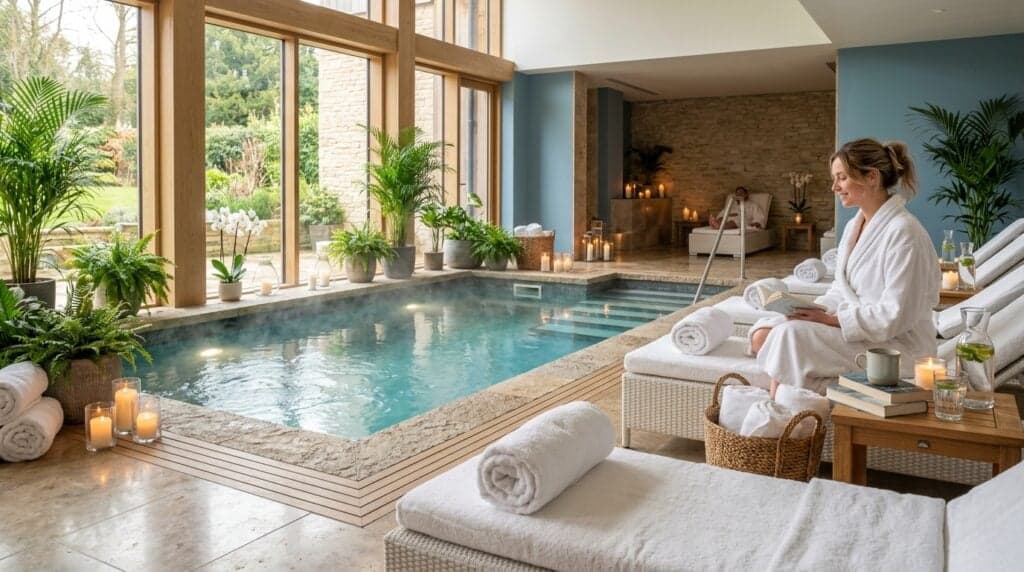
A spa day follows a satisfyingly predictable rhythm once you know what to expect. You arrive, check in, and are given a robe, slippers, and a locker for your belongings. From there, you have access to whatever facilities the venue includes in your package — which might be a swimming pool, hydrotherapy pool, sauna, steam room, experience showers, and a relaxation lounge. If treatments are included, you’ll have appointment times to keep.
Most spa days in the UK run for four to eight hours. A half-day package (three to four hours) is ideal if you want a focused escape without an entire day out of commission. A full-day package gives you time to genuinely slow down — move between the thermal suite at your own pace, have lunch, and spend an hour or two in the relaxation room doing absolutely nothing. More people do this than would admit it, and it’s arguably the best part.
Food and drink varies by venue. Mid-range and premium packages often include lunch or afternoon tea, and the quality has improved dramatically across the industry. Budget packages tend to be facilities-only, with food available to purchase separately.
Types of UK Spa — Which One Is Right for You?
Hotel and resort spas are the premium tier. Think country house hotels in the Cotswolds, five-star properties in London and Edinburgh, or coastal retreats in Cornwall and the Scottish Highlands. You’re paying for impeccable surroundings and attentive service — treatments are bespoke and priced accordingly. These are the go-to for special occasions.
Day spas operate as standalone businesses rather than hotel add-ons. Without the overhead of rooms and restaurants, a well-run day spa can deliver outstanding treatments at a more accessible price point. The independent spa scenes in Manchester, Bristol, Leeds, and Birmingham are particularly strong — look for places with consistent five-star reviews and a focus on a specific treatment style (aromatherapy, holistic, sports recovery).
Thermal and hydrotherapy spas are built around water-based wellness. Thermae Bath Spa is the jewel in the crown — the only natural thermal spa in Britain, fed by genuine hot springs beneath the city, with a rooftop pool overlooking Georgian Bath. Larger leisure destinations across Yorkshire and the North West offer similar multi-pool thermal suites. These are ideal if you want hours of passive, temperature-based relaxation without a packed treatment schedule.
Gym and leisure spas are the best-kept secret in the UK spa market. Many premium health clubs and gym chains have added serious wellness facilities — saunas, steam rooms, hydrotherapy pools, and treatment rooms — alongside their gym floors. The [gyms with spa and wellness facilities listed on GymPal](https://askgympal.co.uk/blog/gyms-with-spas-uk-health-clubs-pools-saunas/) regularly offer day passes that undercut hotel spa prices by 40 to 60 per cent, making them ideal for regular wellness days rather than occasional treats.
How Much Does a Spa Day Cost in the UK?
Prices vary considerably, but here’s an honest breakdown of what each tier delivers.
Budget (£30–£70): Facilities-only access at a gym-attached spa or leisure centre. Sauna, steam room, and usually a pool. No treatments included. Good for regular wellness maintenance without the cost of a full spa day.
Mid-range (£75–£150): Facilities plus one treatment — usually a 30 to 60-minute massage or facial — at a day spa or hotel spa. This is the most popular price bracket in the UK, and the sweet spot for value. Midweek visits at the same venue often run 20 to 30 per cent cheaper than weekend rates.
Premium (£150–£300): Full-day access, multiple treatments, and lunch or afternoon tea included. This is hotel spa territory — a proper experience with high-quality facilities and attentive staff.
Luxury (£300+): Private treatment suites, multi-stage spa journeys, rooftop pools, Champagne on arrival. Gleneagles in Perthshire and The Lanesborough Spa in London operate at this level. For a genuinely milestone occasion, these deliver.
One practical note: Monday to Thursday visits consistently offer better availability and lower prices than weekends. If you have flexibility in your schedule, a Wednesday spa day is often the same experience for considerably less money — plus noticeably quieter facilities.
Spa Etiquette — What You Need to Know Before You Go
Arrive early. Most spas ask guests to arrive 15 to 30 minutes before the first treatment. Arriving late eats into your treatment time — they won’t run over for you when the next guest is booked in.
Silence is the default. Relaxation areas and thermal suites are quiet zones. Phones should be on silent or left in your locker. Most well-run UK spas now actively enforce phone-free relaxation rooms, and the other guests will thank you for it.
Swimwear goes under your robe. You wear your robe and slippers between treatments and throughout the spa. Swimwear is required in pools, hydrotherapy areas, and most saunas and steam rooms. Some gender-separated suites operate clothes-free — the spa will tell you at check-in.
Shower before thermal facilities. Standard practice before entering a pool, sauna, or steam room. Showers are always available, and most spas remind you at the entrance.
Hydrate throughout the day. Moving between hot and cold environments is dehydrating in ways that aren’t always obvious while you’re relaxing. Water stations are available throughout most spa facilities — use them regularly. If your package includes access to a plunge pool or contrast therapy, be especially attentive to how your body responds; the principles are similar to the ones covered in our guide to [cold water therapy and ice baths in the UK](https://askgympal.co.uk/blog/cold-water-therapy-uk-ice-baths-plunge-pools/), where managing the thermal shock safely is the first priority.
Tipping is appreciated but not mandatory. Ten to fifteen per cent for a treatment you were pleased with is standard in the UK spa industry. Check whether gratuities are included in the package price before you go.
The Best Destinations for Spa Days Across the UK
Britain’s spa scene is genuinely distributed. You don’t need to be in London to find exceptional facilities, and some of the best experiences in the country are in places you might not immediately think of.
Bath, Somerset — The obvious choice, and rightly so. Thermae Bath Spa is unlike anything else in the UK: a rooftop pool overlooking Georgian rooftops, fed by natural hot springs that have been used for wellness since Roman times. Day access from around £45 per person, with treatments available to add. Book weeks ahead for weekends.
Harrogate and the Yorkshire Dales — Yorkshire has quietly become one of England’s finest spa destinations. Rudding Park near Harrogate consistently tops national spa rankings, with an underground thermal spa, rooftop hot tubs, and a treatment menu that runs to dozens of options. The surrounding landscape makes the escape feel complete.
Cornwall — Several coastal hotel spas have invested seriously in their facilities over the past decade. Carbis Bay Hotel near St Ives and The Headland in Newquay both deliver strong spa programmes with views that do half the relaxation work for them.
Scottish Highlands — Gleneagles in Perthshire sets the benchmark for destination spa experiences in Scotland. Boutique retreats around Loch Lomond and the Cairngorms offer a more intimate version of the same Highland escape, often at significantly more accessible price points.
Manchester and the North West — The city spa scene in Manchester has developed considerably. King Street Townhouse and Great John Street Hotel both offer polished urban spa experiences. Chester’s day spa options are worth the short trip from Manchester — Sanctuary Spa in particular has a dedicated following.
London — Every price point and every spa type is represented. Bamford Wellness Spa at Berkeley Square, the Cowshed at Soho House, and Agua Spa at the Sanderson are among the most talked-about mid-to-premium options. Leisure centre spa facilities across East and South London offer excellent-value weekday access for Londoners who want regular wellness sessions without the hotel spa price tag.
How to Book Your Spa Day and Make the Most of It
Book treatments when you book your package. Good spas sell out their treatment slots well in advance, particularly on weekends. If a specific massage or facial is what you’re after, don’t wait until you arrive and hope for availability.
Read the package details carefully. What’s included varies enormously between venues and between tiers. Lunch, afternoon tea, specific pool access, and outdoor facilities are frequently sold as add-ons rather than included in the base price. Know exactly what you’re getting before you pay.
Leave your afternoon clear. The most common mistake is booking a spa day and then rushing to something immediately afterwards. The relaxation needs time to settle. Build in at least an hour of nothing after you leave.
Check crowd levels in recent reviews. Some beautiful spas are consistently overcrowded, which undoes much of the benefit. Recent Google and Trustpilot reviews will tell you whether the thermal suite feels like a peaceful retreat or a queue at the post office in a robe.
Consider spa days as part of a broader wellness routine. Many people who spa regularly also maintain complementary practices between visits — stretching, breathwork, temperature exposure, or movement classes. If you’re building out a broader wellness routine, [hot yoga shares a number of the physiological benefits of spa thermal therapy](https://askgympal.co.uk/blog/hot-yoga-uk-guide/), including improved circulation, muscle relaxation, and stress reduction, and it’s now available at studios across most UK cities.
Ready to find a spa near you? Search GymPal’s listings at askgympal.co.uk — we cover over 60 spa and wellness venues across the UK, searchable by location and facilities, so you can compare options before you book.
Time to Book That Spa Day
A spa day done properly is one of the best ways to genuinely reset — not just a few hours off, but an actual break from the noise. The UK spa scene has never been better, from the thermal springs of Bath to the Highland retreats of Scotland, and the range of options means there’s something accessible at every price point.
The only rule: leave enough time to actually enjoy it. Book ahead, arrive early, leave your phone in the locker, and give yourself permission to spend a couple of hours doing absolutely nothing. You’ll be surprised how much better everything looks afterwards.
Find spas and wellness venues across the UK at GymPal — the UK’s fitness and wellness venue finder.

I am Adam Hall, a dedicated fitness professional with over ten years of experience in the UK’s fitness industry. I earned my Master’s degree in Sports Science from Loughborough University and have worked with several top fitness studios across the UK. My certifications include a Level 3 Personal Trainer Certificate and a specialised Strength and Conditioning Coach accreditation.
Starting my career as a personal trainer, I quickly moved up to manage multiple gym locations, overseeing their operations and training programs. Beyond managing gyms, I regularly contribute to well-known fitness magazines and have been featured in articles for “Health & Fitness” and “Men’s Health”. My passion also extends online where I run a popular blog on GymPal’s AI-powered directory platform detailing insights into choosing the right fitness venues across the UK. With hundreds of posts reaching thousands of readers monthly, my goal is to influence positive changes in how people approach health and exercise throughout the country.