Fitness After 50 UK: Strength, Balance and Staying Active
Click Below To Share & Ask AI to Summarize This Article
Fifty used to be the age people quietly swapped squash for gardening. Not any more. Across the UK, gyms and leisure centres are seeing a steady rise in members in their 50s, 60s and beyond — people who’ve realised that strength, balance and stamina aren’t things you inevitably lose with age, but things you can actively protect, and in many cases rebuild from scratch.
The science backs this up. Muscle mass naturally declines by around 3-8% per decade after the age of 30, and that rate speeds up again after 60 if you’re not doing anything to counter it — a process doctors call sarcopenia. But the flip side is just as encouraging: regular strength and balance work at 50, 60 or 70 can rebuild lost muscle, protect your joints, and dramatically cut your risk of the falls and fractures that cause so many hospital admissions in later life.
This guide covers exactly what to focus on, what it’s likely to cost, how to get started without feeling out of place, and where to find the right gym, class or trainer near you. Whether you’ve been active your whole life or you’re returning to exercise after years away from it, the goal is the same: build a routine that keeps you strong, mobile and independent for decades to come.
Why strength training becomes non-negotiable after 50
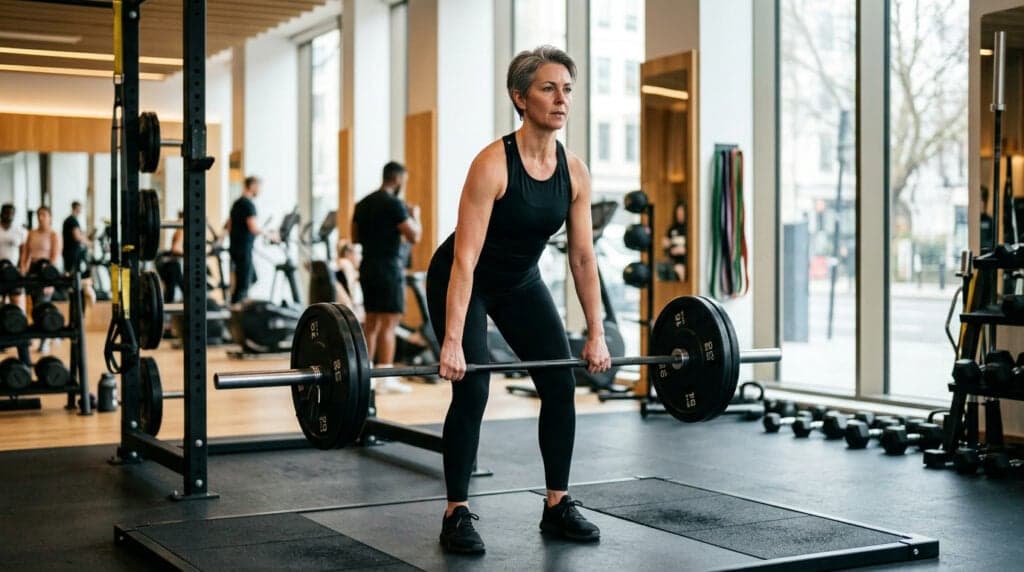
Cardio gets most of the attention, but strength training is arguably the single most important thing you can do for your health in your 50s and beyond. Stronger muscles mean better balance, easier stairs, safer gardening, and a much lower risk of the falls that send so many older adults into A&E every year. It also protects bone density, which matters enormously for women in particular as oestrogen levels drop after the menopause.
The NHS’s physical activity guidelines for older adults recommend muscle-strengthening activities on at least two days a week, alongside balance exercises for anyone at risk of falling. That doesn’t mean powerlifting — it means resistance bands, bodyweight moves, light dumbbells, or a properly supervised weights machine circuit, done consistently and with good form.
Start with compound movements that mimic everyday life: sit-to-stand squats, step-ups onto a low box, seated rows, and modified push-ups against a wall or bench. Two or three sessions a week, with at least a day’s rest in between for recovery, is enough to see real strength gains within about eight weeks. Most UK gyms and leisure centres offer a free induction where an instructor will set weights and reps appropriate to your starting point — always worth booking rather than guessing your way through the weights floor.
Protein matters more here than most people realise. As we age, our bodies become less efficient at using protein to build and repair muscle, so aim to spread protein across your meals — eggs, fish, chicken, lentils, Greek yoghurt — rather than loading it all into one dinner. Pairing that with your strength sessions gives your muscles what they actually need to adapt and grow stronger.
Balance and fall prevention: the exercise most people skip
Balance training doesn’t get the glory of a heavy squat personal best, but it’s just as important, and it’s the one thing most gym-goers under 40 never think about. Falls are one of the leading causes of injury-related hospital admissions among people over 65 in the UK, and the encouraging news is that balance is trainable at any age, often with surprisingly quick results.
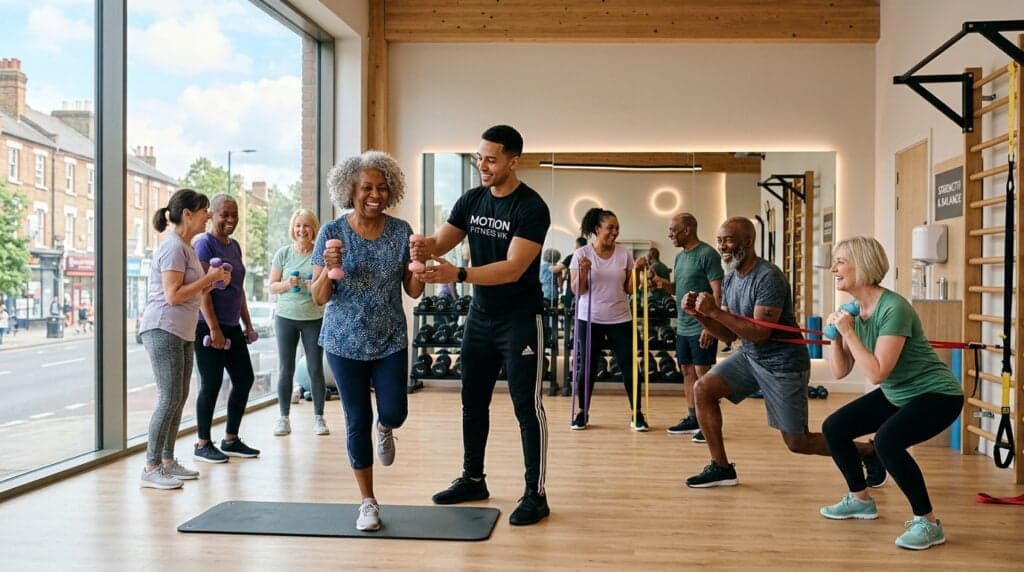
Simple exercises make a real difference: standing on one leg while brushing your teeth, heel-to-toe walking down a hallway, or gentle tai chi and yoga classes designed specifically for older bodies. Many UK leisure centres — including large operators like Better and Everyone Active — now run dedicated “steady and strong” or falls-prevention classes, often free or heavily subsidised through local council public health budgets. It’s always worth asking reception directly what’s available, since these classes aren’t always advertised prominently online.
If you’ve had a fall recently, or you’re worried about your balance, your GP can also refer you to an NHS-funded falls prevention programme in many parts of the country, which typically combines strength, balance and confidence-building exercises over several weeks with a qualified instructor.
Low-impact cardio that protects your joints
High-impact running and jumping aren’t off the table after 50, but if you’ve got creaky knees, an old injury, or you’re simply easing back into exercise, low-impact cardio lets you build fitness without the pounding. Swimming for fitness is one of the best options going — it works your whole body, supports your joints in the water, and builds real cardiovascular fitness without the impact of pavement pounding, and most UK pools run quieter adult-only or over-50s sessions during the day if a full lane full of splashing children isn’t your idea of relaxing.
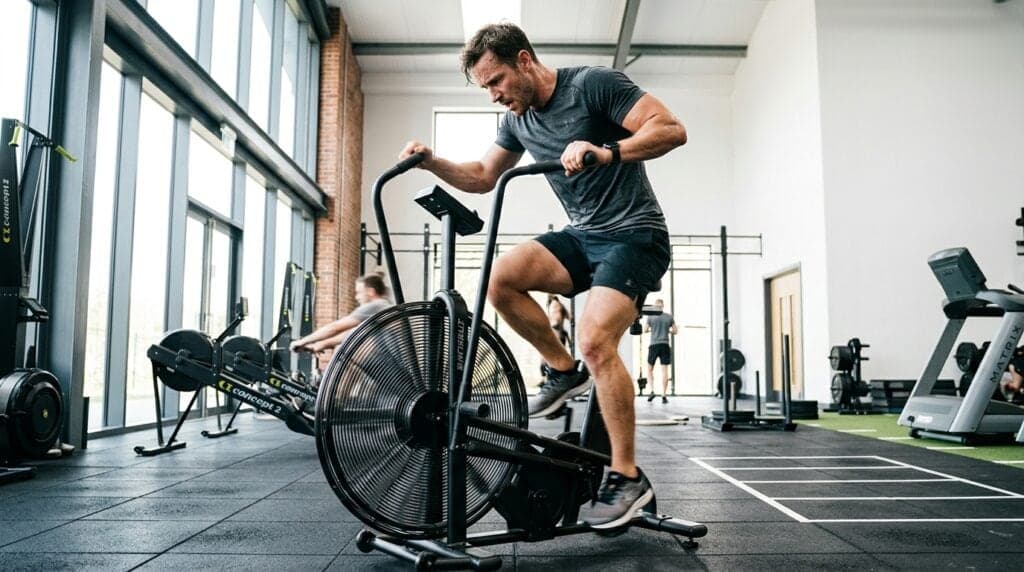
Other solid low-impact options include stationary cycling, elliptical machines, brisk walking groups, and aqua aerobics classes, which are hugely popular with the over-50s crowd precisely because the water takes the strain off your joints while your muscles still have to work hard against the resistance. Rotate between two or three low-impact activities across the week and you’ll build genuine endurance without overloading any single joint, and you’ll be far less likely to get bored and quietly stop turning up.
Getting started when it’s been a while
Walking into a gym for the first time in years — or ever — is intimidating at any age, and it’s a genuine reason people put off starting altogether. If the thought of a room full of twenty-somethings on the squat rack fills you with dread, you’re far from alone, and there are practical ways to work through gym anxiety before it stops you getting started at all.
Booking an induction session, visiting during quieter mid-morning hours, or choosing a smaller independent studio over a huge budget chain can all take the edge off that first visit. Most staff are used to helping people ease back into training and will happily walk you through equipment at your own pace rather than expecting you to already know your way around it.
On cost, most council-run leisure centres offer concessionary or senior membership rates, often 20-30% cheaper than standard adult pricing, sometimes starting from around £25-£35 a month, with pay-as-you-go sessions typically £5-£8. Independent gyms and boutique studios tend to sit higher, but many run senior-specific class blocks at a discount. Some GPs can also refer eligible patients onto local authority “exercise on referral” schemes, which subsidise gym or leisure centre access for a set period — worth asking your surgery about if cost is the main barrier.
Getting a programme built around your body
Generic workout plans rarely account for old injuries, joint issues, or the simple fact that your recovery time isn’t what it was at 25. This is where a bit of personalised guidance really pays off. Working with a qualified personal trainer — even for just a handful of sessions to learn safe technique — can save you months of trial and error and help you avoid the overuse injuries that come from doing too much, too soon.
Look specifically for trainers with experience working with older clients or a recognised qualification in exercise for older adults; many independent gyms and leisure centres list this as a specialism on their trainer profiles, and it’s worth asking directly rather than assuming every trainer has the relevant background. A good trainer will also build in mobility and recovery work, not just sets and reps, which matters more the further you get from your twenties.
Recovery matters as much as the workout itself
One of the biggest mistakes people make when they start training later in life is treating recovery as optional. Sleep, hydration and rest days aren’t a sign you’re not working hard enough — they’re the part of the process where your muscles actually repair and get stronger. Skimping on recovery is one of the fastest routes to a nagging injury that puts you off exercise altogether.
Build at least one full rest day between strength sessions, stretch or foam-roll after cardio, and don’t ignore joint pain that lingers for more than a couple of days — get it checked rather than pushing through it. A slower, more sustainable build-up will get you further than an ambitious plan that has you sidelined with an injury by week three.
Building a routine that actually sticks
The best fitness plan after 50 isn’t the most intense one — it’s the one you’ll still be doing in five years. Aim for a realistic mix across the week: two strength sessions, one or two low-impact cardio sessions, and a bit of balance or mobility work most days, even if it’s just ten minutes while the kettle boils.
Consistency matters more than intensity here. A gentle 30-minute swim three times a week, done reliably, will do more for your long-term health than an occasional brutal class you dread and skip half the time. If you’re not sure what’s available locally, searching GymPal’s directory of UK gyms, pools and studios is a quick way to compare facilities, class timetables and prices near you before committing to a membership.
The takeaway
Fifty isn’t a finish line for fitness — for a lot of people, it’s where things genuinely click into place, because you finally have the time and motivation to do it properly. Prioritise strength and balance work, keep your cardio joint-friendly, ease in gently if you’re new to it, fuel and rest properly, and don’t be afraid to get some professional guidance for the first few weeks.
Ready to find the right gym, pool or studio near you? Search GymPal to compare facilities, classes and prices across the UK and find somewhere that suits exactly where you’re at, whatever your starting point.

I am Adam Hall, a dedicated fitness professional with over ten years of experience in the UK’s fitness industry. I earned my Master’s degree in Sports Science from Loughborough University and have worked with several top fitness studios across the UK. My certifications include a Level 3 Personal Trainer Certificate and a specialised Strength and Conditioning Coach accreditation.
Starting my career as a personal trainer, I quickly moved up to manage multiple gym locations, overseeing their operations and training programs. Beyond managing gyms, I regularly contribute to well-known fitness magazines and have been featured in articles for “Health & Fitness” and “Men’s Health”. My passion also extends online where I run a popular blog on GymPal’s AI-powered directory platform detailing insights into choosing the right fitness venues across the UK. With hundreds of posts reaching thousands of readers monthly, my goal is to influence positive changes in how people approach health and exercise throughout the country.