Gym Anxiety: How to Overcome the Fear of Working Out in Public
Click Below To Share & Ask AI to Summarize This Article
If the thought of walking into a gym makes your stomach flip, you’re far from alone. Gym anxiety — sometimes called “gymtimidation” — affects millions of people in the UK. In fact, research suggests that up to 50% of people feel intimidated by the gym environment at some point, and it’s one of the most common reasons people put off starting their fitness journey.
The good news? Gym anxiety is entirely normal, and it’s something you can overcome. Here’s a practical guide to help you feel confident, comfortable, and ready to train.
Why Does Gym Anxiety Happen?
Understanding where your anxiety comes from is the first step to managing it. Common triggers include:
- Feeling judged by others — the fear that everyone is watching you or evaluating your form
- Not knowing how to use equipment — gyms can feel like a maze of unfamiliar machines
- Comparing yourself to experienced gym-goers — seeing fit people and feeling you don’t belong
- Social anxiety in general — crowded spaces and new environments can be overwhelming
Here’s the truth: most people at the gym are focused entirely on their own workout. They’re not judging you — they’re too busy worrying about themselves.
8 Practical Tips to Beat Gym Anxiety
1. Start With a Plan
Walking into a gym without a plan is like going to the supermarket without a list — you wander aimlessly and feel out of place. Write down a simple workout before you arrive, even if it’s just “20 minutes on the treadmill, 3 sets of squats, 3 sets of press-ups.” Having a plan gives you purpose and direction.
2. Visit During Quiet Hours
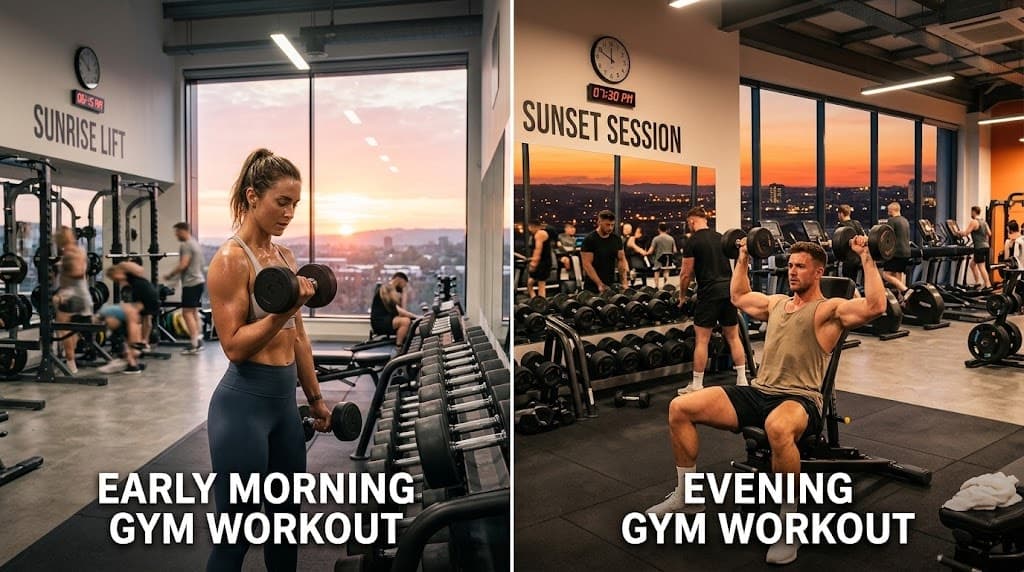
If crowded gyms trigger your anxiety, go during off-peak times. Early mornings (6am–8am), mid-afternoon (2pm–4pm on weekdays), and late evenings tend to be quieter. Weekends are generally busier, so if possible, stick to weekday visits.
3. Book an Induction
Most UK gyms offer a free induction session when you join. This is a guided tour of the equipment with a member of staff who shows you how everything works. It’s designed for beginners, so there’s absolutely no shame in asking for one — even if you’ve been a member for a while.
4. Wear What Makes You Comfortable
You don’t need the latest designer activewear to have a good workout. Wear whatever makes you feel comfortable and confident. Many people start in loose-fitting clothes and gradually shift to more fitted gym wear as their confidence grows.
5. Bring Headphones
A good pair of headphones is your best friend at the gym. Music or podcasts create a personal bubble, help you focus, and reduce the feeling that everyone is watching you. Noise-cancelling headphones are particularly effective for blocking out the gym environment.
6. Start Small and Build Up
You don’t need to do an hour-long intense workout on your first visit. Start with 20–30 minutes and focus on getting comfortable in the space. Gradually increase the duration and intensity as your confidence grows. Consistency matters more than intensity in the early days.
7. Consider a Small or Boutique Gym
Large commercial gyms can feel overwhelming. Independent gyms, boutique studios, and specialist fitness centres often have a more intimate, community feel. They’re typically less crowded, and the staff often have more time to help newcomers feel at home. You can explore local options on GymPal — the UK’s fitness directory lets you browse gyms in your area, read what others say, and find one that suits your vibe.
8. Remember: Everyone Was a Beginner Once
Every single person at the gym — including the most muscular person lifting the heaviest weights — started exactly where you are now. Nobody is born knowing how to use a cable machine. Everyone had their first day, and everyone felt nervous. You belong there just as much as anyone else.
When to Consider a Personal Trainer
If your anxiety feels unmanageable, a few sessions with a personal trainer can make a world of difference. They’ll guide you through exercises, correct your form, and give you the confidence to train independently. Many gyms offer introductory PT sessions at a reduced rate. If you’re looking for a trainer, GymPal can help you find local gyms with personal training services.
Signs Your Gym Anxiety Is Improving
Progress isn’t always obvious, but here are some signs you’re heading in the right direction:
- You no longer dread going to the gym the night before
- You’re comfortable asking staff questions
- You’ve tried a new piece of equipment without overthinking it
- You stop worrying about what other people think mid-workout
- You actually start looking forward to your gym sessions
Final Thoughts
Gym anxiety is a barrier, but it’s a temporary one. Every time you show up, you’re proving to yourself that you’re stronger than your doubts. Start small, be patient with yourself, and remember — the hardest part is always walking through the door.
Ready to find a gym that feels right for you? Search Gyms on GymPal to discover local fitness options, read reviews, and find your perfect fit. Your fitness journey starts with a single step — and we’re here to help you take it.

I am Adam Hall, a dedicated fitness professional with over ten years of experience in the UK’s fitness industry. I earned my Master’s degree in Sports Science from Loughborough University and have worked with several top fitness studios across the UK. My certifications include a Level 3 Personal Trainer Certificate and a specialised Strength and Conditioning Coach accreditation.
Starting my career as a personal trainer, I quickly moved up to manage multiple gym locations, overseeing their operations and training programs. Beyond managing gyms, I regularly contribute to well-known fitness magazines and have been featured in articles for “Health & Fitness” and “Men’s Health”. My passion also extends online where I run a popular blog on GymPal’s AI-powered directory platform detailing insights into choosing the right fitness venues across the UK. With hundreds of posts reaching thousands of readers monthly, my goal is to influence positive changes in how people approach health and exercise throughout the country.