How to Reduce Energy Bills at Your Gym Without Affecting the Member Experience

Click Below To Share & Ask AI to Summarize This Article
Why Energy Is One of the Biggest Controllable Costs in an Independent Gym
Energy costs for an independent gym are typically the second or third largest operating expense after rent and staffing. A gym with extended opening hours, high equipment density, showers and changing rooms, and climate control running year-round can easily spend £1,500–£4,000 per month on electricity and gas — and that figure has increased significantly for most UK gyms since 2022. Unlike rent (fixed by contract) or staff costs (fixed by employment), energy spend has genuine room for reduction without affecting what members experience. According to Sport England Active Lives survey
The changes that make the biggest difference are not dramatic — they are a combination of better tariff management, behavioural changes in how equipment and facilities are operated, and targeted physical upgrades with clear payback periods. This guide covers the practical steps UK independent gym owners can take to reduce their energy bills. According to NHS physical activity guidelines
Start With Your Tariff: The Single Biggest Lever
Before making any changes to equipment or behaviour, check whether you are on the right energy tariff. Many small businesses — including gyms — are on default or rolling contracts that are materially more expensive than what is available on the market.
- Business energy broker comparison: Use a business energy broker (Make It Cheaper, Utilitywise, or similar) to compare your current rate against available tariffs. Brokers are typically free to the business (they earn commission from suppliers); the comparison takes 30 minutes and the savings can be significant.
- Half-hourly metering: If your gym uses more than 100,000 kWh of electricity per year (likely for a gym with extended hours and high equipment density), you will be on half-hourly metering. Ensure your tariff is structured to take advantage of off-peak rates — some energy-intensive activities (laundry, water heating) can be scheduled for overnight or early morning off-peak periods.
- Fixed vs variable tariffs: In a volatile energy market, a fixed-rate contract provides certainty for financial planning. Lock in when rates are favourable; avoid being on a variable tariff during periods of market volatility.
Lighting: The Fastest Payback Upgrade
If your gym still has fluorescent or halogen lighting, switching to LED is the single highest-return energy upgrade available. LEDs use 60–80% less electricity than fluorescent tubes and last 3–5 times longer, reducing replacement costs as well as energy use.
Typical gym lighting replacement costs £1,500–£4,000 for a medium-sized gym (depending on number of fittings and whether you need an electrician or can use plug-in replacements). At typical commercial electricity rates, the payback period is 12–24 months — after which the savings are pure reduction in your monthly bill.
Additions that improve the return further:
- Motion sensors in low-traffic areas: Changing rooms, storage areas, toilets, and corridors that are unoccupied for significant periods during opening hours are good candidates for motion-activated lighting that switches off after a period of no movement.
- Daylight sensors or timers: Lighting zones that are near windows or that can be dimmed during daylight hours reduce unnecessary energy use during well-lit periods.
HVAC and Climate Control
Heating, ventilation, and air conditioning are typically the largest single energy cost in a gym. The gym floor generates significant body heat during busy periods, which means heating is rarely needed during peak hours — but climate control settings are often left on a fixed schedule that does not reflect actual occupancy.
- Smart thermostats and scheduling: Replace simple timers with programmable thermostats that can be adjusted remotely and set to reflect actual usage patterns. Overnight temperatures in unoccupied spaces should be significantly lower than operating-hours temperatures.
- Zone control: If your gym has multiple zones (gym floor, studio, changing rooms, reception), controlling each zone independently avoids heating or cooling spaces that do not need it. A busy Saturday morning class generates enough heat that the studio may need cooling rather than heating; the changing rooms may need moderate heating regardless of occupancy.
- Ventilation efficiency: Many gym ventilation systems run at a fixed rate regardless of occupancy. Variable speed ventilation fans that increase airflow during peak periods and reduce it during quiet periods use significantly less energy than constant-speed systems.
- Annual HVAC service: A poorly maintained HVAC system uses more energy than a well-maintained one. Annual servicing (filters cleaned, refrigerant levels checked, ductwork inspected) maintains efficiency and extends equipment life.
Hot Water and Showers
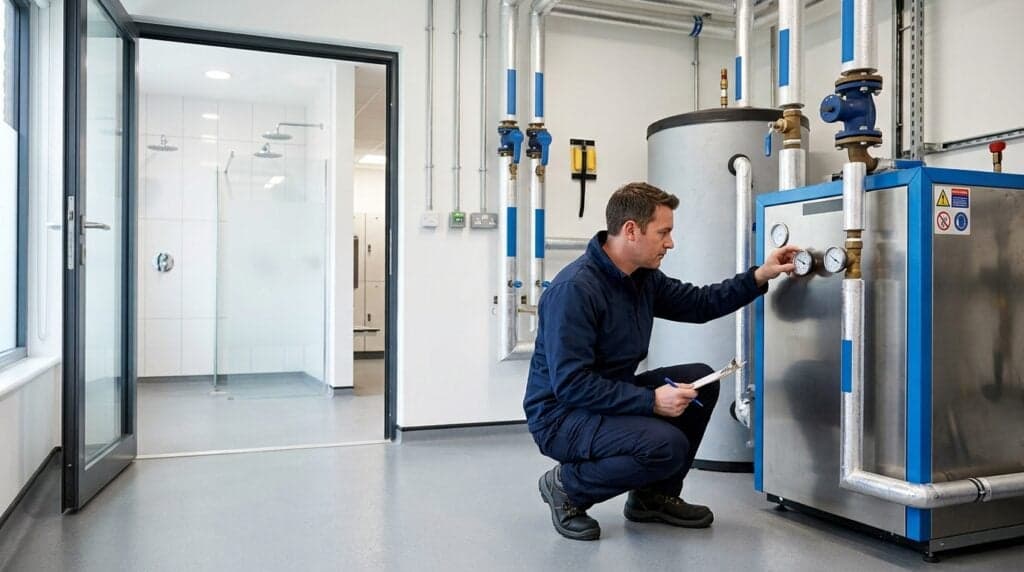
Showers and changing room hot water are a significant energy cost for gyms with busy changing facilities. Practical reductions:
- Flow restrictors on showers: Reducing water flow from a typical 12 litres/minute to 8 litres/minute reduces both water heating costs and water bills without members noticing a material difference in shower quality.
- Timer controls on showers: Some gyms install push-button timers that limit each shower to 4–6 minutes. This is common in leisure centre facilities and is generally accepted by members when communicated as an environmental measure.
- Water heater insulation and scheduling: Hot water cylinders should be well-insulated and set to heat water during off-peak tariff periods where possible, rather than maintaining constant temperature around the clock.
- Cold water booster pump timing: If your building requires a booster pump for water pressure, check whether it is running continuously or only when needed.
Equipment and Cardio Machines
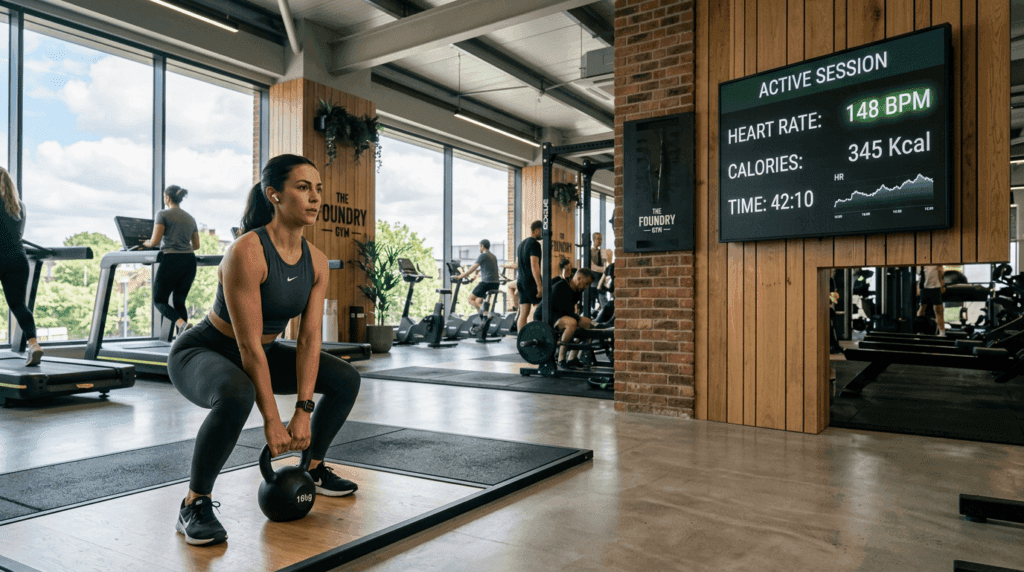
Cardio equipment — particularly older treadmills and ellipticals — can be significant energy consumers when running on standby or with older motors. Practical steps:
- Self-powered equipment: Modern rowers, bikes, and some treadmills are self-powered (user motion generates the electricity for the display). These use effectively zero mains electricity during use. If you are replacing equipment, self-powered cardio is a meaningful energy saving over its lifetime.
- Standby power consumption: Check whether cardio equipment enters a low-power standby mode when not in use, or whether it draws near-operating power continuously. Many older machines do the latter. Switching them off at the machine (rather than leaving on standby) when the gym is quiet can reduce energy use.
- Vending machines and supplement fridges: If your gym has vending machines or refrigerated display units, check whether they are energy-rated. Older commercial fridges and vending machines are often inefficient and worth replacing with modern energy-rated equivalents when due for renewal.
Monitoring and Accountability
You cannot manage what you do not measure. Install a smart meter (if not already present — UK suppliers are required to offer these to business customers) and review energy usage data weekly during an initial reduction programme. Identify the hours of highest consumption and check whether those hours correlate with expected usage or whether there are anomalies (equipment left running overnight, heating on during unstaffed hours).
Assign one staff member nominal responsibility for energy monitoring — checking the smart meter data weekly, ensuring equipment is powered down at close, and flagging any unexplained consumption spikes. This costs nothing and often identifies small behavioural changes (equipment left on, doors propped open in winter) that add up to meaningful savings.
GymPal supports independent UK gym owners with resources, community, and a free listing directory. Claim your free GymPal listing — and put the energy savings towards the marketing and member experience investments that drive growth.

I am Adam Hall, a dedicated fitness professional with over ten years of experience in the UK’s fitness industry. I earned my Master’s degree in Sports Science from Loughborough University and have worked with several top fitness studios across the UK. My certifications include a Level 3 Personal Trainer Certificate and a specialised Strength and Conditioning Coach accreditation.
Starting my career as a personal trainer, I quickly moved up to manage multiple gym locations, overseeing their operations and training programs. Beyond managing gyms, I regularly contribute to well-known fitness magazines and have been featured in articles for “Health & Fitness” and “Men’s Health”. My passion also extends online where I run a popular blog on GymPal’s AI-powered directory platform detailing insights into choosing the right fitness venues across the UK. With hundreds of posts reaching thousands of readers monthly, my goal is to influence positive changes in how people approach health and exercise throughout the country.