Wearable Tech & Member Engagement: UK Gym Owner Guide
Click Below To Share & Ask AI to Summarize This Article
Walk into most UK gyms in 2026 and you’ll see them everywhere: Apple Watches on the treadmill, Whoop bands under wristwraps, Garmins clocking heart rate zones mid-class. Members are already tracking their own training. The gyms that are winning on retention are the ones using that same data to make the member experience feel personal, rather than leaving it locked inside someone’s phone.
That matters more than ever. Membership numbers across the UK are climbing, but growth in sign-ups doesn’t automatically mean growth in loyalty. New members who don’t feel seen after week three still cancel in month two, wearable or not.
This guide is about closing that gap: how to use the fitness data your members are already generating to keep them coming back, without needing an enterprise IT budget or a data science team.
Why wearable data is now a retention tool, not a gimmick
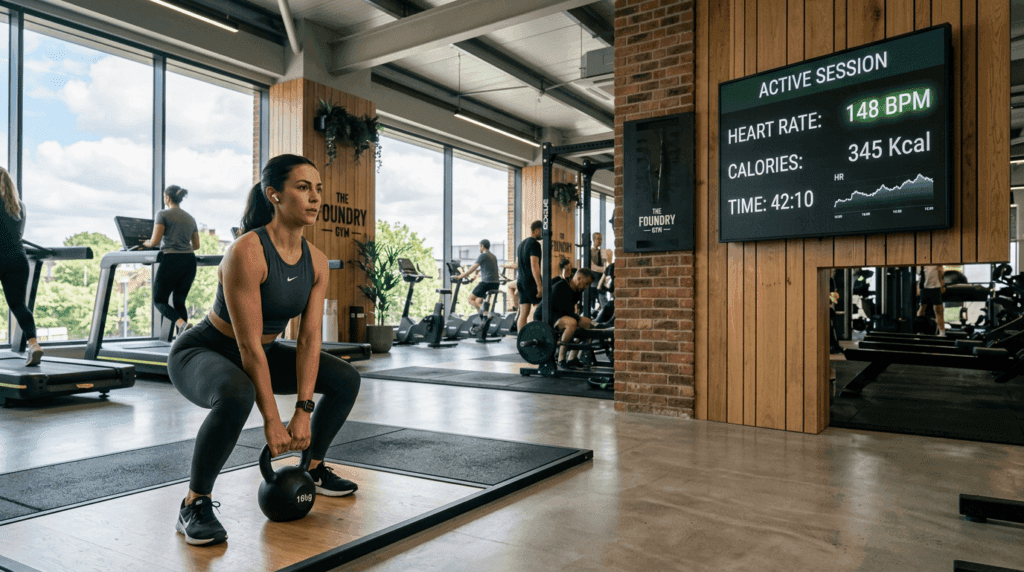
Five years ago, wearables were a personal fitness accessory that had nothing to do with the gym floor. That’s changed. In-club heart rate systems like MYZONE, Polar and Wexer are now common in group exercise studios, and most cardio equipment brands (Technogym, Life Fitness, Matrix) sync directly with Apple Health, Garmin Connect and Fitbit. The data trail a member leaves behind — heart rate zones, calories, session frequency, sleep and recovery scores — is a live picture of how engaged they actually are, not just how often they tap in at reception.
That distinction matters for retention, especially with membership growing across the sector — ukactive’s UK Health and Fitness Market Report 2026 recorded a record 18% of the population now holding a membership, with total club visits up 10% year on year. A member who checks in three times a week but whose wearable shows steadily dropping intensity is coasting, and coasting members churn. Spotting that pattern early, and acting on it with a check-in from a coach or a nudge to try a new class, is a far more effective use of your team’s time than waiting for a cancellation email.
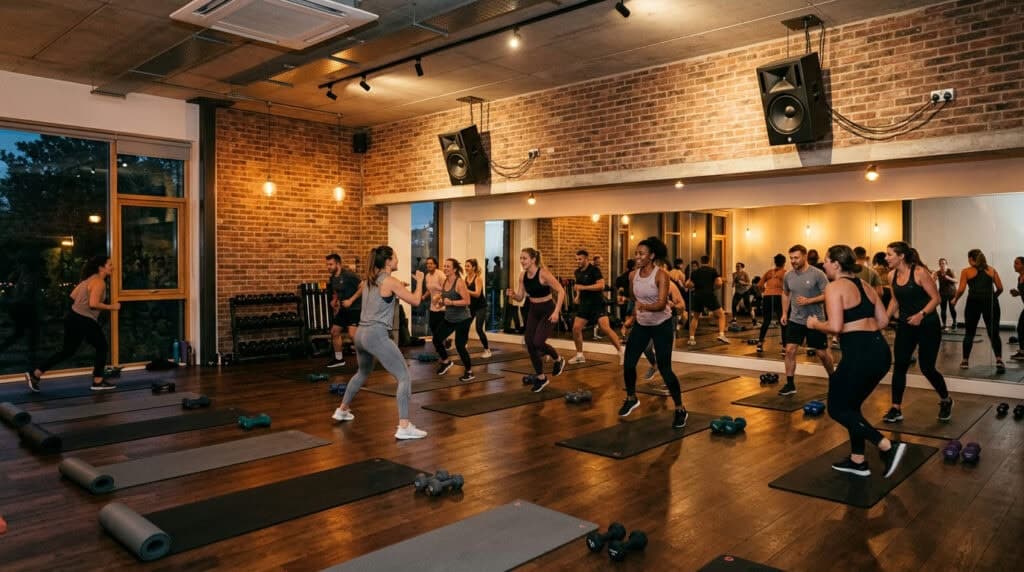
UK boutique studios were early movers here. Heart rate-based classes built around MYZONE or similar systems display each member’s effort in real time on a screen at the front of the room, turning a solo workout into something social and slightly competitive. Big-box gyms are catching up fast: several major UK chains now offer their own branded apps that pull data from Apple Health and Garmin Connect to show members a weekly summary of their training, rather than leaving that insight buried in a third-party app they never open.
Turning raw data into personal engagement
Data on its own doesn’t retain anyone — what you do with it does. The most effective UK operators are using wearable and check-in data to power three things: personalised milestones (celebrating a member’s 50th session or a new personal best), targeted re-engagement (flagging members whose activity has dropped before they lapse), and smarter class recommendations based on what actually gets someone’s heart rate up. None of this requires replacing your existing systems — most gym management platforms now have API connections into the major wearable ecosystems, so the data can flow into the tools your front-of-house team already uses.
It’s also worth connecting this to your existing member rewards structure rather than building something new from scratch. A well-run gym loyalty programme can absorb wearable milestones easily — points for hitting a weekly activity target, badges for consistency streaks — turning passive data into something members actively chase.
Group challenges are another low-effort, high-reward way to put wearable data to work. A month-long “most active minutes” leaderboard across a class cohort, or a step-count challenge between branches for a multi-site operator, costs nothing to run but taps into exactly the kind of light competition that keeps people showing up. The trick is keeping challenges short — two to four weeks — so they create a recurring reason to re-engage rather than one long event that fades out by week two.
You don’t need an enterprise tech stack to start
The biggest myth holding independent gyms back from using member data is that it requires a huge technology investment. In practice, most of what you need is already sitting inside your existing gym management software. If you’re not sure whether your current setup can handle wearable integrations, activity dashboards or automated re-engagement triggers, it’s worth revisiting how to choose the right gym management software for an independent gym before assuming you need to start from scratch.
A realistic starting point for most independent operators looks like this:
- Turn on the wearable and app integrations your existing software already offers, rather than buying a new platform
- Pick two or three data points to actually act on — session frequency and intensity trend are the most useful for retention
- Set up one automated trigger, such as a message to members whose visits have dropped for two consecutive weeks
- Give staff a simple weekly view of “at risk” members rather than raw data dumps nobody has time to read
Start small and prove the retention impact before investing further. A single well-timed re-engagement message, sent because the data flagged a lapsing member, will do more for your churn rate than a dashboard nobody looks at.
Using activity data to fix scheduling, not just retention
Wearable and check-in data doesn’t just tell you which members are at risk — it tells you which classes and time slots are actually working. If heart rate data shows a Tuesday HIIT class is consistently under-intensity compared to the same class on Thursdays, that’s a coaching or programming issue worth investigating, not just a retention one. This is where member data overlaps with the operational side of running a gym: getting your class timetable and instructor utilisation right so the sessions your data shows members respond best to are the ones you’re running at your busiest times.
Handling privacy and avoiding data overload
Any use of member health data in the UK needs to be handled properly under UK GDPR. Wearable data — heart rate, sleep, activity levels — counts as health data, which is a special category under data protection law, so members need clear, specific consent before you connect their wearable to your systems or use that data for anything beyond their own dashboard. Be explicit about what you’re collecting, why, and how long you keep it, and make opting out easy and penalty-free. If in doubt, the ICO’s guidance on special category data is the reference point — treat wearable health data with the same care you’d give medical records, not with the same casualness as a booking history.
The other trap is drowning your team in data they can’t use. Sending front-of-house staff a spreadsheet of raw heart rate readings helps nobody. The gyms getting real value from this are the ones that reduce everything down to a handful of simple flags — engaged, coasting, at risk — that a coach can glance at before a session and act on immediately.
It’s also worth remembering that not every member wants their gym watching their data closely, even with consent given. Some just want to train and leave. Build engagement features as an opt-in layer on top of the core membership experience, not a requirement for using the gym, and make sure staff know how to switch a member out of data-driven communications if they ask.
Don’t leave non-wearable members behind
Not every member owns a smartwatch, and plenty who do won’t want to connect it to a gym app. Older members, in particular, are often just as engaged as anyone else on the floor but show up as invisible in a wearable-first engagement strategy. Keep check-in frequency, class attendance and PT session history as your baseline engagement signals for everyone, and treat wearable data as an enhancement layered on top for the members who opt in — not a replacement for the basics. A two-tier engagement strategy that still works without a device is far more inclusive, and far less likely to alienate the members who’ve been loyal for years.
Getting started this month
You don’t need every member wearing a device to make this work. Even a partial rollout — your most engaged 20-30% of members syncing activity data — gives you enough signal to spot disengagement patterns and test what re-engagement actually moves the needle. Start with the integrations already built into your existing software, pick one metric to act on, and build from there.
A sensible first month looks like this: audit which wearable and app integrations your current software already supports, brief front-of-house and coaching staff on the one or two flags they’ll be watching for, and pick a single small cohort — one class, one department, one branch — to pilot with before rolling out gym-wide. You’ll learn more from getting real feedback on a 20-person pilot than from months of planning a perfect full-scale rollout.
If you’re still building out your gym’s online presence to bring in the members you’ll eventually be tracking, make sure your listing is up to date so new members can find you in the first place — you can claim your gym’s GymPal listing in a few minutes if you haven’t already.
Member engagement in 2026 isn’t about who has the flashiest wearable integration — it’s about who actually acts on what the data is telling them. Start small, act on one signal at a time, and the retention gains follow.

I am Adam Hall, a dedicated fitness professional with over ten years of experience in the UK’s fitness industry. I earned my Master’s degree in Sports Science from Loughborough University and have worked with several top fitness studios across the UK. My certifications include a Level 3 Personal Trainer Certificate and a specialised Strength and Conditioning Coach accreditation.
Starting my career as a personal trainer, I quickly moved up to manage multiple gym locations, overseeing their operations and training programs. Beyond managing gyms, I regularly contribute to well-known fitness magazines and have been featured in articles for “Health & Fitness” and “Men’s Health”. My passion also extends online where I run a popular blog on GymPal’s AI-powered directory platform detailing insights into choosing the right fitness venues across the UK. With hundreds of posts reaching thousands of readers monthly, my goal is to influence positive changes in how people approach health and exercise throughout the country.